Daijiworld Media Network - Mangaluru
Mangaluru, Feb 5: The Mangaluru City Crime Branch (CCB) police have busted a large-scale investment fraud racket operating from Nepal and targeting Indian investors, arresting 11 accused involved in cheating victims of hundreds of crores of rupees, city police commissioner Sudheer Kumar Reddy said at a press conference here on Thursday, February 5.
According to the commissioner, the fraud syndicate, which included Indian and Chinese nationals, was operating from Nepal and coordinating online investment scams across India. While 11 Indian accused have been arrested by the Mangaluru City CCB police, Nepal police have arrested Chinese nationals linked to the racket. Five Indian accused are currently absconding, and efforts are under way to trace them.
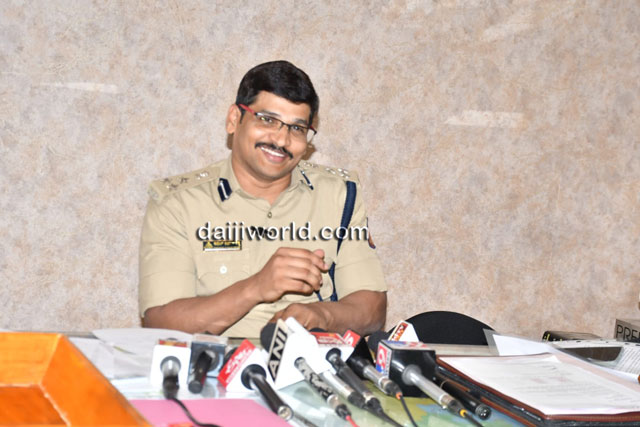
Mangaluru City police comissioner Sudheer Kumar Reddy at press briefing
Investigations revealed that the accused used social media platforms to lure investors with promises of high returns. Examination of seized mobile phones and laptops led to the detection of details of 624 bank accounts, against which more than 4,580 complaints have been registered on the NCRP portal across the country. In one bank account alone, transactions worth Rs 167 crore were detected.
In the specific case registered at the Mangaluru CCB police station, fraudsters diverted around Rs 30,70,26,725 through 10 bank accounts. Details of the remaining 623 bank accounts are being verified, police said.
Case details
The case has been registered as CCB police station Crime No 02/2026 under Sections 66(C) and 66(D) of the IT Act and Sections 318(4) and 308(5) of the Bharatiya Nyaya Sanhita. The complainant was cheated of Rs 1.38 crore, which was transferred into 10 different bank accounts. Technical analysis and investigation confirmed that the fraud was being operated from Nepal, leading to the arrest of the gang.
Police explained that one group of fraudsters operated from Nepal by recruiting bank account holders and agents through social media. The cheated money was routed through multiple accounts, converted into USDT cryptocurrency and transferred abroad.
Another group, operating from Cambodia and other countries, contacted investors through social media platforms. Indians working abroad were used to speak to victims in local languages and persuade them to invest more money. The Nepal-based group controlled and monitored the entire financial operation.
In the 10 bank accounts used in the Mangaluru case, around 128 complaints and 36 FIRs have been registered on the NCRP portal across the country.
How bank accounts were procured
Police said the fraudsters created fake advertisements on Instagram and Telegram under different company names, seeking corporate accounts, current accounts, USDT-to-INR exchange operators, management operators and OTP workers. Victims were lured with commissions ranging from 5 to 10 percent, along with offers of flight tickets, cab bookings, hotel and lodge facilities.
Those who fell for the offers were taken to places such as Dubai and Nepal, where their SIM cards were inserted into phones controlled by the fraudsters. Using net banking facilities, the accused transferred funds as required, purchased USDT daily and sent the cryptocurrency to associates abroad.
How investors were trapped
Operating from Cambodia and Dubai, the main accused contacted Indian citizens through unknown WhatsApp numbers and social media platforms such as Instagram, Telegram and Facebook, promising high returns. Fake apps were used to show inflated profits. Initially, small returns were paid to build trust, after which victims were persuaded to invest larger amounts to withdraw their money.
Police stated that the gang was cheating Indian investors of between Rs 60 lakh and Rs 1 crore every day through such investment frauds.
Warning on digital slavery
Commissioner Reddy cautioned youth seeking jobs abroad against falling prey to fake job advertisements and agents. Victims are often taken abroad on tourist visas, their passports seized, and forced to work in unknown locations. They are compelled to speak to innocent investors in their mother tongue and cheat them, without proper food or contact with family.
In Dakshina Kannada district alone, six persons have already been rescued from such cyber slavery, and cases have been registered based on their complaints, he said.
Why money recovery becomes difficult
Police explained that recovery becomes difficult as fraudsters convert money into cryptocurrency and transfer it abroad on the same day. Delay by victims in reporting fraud also reduces the chances of recovering the amount.
Strong warning to account holders
Those who provide bank accounts for commission will also be treated as accused, police warned. As the main operators remain abroad, account providers are often arrested first under the law.
Advice to investors
Investors have been advised not to fall for attractive online advertisements promising high returns, fake SEBI certificates or fake demat accounts. Police noted that even educated persons are increasingly falling victim to online investment, trading and money-doubling scams.
People are advised to invest only through SEBI-registered institutions or brokers and exercise extreme caution against high-return promises.
Cyber fraud safety measures
Police urged citizens to immediately call 1930 and lodge a complaint at the nearest police station within one hour of detecting fraud. They also cautioned against fake loan apps, online games, fake job offers, APK files, suspicious links, sharing OTPs, and fake video calls impersonating police, CBI, judges, customs, SEBI or TRAI officials.
Arrested accused
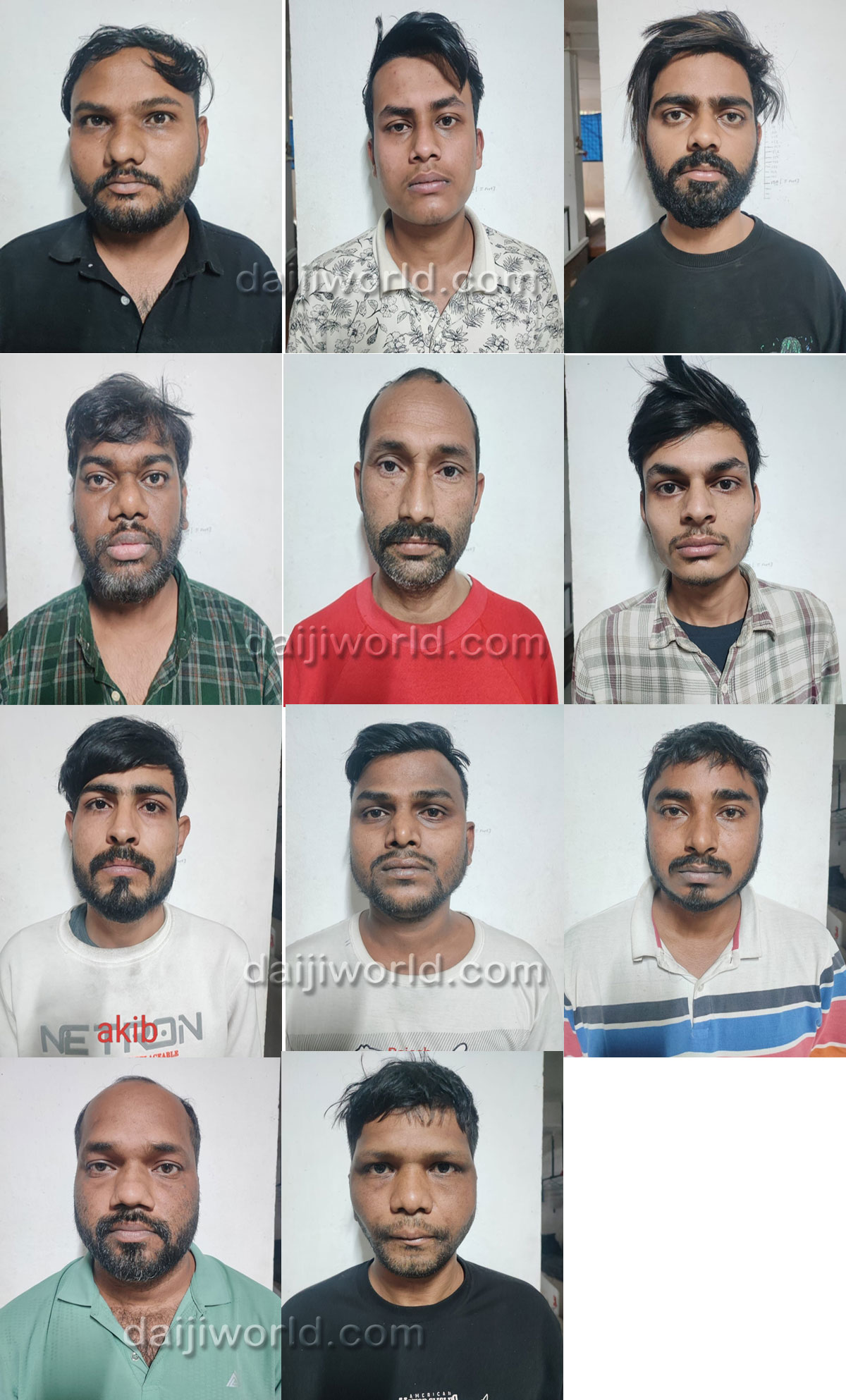
The arrested accused have been identified as Makwan Vikram (25) of Gujarat, Soumyaditya Chattopadhyay (21) of West Bengal, Pupla Shiva Kumar Rao (32) of Jharkhand, Gaurav Pandey (24) of Uttar Pradesh, Harsh Mishra (22) of Uttar Pradesh, Rajesh Mandan (30) of Jharkhand, Mohammed Akeeb Ali (27) of Uttar Pradesh, Rajeev Ranjan Kumar (30) of Bihar, Mithun Kumar Mangaraj (38) of Jharkhand, Naushad Ali (34) of Uttar Pradesh and Om Prakash Yadav (37) of Rajasthan.
Seized items
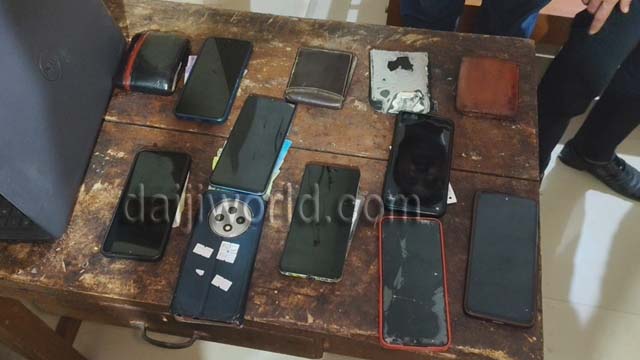
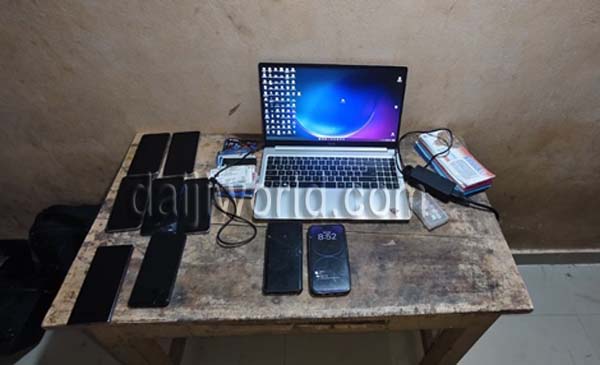
Police have seized one laptop, 21 mobile phones, 20 SIM cards of various companies, and 20 debit and credit cards from different banks.
Further investigation is under way.