Daijiworld Media Network - Chennai
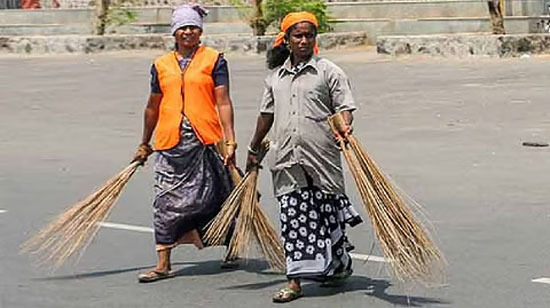
Chennai, Feb 4: In a move aimed at reinforcing rural sanitation systems and improving the working conditions of grassroots-level staff, the Tamil Nadu government has approved an increase in the monthly remuneration of sanitation workers employed in village panchayats, raising it from Rs 5,000 to Rs 6,000.
The initiative is part of a wider strategy to upgrade waste management mechanisms in rural areas, many of which are witnessing sharp population growth and increasing urban characteristics. Officials said the enhanced pay reflects the expanding responsibilities placed on sanitation workers as waste generation rises across villages.
To address these growing challenges, the government has introduced a fresh grading framework for village panchayats, classifying them into ‘A’, ‘B’, and ‘C’ categories. The new system is designed to improve planning and service delivery by aligning manpower, infrastructure, and financial resources with each panchayat’s population size and volume of solid waste.
According to officials, the reclassification will enable local bodies to organise sanitation operations more efficiently, ensuring regular waste collection and cleaner village environments. It is also expected to bring greater clarity in deploying workers and equipment where they are most needed.
With rural households increasing steadily, the government has empowered the Commissioner of Rural Development and Panchayat Raj to periodically review and rationalise the number of sanitation workers in each panchayat. This provision is intended to ease workload pressures and enhance the overall effectiveness of sanitation services.
The Rs 1,000 monthly wage increase will benefit thousands of sanitation workers engaged in solid waste management across village panchayats.
These workers, many of whom are appointed through self-help groups and panchayat-level federations, are responsible for essential tasks such as daily cleaning, waste segregation, and disposal.
To fund the revised wages and sustain sanitation programmes, the State has allocated Rs 476 crore annually from the State Finance Commission grant. The allocation will cover the additional salary burden while supporting ongoing rural cleanliness and public health initiatives.
The decision has been widely welcomed as long-overdue recognition of the role played by sanitation workers, who are central to safeguarding public health and environmental hygiene in rural Tamil Nadu.
With immediate implementation of the order, the government expects the measures to provide financial relief, improved job stability, and stronger sanitation outcomes across villages statewide.