Daijiworld Media Network - New Delhi
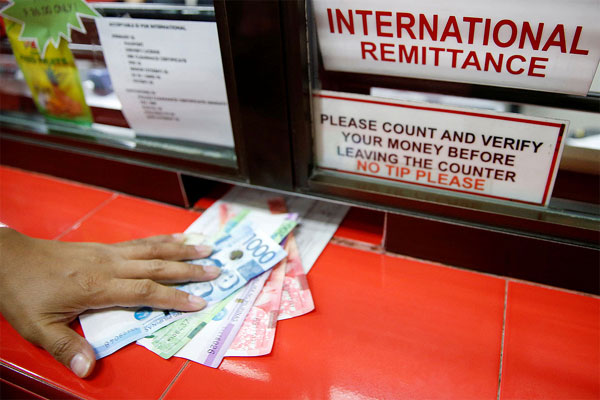
New Delhi, Jan 29: India continued to retain its position as the world’s largest recipient of remittances, with inflows rising to $135.4 billion in FY25, providing crucial support to the country’s external sector, according to the Economic Survey 2025–26 tabled in Parliament on Thursday.
The Survey noted a rising share of remittances from advanced economies, signalling the growing contribution of skilled and professional Indian workers abroad. These inflows have helped reinforce stability in India’s external account amid an uncertain global environment.
At the same time, the Survey underlined the need for a coordinated push to lower manufacturing costs to strengthen India’s export competitiveness. It said long-term external resilience and stronger currency credibility would depend on expanding manufacturing export capacity, backed by a disciplined and productivity-focused industrial policy, careful control of input costs across value chains, and the parallel growth of high-value services.
Despite tighter global financial conditions, India continued to attract robust investment inflows, with gross capital inflows amounting to 18.5 per cent of GDP in FY25.
Citing UNCTAD data, the Survey said India remained the largest recipient of gross FDI inflows in South Asia, overtaking major Asian peers such as Indonesia and Vietnam. Globally, India ranked fourth in Greenfield investment announcements in 2024, with more than 1,000 projects, and emerged as the top destination for Greenfield digital investments between 2020 and 2024, attracting $114 billion.
FDI inflows also showed an uptick in the current year, with gross FDI rising to $64.7 billion during April–November 2025, compared to $55.8 billion in the same period a year earlier.
On portfolio flows, the Survey pointed to volatility in foreign portfolio investment (FPI), noting recurring cycles of inflows and outflows driven by global financial developments. “The data indicate volatility, with six months of net outflows and three months of net inflows, resulting in a modest net balance for the year-to-date,” it said.
India’s foreign exchange reserves strengthened to $701.4 billion as of January 16, up from $668 billion at the end of March, providing a comfortable liquidity cushion. The reserves are sufficient to cover around 11 months of merchandise imports and about 94 per cent of external debt outstanding as of end-September 2025.
The Survey emphasised that currency performance ultimately depends on the economy’s ability to generate domestic savings, maintain external balance, attract stable FDI, and build export competitiveness anchored in innovation, productivity, and quality.
India’s external debt stood at $746 billion at end-September 2025, up from $736.3 billion at end-March 2025, while the external debt-to-GDP ratio was placed at 19.2 per cent. The Survey noted that external debt accounts for less than 5 per cent of India’s total debt, significantly limiting risks to the external sector.