Daijiworld Media Network - Washington
Washington, Dec 23: Even as US Vice President JD Vance has not officially announced his bid for the 2028 presidential race, strong early signals from the MAGA grassroots suggest he is emerging as a clear favourite to succeed President Donald Trump.
At the AmericaFest conference organised by Turning Point USA in Arizona, Vance dominated a straw poll, securing a massive 84 per cent support from attendees. Secretary of State Marco Rubio trailed far behind with 5 per cent, while Florida Governor Ron DeSantis received just 3 per cent, highlighting Vance’s growing appeal within Trump’s core support base.
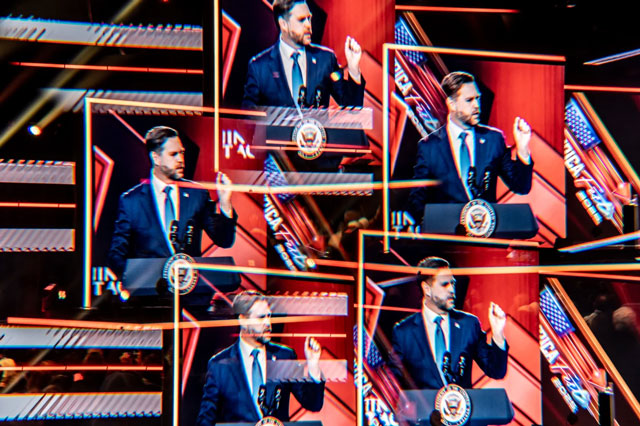
Vance also received a significant endorsement from Erika Kirk, CEO of Turning Point USA and widow of the organisation’s late co-founder Charlie Kirk. Turning Point USA, which played a key role in mobilising young conservative voters during Trump’s 2024 campaign, now claims over one million members and more than 1,400 chapters across college campuses.
Participants at the four-day conference described Vance as a leader who connects with both grassroots activists and older MAGA supporters. Many praised his blunt speaking style and personal background, seeing him as a politician who reflects Trump’s combative approach while offering a generational shift in leadership.
Several attendees felt Trump himself appeared to be positioning Vance as his political heir, pointing to the vice president’s increasingly prominent public role. Younger voters, meanwhile, said they were drawn to Vance’s strong rhetoric on national identity, rights, and conservative values, even if some admitted their final choice would be influenced by family preferences.
Notably, none of the conference attendees interviewed expressed opposition to Vance, underscoring his broad acceptance across factions of the conservative movement. Political observers note that while former vice presidents have often struggled to convert their position into electoral success, Vance appears to be consolidating support unusually early.
As the Republican Party begins to look beyond Trump’s presidency, the overwhelming backing seen at AmericaFest indicates that JD Vance is fast emerging as the leading MAGA contender for the 2028 White House race.