Daijiworld Media Network - New Delhi
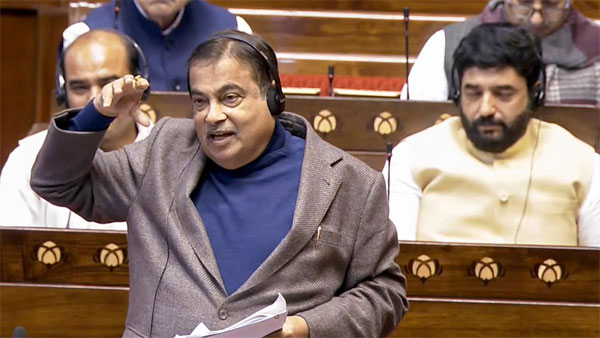
New Delhi, Dec 17: The Union government has announced a major expansion of its cashless medical treatment initiative for victims of road accidents, aimed at ensuring immediate care without financial hurdles. Informing the Rajya Sabha, Union Minister for Road Transport and Highways Nitin Gadkari said accident victims will now be eligible for cashless treatment of up to Rs 1.5 lac per person for the first seven days of hospitalisation.
Under the programme, the government will directly facilitate payments to hospitals, removing the need for victims or families to bear upfront medical expenses. After being piloted in selected regions, the scheme has now been extended across the country in coordination with state governments.
The minister also revealed that work is underway to create a rapid-response emergency system that enables specialised ambulances to reach accident sites within 10 minutes. This will be supported by a centralised emergency helpline and an upgraded ambulance network designed to reduce critical delays in trauma care.
As part of these efforts, modern ambulances equipped with advanced medical facilities will be deployed through agreements with state governments. In high-risk and high-traffic areas, response times are expected to be reduced to as little as 10 minutes.
Highlighting the importance of public participation, Gadkari referred to the ‘Rah-Veer’ scheme, introduced earlier this year. Under the initiative, individuals who help transport accident victims to hospitals during the crucial “golden hour” will be honoured with the title of ‘Rahaveer’ and awarded Rs 25,000 — a significant increase from the earlier incentive of Rs 5,000.
The minister also stressed the need for specialised ambulances fitted with rescue equipment, particularly for accidents involving vehicles falling into gorges, where conventional ambulances are often ineffective. The central government plans to sign memorandums of understanding for deploying such ambulances and will reimburse costs if they reach the accident site within the stipulated 10-minute window.
Citing a study by the Indian Medical Association, Gadkari told the House that timely medical intervention could save nearly 50,000 lives every year in India. He noted that delays in emergency response remain one of the biggest contributors to road accident fatalities.
Describing road safety as a matter of grave concern, the minister reiterated India’s commitment to the global goal of reducing road traffic deaths and injuries by 50 per cent by 2030, in line with the Stockholm Declaration. He added that the government is also strengthening vehicle safety norms, enforcing stricter standards, introducing star ratings for vehicles, and holding contractors accountable for road quality to improve overall safety outcomes.