Daijiworld Media Network - New Delhi
New Delhi, Dec 11: The government informed Parliament on Wednesday that the Directorate General of Civil Aviation’s latest surveillance audit of major airports found no major safety breaches. All issues detected were classified as Level II — procedural or administrative lapses that do not pose an immediate critical safety risk — and were resolved after corrective action by the respective aerodrome operators.
Minister of State for Civil Aviation Murlidhar Mohol, responding to a question in the Lok Sabha, said the DGCA maintains a comprehensive system to ensure that airports follow all regulatory and safety requirements. This includes routine surveillance, spot checks, regulatory audits, and additional special audits whenever risk indicators arise. Airport licences are granted only after operators comply with the standards outlined in Civil Aviation Requirements (CAR) Section 4, he noted.
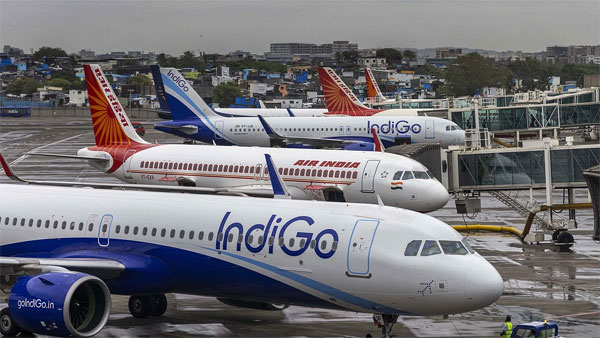
Mohol reiterated that aerodrome operators must keep their facilities in optimal condition throughout the validity of their licence. The DGCA regularly inspects airports to ensure compliance, and any detected violations trigger enforcement proceedings as per the agency’s established policy framework.
To strengthen its regulatory capacity, the DGCA has added 22 new officers in the past four months, while the Departmental Promotion Committee has completed its review for 42 others. Recruitment is also underway for 62 technical officers, five flight operations inspectors and eight stenographers, and exams have already been held to select 121 operations officers. As part of an ongoing restructuring drive aligned with the rapid growth of India’s aviation sector, 441 new posts have been created over the last three years. Of the DGCA’s sanctioned strength of 1,630 personnel, 836 positions are currently filled.
The minister added that safety oversight remains a continuous process, carried out under the DGCA’s Annual Surveillance Plan. Any findings during these inspections are promptly shared with airport operators for corrective measures, which the regulator tracks to ensure compliance.