Daijiworld Media Network – New Delhi
New Delhi, Nov 26: The Centre on Thursday proposed reconvening Parliament from November 30 amid speculation over the possible revival of the women's reservation and delimitation bills, with the Lok Sabha scheduled to meet on Monday and the Rajya Sabha on Wednesday, December 2.
Union Parliamentary Affairs Minister Kiren Rijiju announced that the government had requested Lok Sabha Speaker Om Birla to reconvene the lower house on November 30 and Rajya Sabha Chairman CP Radhakrishnan to convene the upper house on December 2 to transact essential government business.
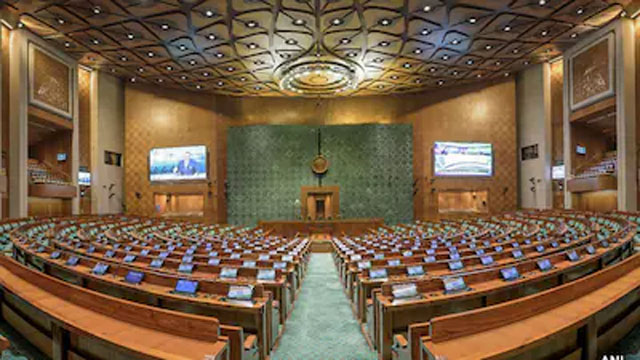
In a post on X, Rijiju said the sittings of both Houses could conclude on December 3, depending on the requirements of government business.
"The Government has requested Hon'ble Speaker, Lok Sabha and Hon'ble Chairman, Rajya Sabha to reconvene Lok Sabha on Monday, 30th November, 2026 and Rajya Sabha on Wednesday, 2nd December, 2026 respectively to transact essential Government Business," Rijiju said.
He added that the sittings could conclude on December 3, subject to the exigencies of business.
Although the government has not officially specified the legislative proposals to be taken up, the announcement has triggered speculation that the Centre may bring back legislation concerning delimitation and the implementation of 33 per cent reservation for women in the Lok Sabha and state legislative assemblies.
The development comes after Parliament's Monsoon Session remained technically open for more than 100 days. Both the Lok Sabha and Rajya Sabha were adjourned sine die on August 13, but neither House was formally prorogued, leaving the session technically unfinished.
The proposed legislative exercise is linked to the government's plan to increase the strength of the Lok Sabha to a maximum of 850 seats and facilitate the implementation of women's reservation.
The Constitution (131st Amendment) Bill, 2026, introduced in the Lok Sabha on April 16, sought to increase the maximum strength of the lower house from 550 to 850 members, including up to 815 representatives from states and 35 from Union Territories.
The proposed legislation also sought to delink the implementation of women's reservation from the requirement of conducting a future census under the existing constitutional framework.
The government had argued that the changes were necessary to facilitate the 33 per cent quota for women ahead of the 2029 Lok Sabha elections.
However, the legislation suffered a setback on April 17 after it failed to secure the required two-thirds majority in the Lok Sabha. While 298 members voted in favour, 230 voted against the bill, leaving it short of the constitutional requirement.
Following the defeat of the Constitution Amendment Bill, the government did not proceed with the two related legislations — the Delimitation Bill, 2026, and the Union Territories Laws (Amendment) Bill, 2026.
The proposed delimitation exercise was intended to redraw parliamentary and Assembly constituencies and increase legislative representation based on population figures.
The issue has also triggered a political disagreement between the ruling National Democratic Alliance (NDA) and the opposition INDIA bloc.
While the government has maintained that delimitation is necessary to reflect demographic changes and facilitate women's reservation, opposition parties have objected to linking the two exercises.
The INDIA bloc has demanded that the 33 per cent reservation for women be implemented in the existing 543-member Lok Sabha without waiting for a delimitation exercise.
With Parliament set to reconvene after an unusually long gap, the upcoming sittings are expected to draw attention to the government's legislative priorities. However, the Centre is yet to officially confirm whether the women's reservation or delimitation proposals will feature in the business scheduled for the Houses.