Daijiworld Media Network - New Delhi
New Delhi, Nov 22: India is steadily moving towards a futuristic healthcare system centred on prevention, early detection and precision medicine, as metabolic and lifestyle-related diseases increasingly affect younger populations, Union Minister of State (Independent Charge) for Science and Technology Dr Jitendra Singh said on Sunday.
Addressing THE WEEK Health Summit 2026 in the national capital, the minister said safeguarding the health of India's youth was crucial for the country's long-term development and in line with the vision of Viksit Bharat 2047.
He said healthcare was gradually moving beyond conventional treatment-based approaches towards scientific interventions, preventive strategies and advanced research at molecular and genetic levels.
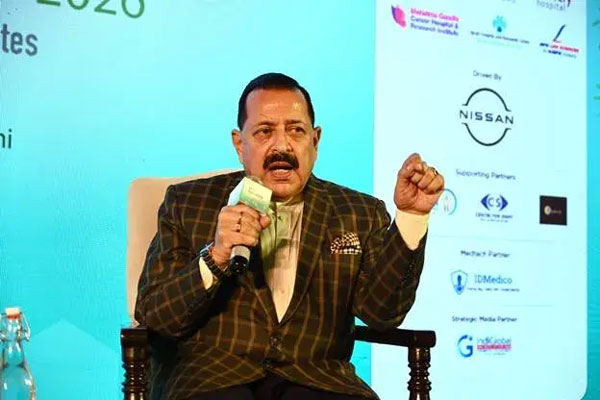
Dr Singh pointed out that metabolic disorders such as diabetes, obesity, hypertension and cardiovascular diseases were increasingly affecting younger people across the country.
He attributed the growing prevalence of these conditions to changing dietary habits, reduced physical activity and rising lifestyle-related health risks in both urban and rural areas.
"Diabetes, obesity, hypertension and cardiovascular diseases are increasingly affecting younger people, making preventive healthcare and early detection imperative," he said.
Addressing healthcare professionals, researchers and industry representatives, the minister stressed that prevention could not remain the sole responsibility of doctors and healthcare institutions. He said it required wider public participation, greater awareness and changes in individual lifestyles and behaviour.
He emphasised that early diagnosis and preventive healthcare would play a central role in tackling India's future disease burden.
Highlighting advances in medical science, Dr Singh said India was increasingly investing in research at molecular and genetic levels to improve understanding of diseases and develop targeted interventions.
He noted that developments in biotechnology, genomics and molecular science were paving the way for more precise approaches to diagnosis and treatment, strengthening the country's ability to address complex health conditions.
The minister also highlighted India's expanding global role in preventive healthcare and vaccine development.
Referring to the indigenous DNA vaccine developed by India during the Covid-19 pandemic, he said the country had continued to strengthen its vaccine research ecosystem.
He also cited the HPV vaccination initiative, under which more than 50 lakh adolescent girls have already been vaccinated, as an important step towards reducing the incidence of cervical cancer.