Daijiworld Media Network - New Delhi
New Delhi, Nov 22: The Centre is considering imposing an export duty of up to 30 per cent on non-Basmati rice, along with a minimum export price (MEP), to contain rising domestic prices. A temporary export ban is also being considered as a last resort, official sources said.
The proposed restrictions could be introduced next month. However, any export curbs are likely to be temporary, unlike the ban imposed in 2023, which remained in force for 14 months.
According to sources, the government is examining a 30 per cent export duty to reduce India's competitiveness in the international non-Basmati white rice market. Even with a 20 per cent duty, Indian rice could remain competitive against supplies from Thailand and Vietnam, while Pakistani rice would be cheaper.
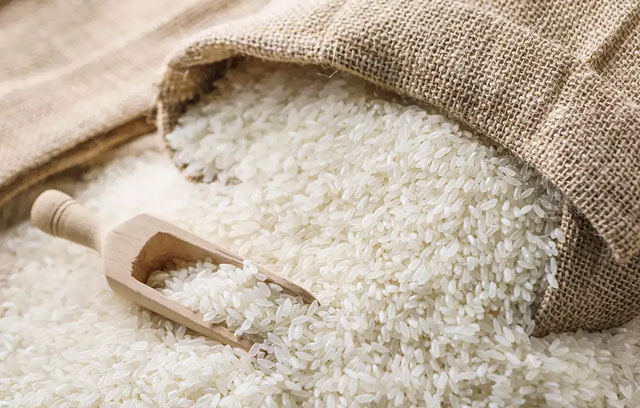
During the first week of November, India's free-on-board (FOB) price for white rice with five per cent broken grains stood at $384-389 per tonne. This was lower than Pakistan's approximately $415 per tonne, Thailand's $495 per tonne and Vietnam's $480 per tonne, sources said.
The move comes amid rising food inflation. Food inflation increased to 8.94 per cent last month from 7.74 per cent in September. Rice inflation has also been steadily climbing, reaching 12.51 per cent in October, compared with 8.27 per cent in September, 5.89 per cent in August, 3.30 per cent in July and 1.72 per cent in June.
Rice inflation was particularly high in southern states during October, touching 43.2 per cent in Karnataka, 25.7 per cent in Andhra Pradesh, 24.6 per cent in Telangana, 17.4 per cent in Tamil Nadu and 9.4 per cent in Kerala.
Strong international demand and improved market opportunities have also boosted India's rice exports. Total non-Basmati rice exports, including paddy and seed, rose seven per cent to 8.84 million tonnes during April-October of the current fiscal, compared with 8.28 million tonnes in the corresponding period last year.
Shipments of parboiled rice declined five per cent to 4.87 million tonnes, while white rice exports increased more than 18 per cent to 2.82 million tonnes. Broken rice exports surged 74 per cent to 0.98 million tonnes.
India exported 15.04 million tonnes of non-Basmati rice worth $5.87 billion in the 2025-26 fiscal.
An official source said an inter-ministerial panel had discussed several options but decided against imposing a blanket export ban as the first measure. Restrictions aimed at reducing domestic prices would instead be introduced in a calibrated manner, depending on price movements.
As part of efforts to improve domestic availability, the Centre on November 6 doubled the quantity of rice offered through e-auctions under the Open Market Sale Scheme (Domestic) for 2026-27 to 50 lakh tonnes. Around 25 lakh tonnes had been sold during the first seven months up to October.
The government has also asked cooperatives NAFED, NCCF and Kendriya Bhandar to expand their presence, particularly in southern states, to sell subsidised rice under the Bharat Rice brand.
Traders, retailers, wholesalers, processors and millers have been directed to declare their stocks of Basmati, premium non-Basmati, other non-Basmati, parboiled and broken rice, as well as paddy, separately every Friday.
Andhra Pradesh, Karnataka, Kerala, Tamil Nadu and Telangana have also been permitted to impose stock limits on rice and paddy if required.
Despite these measures, the all-India average retail price of rice on November 21 was more than 11 per cent higher than a year earlier, raising expectations of further government intervention.
Adding to the concerns, paddy cultivation during the 2026-27 Kharif season declined by around four per cent to 42.68 million hectares due to deficient rainfall in several states. While the Centre is yet to release its first production estimates, trade and industry estimates put Kharif rice output at 112-115 million tonnes. India had produced 124.76 million tonnes during the 2025-26 Kharif season.
India had banned broken rice exports and imposed a 20 per cent export duty on paddy, husked brown rice and non-Basmati white rice in September 2022. In July 2023, exports of non-Basmati white rice, excluding parboiled rice, were prohibited. A 20 per cent export duty on parboiled rice and an MEP on Basmati rice were introduced in August 2023.
Most restrictions, including the MEP, were lifted during September-October 2024. The ban on broken rice exports, however, continued until March 2025 before being withdrawn.