Daijiworld Media Network – New Delhi
New Delhi, Nov 19: Islam is projected to overtake Christianity as the world's largest religion by 2035, driven primarily by higher fertility rates among Muslim women, according to projections by the Pew Research Center.
The study estimates that the global Muslim population will reach 2.57 billion by 2035, surpassing the Christian population, which is projected to stand at 2.52 billion. In 2020, Christians numbered around 2.27 billion, compared with 2.02 billion Muslims worldwide.
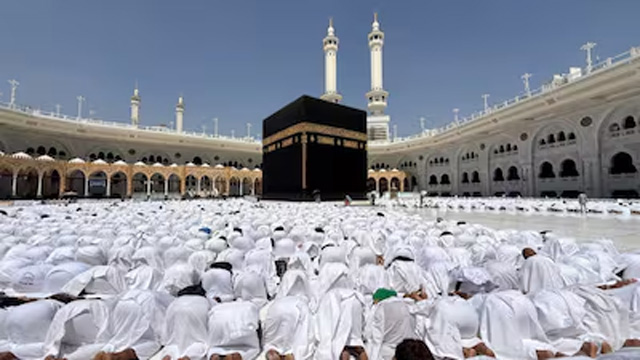
Higher birth rates, rather than religious conversions, are expected to be the main factor behind this demographic shift. Between 2020 and 2025, Muslim women had an average of 3.1 children, compared with 2.5 among Christian women and 1.6 among women belonging to other religious groups.
Pew senior demographer Conrad Hackett attributed the trend primarily to differences in fertility rates. The replacement fertility rate is generally considered to be 2.1 children per woman.
If current trends continue, the number of Muslims worldwide could exceed 3.6 billion by 2070, while the Christian population is expected to remain just below 3 billion.
The projections, covering the period from 2020 to 2070, take into account fertility rates, age profiles, migration patterns and changes in religious identity.
While the global population is expected to grow by 29% during this period, the Muslim population could increase by 80%, compared with 30% growth among Christians. Although Hindu and Jewish populations are also expected to increase in absolute numbers, their shares of the global population are projected to decline. The Buddhist population, meanwhile, is expected to decrease both in numbers and proportion.
Much of the projected growth in Christian and Muslim populations is expected to take place in sub-Saharan Africa, where relatively high fertility rates and rising life expectancy are contributing to population expansion.
By 2070, more than half of the world's Christians are expected to live in sub-Saharan Africa. The Democratic Republic of Congo is projected to overtake the United States as the country with the largest Christian population, with its Christian population expected to reach 270 million.
In contrast, Europe's population is projected to decline by 17% by 2070. The number of Christians in the region could fall by a third, from 505 million in 2020 to 324 million. The Muslim share of Europe's population, however, is expected to rise from 6% to 13%.
The United States and Canada are also expected to witness changes in their religious composition. Christianity, which currently accounts for around 62% of the US population, is projected to lose its majority status within the next four decades. In Canada, Christians could account for less than half the population by 2030.
The growing number of people identifying as atheists, agnostics or having no religious affiliation is another major factor behind these changes. This group, commonly referred to as the religiously unaffiliated, is projected to account for 41% of the US population by 2070.
Meanwhile, Pakistan is projected to have the world's largest Muslim population by 2070, followed by India, Nigeria and Indonesia, which currently has the largest Muslim population.
Pew also estimated that Muslim mothers gave birth to around 252 million babies between 2020 and 2025, compared with 208 million among Christian mothers. Muslims are the only major religious group projected to record an increase in births in the coming decades.
Researchers have cautioned against interpreting the projections as a religious contest. Alan Cooperman, Pew's director of religion research, said the growth of Muslim populations was not necessarily taking place at the expense of Christians, as most population increases were expected in countries where these religions already had a majority.
Gina Zurlo, a senior researcher at Harvard Divinity School, emphasised the importance of improving relations between Christian and Muslim communities through greater interreligious education and personal interaction.
The projections highlight how differences in fertility rates, population age structures and religious affiliation could reshape the global religious landscape over the next five decades.