Daijiworld Media Network - Baghpat
Baghpat, Nov 16: In an unusual departure from traditional customs, an 80-year-old man in Uttar Pradesh's Baghpat district organised his own 'terahvin' ceremony while still alive, bringing together around 900 people for a community feast.
Chaudhary Baljor Singh, a resident of Johri village, hosted the gathering at his home on Sunday. The event included traditional rituals, a havan, a community meal and a 'pagdi' ceremony during which he symbolically handed over family responsibilities to his 10-year-old grandson, Mukul.
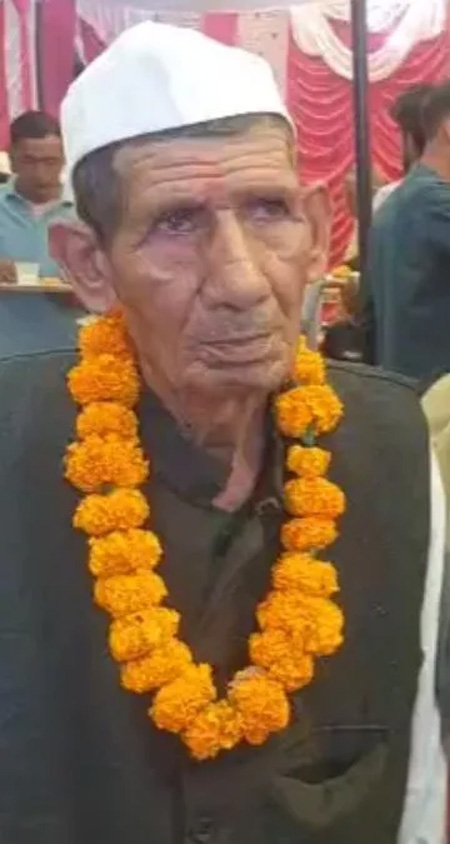
A terahvin is traditionally observed 13 days after a person's death, when relatives and members of the community gather to offer prayers and pay their respects. However, Baljor Singh decided to conduct the ceremony during his lifetime so that he could personally oversee the arrangements and participate in the rituals.
Explaining his decision, the octogenarian said he wanted to complete the arrangements himself rather than leave the responsibility to his family after his death. He also did not want his relatives to face criticism over the arrangements. "I am doing my own work myself," he said.
The programme began with a havan in the morning, followed by the traditional pagdi ceremony. Baljor Singh personally handed over his pagdi to his grandson Mukul, symbolising the transfer of family responsibilities to the next generation.
Baljor Singh has three daughters and one grandson. His family members, relatives and several villagers attended the gathering. The feast was organised on a large scale, with cooks preparing traditional dishes, including puris, raita, two varieties of vegetables and laddoos.
Uttar Pradesh Minister of State KP Malik was among those who attended the event, which also saw the participation of several members of the Chaudhary community.
Unlike a conventional terahvin associated with mourning, the gathering turned into an occasion of celebration and togetherness, allowing Baljor Singh to meet relatives, friends and community members and personally oversee the traditional ceremonies.