Daijiworld Media Network - Africa
Africa, Nov 12: The Ebola outbreak in Africa has raised fresh global health concerns, with the Democratic Republic of Congo (DRC) reportedly recording more than 11,000 infections and over 5,300 deaths. As health authorities continue efforts to contain the spread, concerns have emerged about the possibility of the virus reaching other countries, including India.
Amid these concerns, Dr Randeep Guleria, Chairman of the Institute of Internal Medicine, Respiratory and Sleep Medicine at Medanta and former director of AIIMS, has explained how Ebola spreads, its symptoms and the precautions people should take.
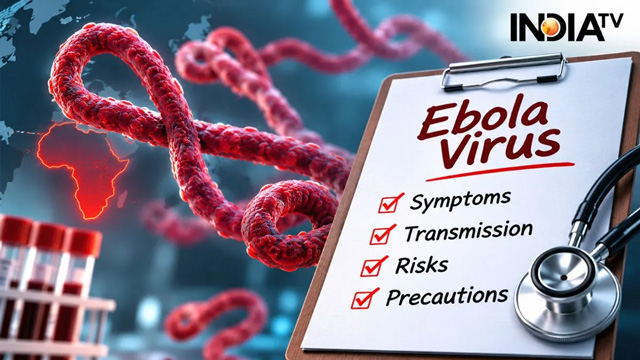
In an awareness video shared by Medanta, Dr Guleria said there was no immediate reason for people in India to panic but stressed the importance of vigilance, screening and infection control.
He explained that Ebola does not spread through the air like Covid-19. Instead, transmission primarily occurs through direct contact with the bodily fluids and secretions of an infected person.
Dr Guleria clarified that Ebola does not spread simply through coughing or being in close proximity to an infected person. Transmission generally becomes possible after symptoms develop, when another person comes into contact with infected bodily fluids.
He said the incubation period usually ranges from two to 21 days and that infected individuals do not transmit the virus during this period. The possibility of Ebola developing into a pandemic similar to Covid-19 is considered very low, although countries must continue monitoring travellers arriving from affected regions.
Ebola is a zoonotic infection, meaning it can spread from animals to humans. The virus has predominantly been reported in Central and Western Africa and can involve non-human primates. Direct contact with infected animals or people can result in transmission.
Healthcare workers and family members caring for infected patients are particularly required to follow strict protective measures.
Referring to an earlier outbreak in 2014, Dr Guleria also highlighted that the virus could persist in certain bodily secretions even after recovery. He cited medical literature documenting the detection of Ebola in the semen of a recovered patient for up to three months, as well as its presence in tears. This underlines the importance of continued precautions after recovery.
The initial symptoms of Ebola may resemble those of several other infections. They include fever, body aches, headache, sore throat, abdominal pain, diarrhoea and abdominal cramps. As the disease progresses, patients may develop more serious complications.
In advanced stages, Ebola can cause confusion, altered sensorium and internal or external bleeding. Patients may experience bleeding from the mouth, coughing up blood, vomiting blood or blood in their stools. Skin rashes and spots may also appear.
Explaining the severity of the infection, Dr Guleria said the virus could damage blood vessels and affect the body's clotting mechanism. In some cases, patients may develop disseminated intravascular coagulation (DIC), a serious condition involving abnormal blood clotting. Severe cases can progress to acute respiratory distress syndrome and respiratory failure.
Dr Guleria said Ebola could have a case fatality rate of up to 50 per cent. However, recovery is possible with appropriate supportive medical care. Some survivors may continue to experience complications such as arthritis, joint pain, eye problems and persistent body aches.
Emphasising India's preparedness, he called for continued screening of passengers arriving from affected regions, particularly Central and Western Africa, along with strict infection control practices.
"We need to be vigilant, we need to do good screening for people coming from Central and Western Africa and we need to follow infection control practices," he said.
The outbreak in the Democratic Republic of Congo continues to pose challenges for health authorities. Armed conflict, limited access to healthcare, poor road connectivity and mistrust among local communities have complicated efforts to contain the infection.
Dr Guleria's message is that India should remain alert without creating unnecessary panic. Awareness of the transmission routes, early identification of symptoms and appropriate infection control measures remain essential in managing the risk.