Media Release
Pilar, Nov 12: Solidarity Forum of The Society of Pilar in collaboration with Sadbhav and the Conference of Religious India (CRI), Goa and Daman organised Samvaad – A Dialogue of Theological Exchange on November 11 at Br Albert Hall, Pilar Seminary, Pilar.
The interreligious theological dialogue focused on the theme, “The Theology of Creation, Stewardship, and Human Responsibility.” It brought together speakers from Hindu, Muslim and Christian traditions to explore humanity’s relationship with the natural world from different religious and theological perspectives.
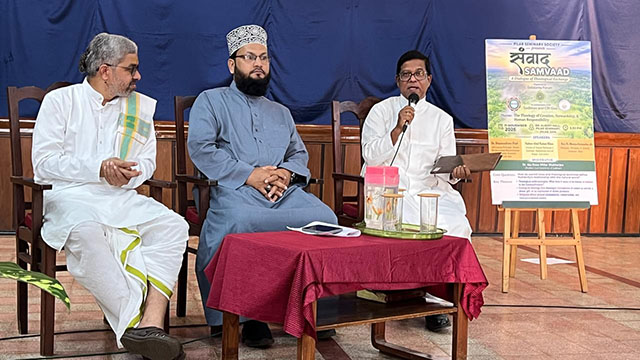
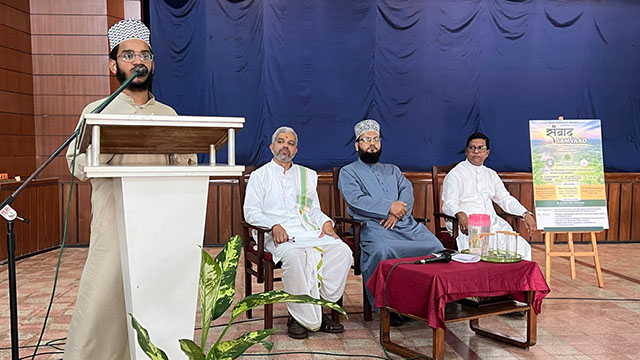
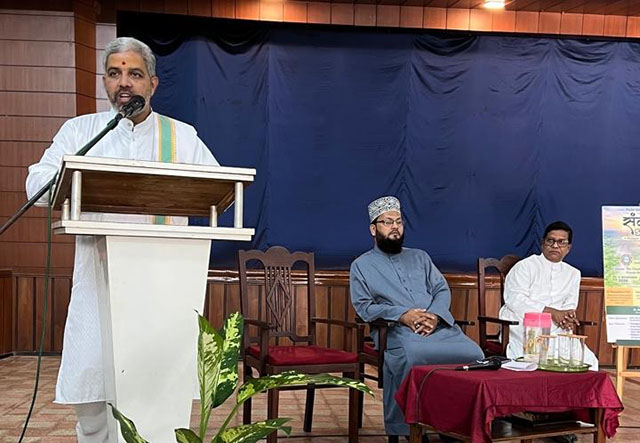
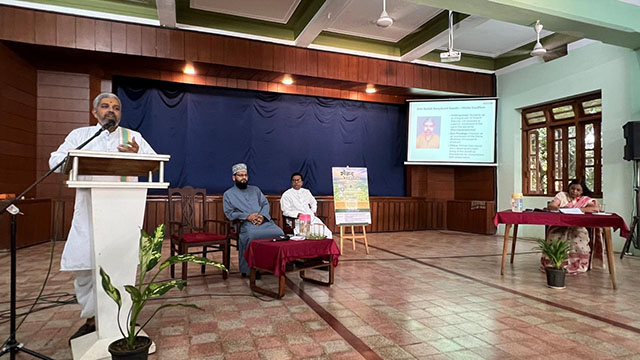
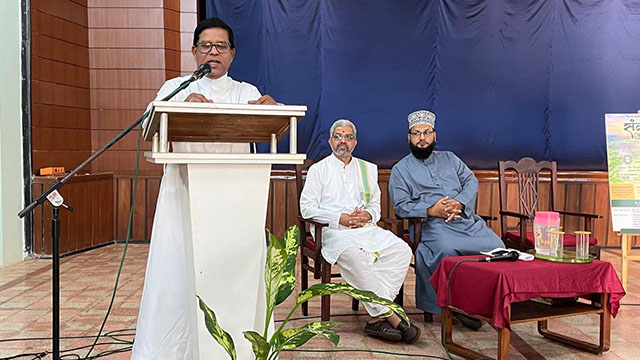
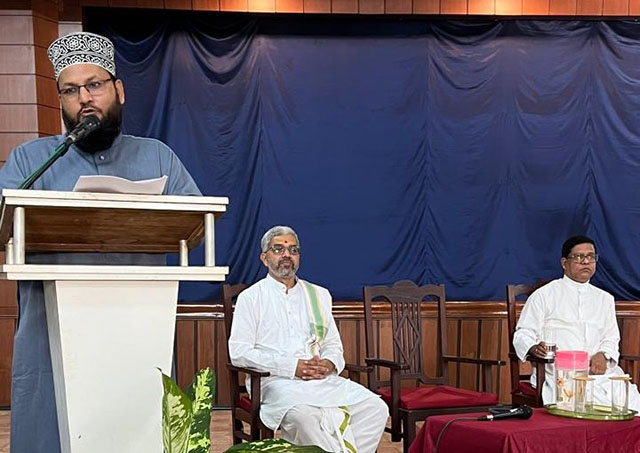
The speakers included Satish Suryakant Gaude, assistant professor of Sanskrit at Swami Brahmanand Mahavidyalaya, Tapobhoomi, Kundaim, Ponda; Hafeez Abul Kalam Khan, Imam of Masjid Mehboob E Subhani, Makhdoom Ashraf Nagar, Cortalim; and Fr Mateus Fernandes SFX, Manager of Miracles High School, Sanguem.
Dr Ida Rose Miller Mukherjee, member of the Core Committee of Sadbhav, moderated the dialogue.
The central question guiding the exchange was: “How do sacred texts and theological doctrines define humanity’s relationship with the natural
Presenting the Hindu perspective, Satish Suryakant Gaude highlighted the significance of the five elements that constitute the universe and sustain life. He emphasised the need for humanity to remain connected with and preserve these elements, warning that their neglect would ultimately threaten human life. He stressed that the responsibility for protecting and conserving nature rests with everyone and requires collective effort. Referring to the principle of Vasudhaiva Kutumbakam (the world is one family), he called for unity and collective responsibility in maintaining the balance of nature, stating that humanity must work together to safeguard the natural world.
Presenting the Islamic perspective, Hafeez Abul Kalam Khan emphasised that protecting and preserving the Earth is a shared responsibility of all humanity, transcending religious and community boundaries. He stressed that human beings are not the owners of the Earth but its stewards, entrusted with the responsibility of caring for and safeguarding the natural world. He called for collective efforts across religions and communities to preserve the environment, stating that “it is the need of humanity that we take care of it.”
Presenting the Christian perspective, Fr Mateus Fernandes SFX emphasised that creation is God's gift and humanity is entrusted with the responsibility of protecting it through responsible stewardship rather than exploitation. Referring to Pope Francis' encyclical Laudato Si', he highlighted the interconnectedness of human beings and nature, warning that consumerism and excessive consumption contribute to ecological destruction, particularly affecting the poor and vulnerable.
He called for practical measures such as conserving water, reducing plastic use, protecting trees and avoiding food wastage. Urging schools, parishes and religious communities to become models of ecological responsibility, he stressed: “The earth is not our personal property; it is God's gift entrusted to us.”
In her concluding remarks, Dr Ida Rose Miller Mukherjee, member of the Core Committee of Sadbhav and moderator of the session, highlighted the complementary roles of science, politics and theology in addressing the ecological crisis. She observed that while science explains what is happening and politics determines the rules to be followed, theology provides the deeper reason why humanity must care for creation.
Emphasising the need for a change in human attitudes and lifestyles, she called for a shift from consumerism to care and from greed to gratitude. She stressed that addressing the ecological crisis requires not merely external changes but a transformation in the way human beings relate to the natural world.
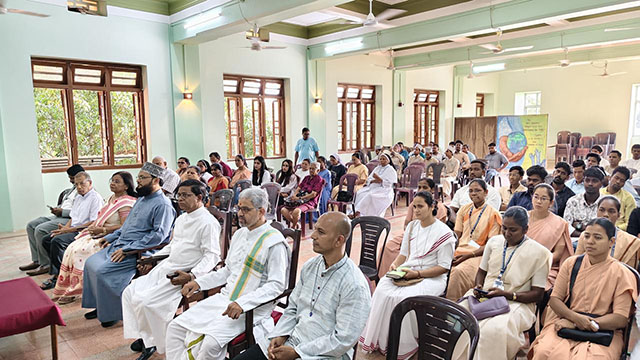
Participants came in from the Christian tradition belonging to the Pilar Seminary, Palotine Seminary, Assagao, Redemptorist Seminary, Varca, and Nuns from Institute of Mater Dei, Old Goa. From the Hindu tradition there were students from Swami Brahmanand Mahavidyalaya, Shri Kshetra Tapobhoomi Kundaim, Ponda. From the Muslim tradition there were students from the Madrasa-e-Ashrafiya, Verna, who interacted with the panelists. Welcoming the panelists and the participants, Fr Elvis Fernandes SFX, Convenor of Solidarity Forum and Sadbhav stressed on the meaning of Inter-religious dialogue and different forms of Inter-religious dialogue.
A verse from the Prithvi Sukta (Atharva Veda 12.11.12), Surah Al- Rahman 55: 7-9) and Ps 104: 10-14,24 were presented by the representatives of different faiths.
Scholastic Agustine Coelho SFX, thanked all. Jisha Ponnachan who anchored the programme concluded with a prayer.