Daijiworld Media Network - Washington
Washington, Nov 10: US President Donald Trump has urged the Senate to expedite the confirmation of 161 pending administration nominations, including 25 federal judges, as Republicans prepare to lose control of both chambers of Congress following the Democrats' sweeping victories in the November 3 midterm elections.
In a post on his social media platform Truth Social, Trump called on senators to clear the pending nominations, stressing the importance of filling vacancies across the federal administration and judiciary.
"Very important for the U.S. Senate to confirm all of our pending 161 Nominations, including 25 Federal Judges. Thank you for your attention to this matter! President DONALD J. TRUMP," he wrote.
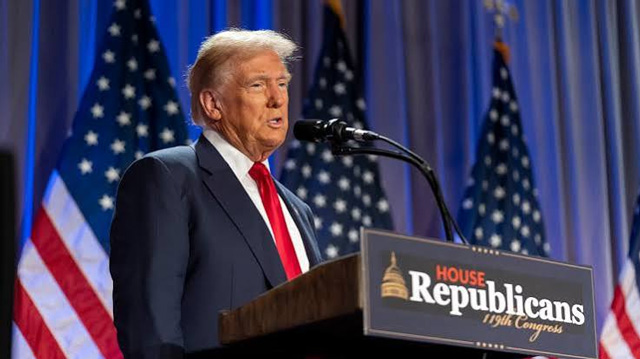
Trump's appeal comes at a politically significant moment, with Democrats securing majorities in both the House of Representatives and the Senate in what has been described as a historic 'blue wave'. The election results mark a major setback for Republicans and are expected to reshape the political landscape in Washington when the new Congress takes office in January 2027.
However, Republicans will retain control of both chambers during the outgoing Congress's remaining session, commonly known as the lame-duck session. This gives the Trump administration a limited window to advance pending nominations before Democrats assume control on January 3, 2027.
The confirmation of presidential nominees is particularly important because the US Constitution requires Senate approval for appointments to key executive positions, ambassadorships and federal judicial offices. Under Article II, Section 2, the president exercises the power of nomination, subject to the Senate's advice and consent.
The incoming Democratic majorities are expected to exercise greater scrutiny over Trump's appointments and administration policies. Democrats have indicated their intention to pursue investigations, examine federal expenditure, scrutinise executive decisions and advance legislative proposals aimed at reversing or modifying certain Republican policies.
Nevertheless, Democratic control of Congress will not give the party unrestricted authority to enact legislation. Trump retains the constitutional power to veto bills passed by both chambers, providing the administration with an important safeguard against legislative measures it opposes.
Under Article I, Section 7 of the US Constitution, legislation passed by the House and Senate must be presented to the president before it can become law. The president has 10 days, excluding Sundays, to sign a bill, return it to Congress with objections or allow it to become law without signing it, provided Congress remains in session.
If Trump exercises a regular veto, the bill is returned to the chamber where it originated, accompanied by his objections. Congress can still enact the legislation by overriding the veto, but this requires a two-thirds majority in both the House and Senate.
Such a requirement presents a significant challenge for Democrats, who, despite their incoming majorities, do not have the numbers needed for a veto override. Historically, presidential veto overrides have been relatively uncommon, making the power an important instrument in the balance of power between the executive and legislative branches.
The president also has the option of exercising a pocket veto. This happens when a bill is not signed within the constitutionally prescribed 10-day period and Congress adjourns in a manner that prevents its return. In such circumstances, the bill fails to become law and cannot be overridden through the normal veto-override process. Lawmakers would have to introduce and pass the legislation again.
Apart from formal vetoes, the White House can also influence the legislative process through advance warnings that the president intends to reject particular bills. The administration can issue Statements of Administration Policy (SAPs), communicating its position on proposed legislation and signalling potential opposition before a measure reaches the president's desk.
Meanwhile, congressional oversight is expected to become another major area of confrontation between the incoming Democratic leadership and the Trump administration.
Democrats could use their control of congressional committees to conduct hearings, issue subpoenas, seek official documents and investigate federal agencies, government expenditure and executive decisions.
These oversight powers would allow lawmakers to examine the administration's functioning and hold officials accountable even when they lack the numbers required to overcome a presidential veto.
With Democrats preparing to take charge of Congress in January, the remaining weeks of Republican control have become crucial for Trump's administration, particularly in securing confirmations for pending appointments and advancing its legislative priorities before the political balance of power shifts.