Daijiworld Media Network - Washington
Washington, Nov 7: The United States carried out fresh limited military strikes on Iran's air defence systems on Friday, even as Qatar stepped up diplomatic efforts to bring Washington and Tehran closer to negotiations over Iran's nuclear programme.
US President Donald Trump described the latest military action as "minor", saying American forces had destroyed an Iranian anti-aircraft system shortly after it was built.
"They knocked out -- they built a little bit of an anti-aircraft device and we knocked it out in about 15 minutes, maybe five," Trump told reporters after arriving in West Palm Beach, Florida, on Friday evening.
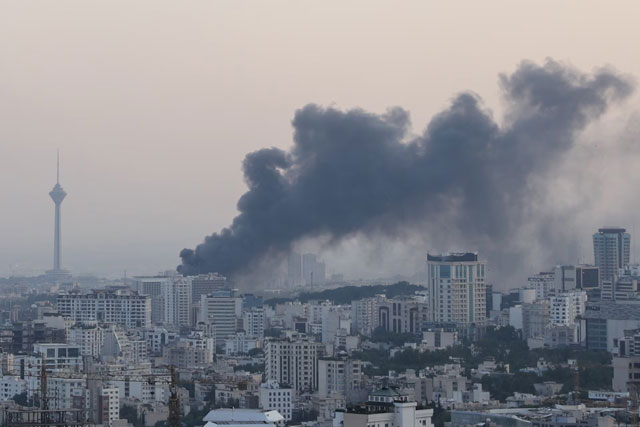
Iranian state media reported hearing two explosions in the Suza area of Qeshm Island, located in the strategically important Strait of Hormuz, a major route for global oil shipments.
The US military had also reported carrying out what it described as defensive strikes on Monday. Explosions were heard on Qeshm and Hengam islands, as well as in the nearby mainland area of Bandar Abbas.
Friday's strikes were the first since Trump's Republican Party suffered a major setback in Tuesday's US midterm elections. Voter dissatisfaction over the administration's handling of the conflict and rising fuel prices contributed to the party's electoral losses. The war has affected several sectors of the global economy.
In the days following the elections, Trump has alternated between threatening to "destroy" Iran and suggesting that an agreement to end the conflict could be close.
Meanwhile, diplomatic efforts gathered momentum after officials from Iran and Qatar confirmed that Tehran was reviewing proposals presented by Qatar to address differences with Washington over Iran's nuclear programme.
However, an official familiar with the discussions said Iran was not prepared to negotiate its nuclear activities with the Trump administration until the United States agreed to several conditions Tehran wants included in any ceasefire agreement. The officials spoke anonymously because they were not authorised to comment publicly on the negotiations.
Iran has demanded an end to the US blockade of its ports, the lifting of sanctions, the release of frozen Iranian assets, compensation for war-related damage and an end to hostilities across the region, including Israeli military operations in Lebanon.
Regional officials said Qatar had presented a possible interim agreement involving confidence-building measures over two days. Under the proposal, the United States would lift its blockade and release some frozen Iranian funds. In return, Iran would allow International Atomic Energy Agency inspectors access to nuclear facilities previously bombed by the United States and Israel.
On the second day, Iran would reopen the Strait of Hormuz under a modified arrangement reportedly agreed upon with Oman but not yet approved by Washington. The mechanism would remain temporary until a permanent agreement involving other Gulf countries could be reached.
The proposed measures would pave the way for wider negotiations on Iran's stockpile of highly enriched uranium and other aspects of its nuclear programme. According to the International Atomic Energy Agency, Iran possesses 440.9 kg of uranium enriched to 60 per cent purity, close to the 90 per cent level generally associated with weapons-grade material. Tehran maintains that its nuclear programme is peaceful.
Adding another dimension to the developments, the US Central Command announced on Friday that Washington was offering a reward of up to USD 20 million, along with possible relocation, for information about Iran's nuclear programme. The offer covers information about facilities, equipment, personnel, including members of the scientific community, and the movement of related materials. The announcement directed informants to the US State Department's Rewards for Justice programme.
Diplomatic contacts have also intensified across West Asia. US Defence Secretary Pete Hegseth spoke with Qatar's Defence Minister Sheikh Saoud bin Abdulrahman Al Thani on Friday about regional developments. Qatar also confirmed a separate telephone conversation between Trump and the Qatari emir on efforts to reduce tensions.
Iranian Foreign Minister Abbas Araghchi held discussions with his Iraqi and Tunisian counterparts. During his conversation with Iraqi Foreign Minister Fuad Hussein, Araghchi outlined Tehran's position on resuming negotiations with Washington, according to Iraq's News Agency.
Egyptian Foreign Minister Badr Abdelatty, who has spoken twice with Araghchi this week, urged both sides to demonstrate flexibility and pursue compromise solutions to prevent another escalation. He also spoke with UAE Foreign Minister Abdullah bin Zayed Al Nahyan, emphasising the importance of political negotiations to avert another military confrontation.
Despite the renewed diplomatic activity, Friday's strikes underline the continuing military tensions between Washington and Tehran as efforts to find a negotiated settlement remain uncertain.