Daijiworld Media Network - Washington
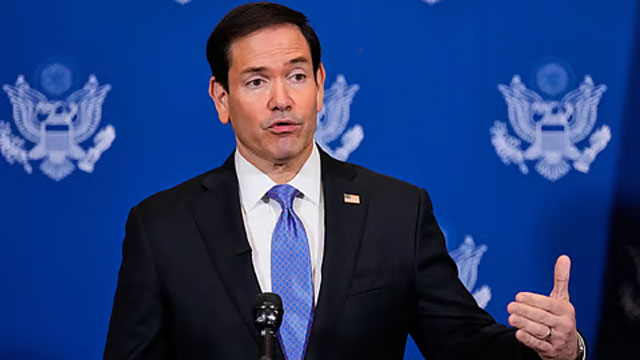
Washington, Oct 18: US President Donald Trump wants a 60-day period to assess the potential impact of imposing sanctions on Russia and tariffs on countries purchasing Russian oil, Secretary of State Marco Rubio has said, explaining the rationale behind the temporary waivers granted under the Graham Act.
Rubio made the remarks on Saturday evening while responding to questions ahead of his departure for a week-long tour of Uzbekistan and India. He is scheduled to visit India on Monday.
“I think the president wants to take the 60-day period of time to sort of analyse what imposing both sanctions and tariffs will mean to the global economy, and even to the US economy,” Rubio said.
On Friday, Trump waived key provisions of the Sanctioning Russia and Iran Act, also referred to as the Graham Act, which authorised punitive tariffs on countries purchasing Russian oil. The decision provided temporary relief to India, which continues to import a substantial quantity of energy from Russia.
According to the executive order signed by Trump, the waivers will remain in effect until the President or the Secretary of State, in consultation with the Secretary of the Treasury and the US Trade Representative, determines that further action is appropriate.
Rubio said the provisions allowing waivers were included when the legislation was passed to enable the administration to assess changing international circumstances and their potential impact on energy supplies and the global economy.
He cited several factors that needed to be considered, including pressure on global energy supplies amid the conflict involving Iran, Houthi attacks in Saudi Arabia and the ongoing Russia-Ukraine war.
“All of that has to be taken into account and weighed against each other,” Rubio said, indicating that the administration wanted to evaluate the broader consequences before deciding on the next course of action.
Referring specifically to India, the US Secretary of State said the country had voluntarily diversified its energy sources but continued to depend significantly on Russian supplies because shifting from one source to another could not be accomplished overnight.
“Then you've got countries like India, for example, that have voluntarily diversified their energy portfolio, but are still getting a substantial amount of energy from Russia because it's hard to pivot from one day to the next,” he said.
Rubio described India as an important ally and partner of the United States, adding that Trump needed time to examine the competing economic and geopolitical considerations before determining the appropriate combination of sanctions and tariffs.
The temporary waivers offer India some relief from the threat of additional trade penalties linked to its purchases of Russian oil. However, the administration's decision on whether to extend, modify or withdraw the relief will depend on its assessment during the period.
Rubio's upcoming visit to India is expected to provide an opportunity for discussions on bilateral relations and other issues of mutual interest, amid continuing international uncertainty over energy security, trade measures and the conflict involving Russia and Ukraine.