Daijiworld Media Network - Panaji
Panaji, Oct 13: The Goa government, through its Department of Science and Technology, has proposed a Geographical Indication (GI) tag for the traditional coconut-leaf broom, locally known as Muugdyachi Saaran, Vhiranche Saaran or Zhaadu, to preserve the state's indigenous craftsmanship and cultural heritage.
The proposal, moved in August, seeks to recognise the broom's distinctive identity, traditional manufacturing techniques and close association with Goa's cultural and ecological landscape. The handcrafted implement remains widely used in Goan households, particularly for cleaning outdoor areas.
Made from the sturdy midribs of coconut palm leaflets, the broom is an example of a traditional household product manufactured using locally available natural materials. Its production involves manually stripping, trimming and drying the midribs, locally known as vhir or hir, before aligning and binding them tightly with coir rope made from coconut husk fibre.
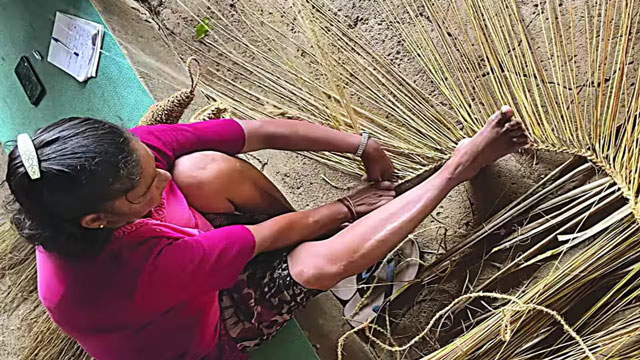
According to the proposal, a typical broom contains around 100 to 120 midribs, each measuring between 0.9 and 1.2 metres. It weighs approximately 250 to 400 grams.
Unlike factory-made synthetic alternatives, Muugdyachi Saaran is entirely handcrafted. Its sturdy construction makes it suitable for sweeping both wet and dry surfaces, especially damp outdoor spaces where leaves, soil and other debris tend to accumulate.
“The Goan traditional coconut broom, locally known as Muugdyachi Saaran or Vhiranche Saaran or Zhaadu, is a highly sustainable and eco-friendly household implement that reflects the ingenuity of Goan craftsmanship,” the proposal stated.
The broom's durability is another feature highlighted in the application. Depending on usage and maintenance, it can last between three and five months under heavy outdoor use, while careful handling and proper storage can extend its lifespan to nearly a year.
Its biodegradable composition also makes it an environmentally friendly alternative to synthetic cleaning products, as it is made from natural materials that are readily available in Goa.
The proposal emphasises that the broom's significance extends beyond its everyday household use. It is closely associated with traditional beliefs, ritual cleanliness and agrarian life in Goan society.
“This widespread presence reflects its deep cultural integration, as Muugdyachi Saaran is not only a household utility but also a symbolic craft tied to ritual purity, agrarian life, and traditional beliefs in Goan society. Its preparation from locally available coconut palms further anchors it to the geographical and ecological identity of Goa,” the proposal stated.
The Department of Science and Technology said that recognition through a GI tag could help preserve the traditional craft and increase awareness of Goa's distinctive cultural heritage.
A Geographical Indication tag identifies products whose specific qualities, reputation or characteristics are linked to a particular geographical area. Such recognition can help protect a product's identity and distinguish it from similar products made elsewhere.
If granted, the proposed GI recognition could provide greater visibility to Goa's traditional coconut-leaf broom and highlight the skills of the people who continue to make it by hand. It would also recognise the connection between the craft, the state's coconut-growing landscape and generations of traditional knowledge.