Daijiworld Media Network - New Delhi
New Delhi, Sep 17: The Union Ministry of Health and Family Welfare has issued an advisory clarifying that stem cell treatments can be offered as standard care only for diseases and indications specifically approved by the Ministry.
The advisory, dated September 16, 2026, has been issued to States and Union Territories that have adopted the Clinical Establishments (Registration and Regulation) Act, 2010.
It specifically states that the therapeutic use of any type of stem cell for Autism Spectrum Disorder (ASD) must remain restricted to duly approved clinical trials. Unproven stem cell interventions should not be offered as routine, standard or commercial clinical services.
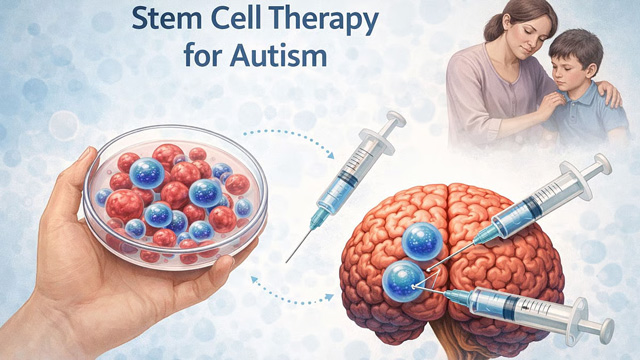
The Ministry’s advisory distinguishes established stem cell transplantation from experimental or unproven therapies. It reiterates that stem cell treatments may be used as standard care only for approved conditions and indications.
The clarification comes in the context of a January 30, 2026, Supreme Court judgment in Yash Charitable Trust & Ors. v. Union of India.
Dr Prashant Mehta, Programme Head – BMT, CAR-T and Cellular Therapy and Comprehensive Cancer Care at Amrita Hospital, Faridabad, said the advisory draws an important distinction between established stem cell transplantation and experimental treatments.
He noted that stem cells are not inherently unproven, citing haematopoietic stem-cell transplantation as an established treatment for selected blood cancers and serious haematological disorders.
The concern, he said, arises when stem cell therapy is promoted for conditions where its effectiveness and long-term safety have not been adequately established through rigorous clinical trials.
Regarding autism, Dr Mehta said the available evidence remains preliminary and varied. He referred to a randomised controlled trial involving 32 children that demonstrated the feasibility of administering intrathecal bone-marrow stem cells.
He also cited systematic reviews highlighting limitations such as small sample sizes, differences in cell types and doses, varying methods of administration and inadequate long-term follow-up.
Dr Mehta further referred to a 2026 randomised placebo-controlled trial involving 34 children. According to him, the study reported feasibility in a selected subgroup but did not establish clinical efficacy. He said the limited sample size and short follow-up underline the need for further research rather than routine treatment.
Dr Mehta said the advisory would help legitimate research progress through properly designed and ethically approved clinical trials while protecting patients and families from interventions marketed without sufficient evidence.
“In cellular therapy, scientific promise must never be confused with demonstrated clinical benefit,” he said, adding that informed consent, regulatory oversight and patient safety must remain central to innovation.
The September 16 advisory places stem cell use for autism within the clinical-trial framework and reinforces that such interventions can be provided as standard care only for conditions and indications approved by the Ministry.