Daijiworld Media Network - Aden
Aden, Sep 13: Fighting between Yemen's Saudi-backed government forces and Iran-aligned Houthi rebels intensified on Saturday, with government forces reporting strikes on Houthi positions in the Red Sea port city of Mocha as the number of civilians displaced by the renewed conflict surged to 76,000.
Yemen's government news agency Saba reported that government forces had destroyed Houthi vehicles and weapons and killed fighters near the port of Mocha. A military spokesman said Houthi positions on the outskirts of the city were also targeted.
The Houthis, meanwhile, claimed that Saudi aircraft had carried out 129 airstrikes over areas under their control during the previous 48 hours.
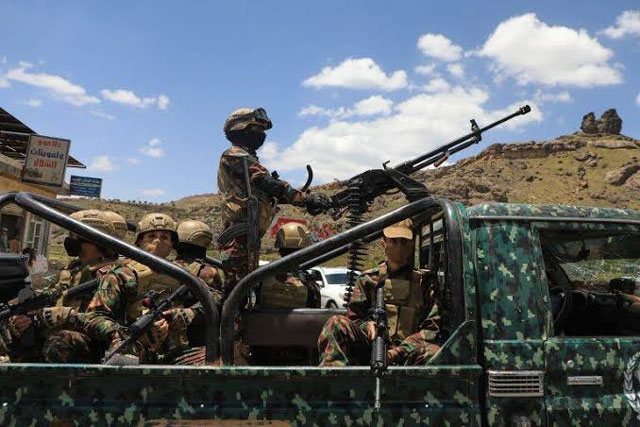
The latest fighting follows a week-long Houthi offensive that resulted in the group capturing the remaining sections of Yemen's Red Sea coast and several strategically important islands, strengthening its control over the Bab al-Mandab Strait at the southern entrance to the Red Sea.
The developments have added another major flashpoint to the wider Middle East conflict. The Red Sea has become increasingly important for Saudi Arabia's oil exports after Iran largely disrupted shipping through the Persian Gulf by imposing a blockade on the Strait of Hormuz.
The Houthis have also declared their own maritime blockade targeting Saudi Arabia's Red Sea ports.
US news website Axios reported that Saudi Crown Prince Mohammed bin Salman had twice called US President Donald Trump last week seeking American strikes against the Houthis. Trump reportedly rejected the request.
Following the report, Trump acknowledged on Saturday that he had spoken with the de facto Saudi leader. However, he also said the Houthis had contacted the United States and “don't want to fight with us”.
Trump did not say whether Washington would take military action against the Houthis, but told reporters that “everything's gonna work out fine and dandy” in the region.
Yemen's civil war began in 2014 when the Houthis seized the capital, Sanaa. The conflict had largely remained dormant following a ceasefire in 2022 but erupted again in July, drawing Yemen deeper into the wider Middle East war.
Saudi Arabia intervened in the Yemeni conflict in 2015 on the side of the internationally recognised government and continues to support the Aden-based administration.
Saudi authorities on Saturday issued two brief alerts warning of possible attacks in southern regions bordering Yemen.
The renewed fighting has triggered a fresh wave of displacement in a country already devastated by years of war.
The Houthi capture of Mocha on Thursday prompted large numbers of residents to flee towards Aden, where Yemen's internationally recognised government is based.
One displaced resident, Abdulali al-Rajihi, said the Houthis ordered residents to leave within half an hour.
“We fled wearing the clothes on our backs. And we took our children, as much as we could manage,” he said.
Another displaced resident, Saddam Ali, fled Al-Waziyah with his 11 children and a few belongings packed into a small pickup truck. He said he could not find a single vacant house in Aden, “not even a shelter”.
The UN migration agency said on Saturday that 76,000 people had fled the fighting since July, with the figure quadrupling in just one week.
The agency said it was providing assistance but warned that humanitarian needs were rapidly exceeding available resources.
“The situation is deteriorating by the day,” it said.
The renewed fighting has killed more than 500 people, according to sources on both sides.
The United States has previously launched major military action against the Houthis. In 2025, Washington conducted a seven-week bombing campaign against the group following repeated Houthi attacks on Red Sea shipping carried out in support of Hamas during the Gaza war.
The campaign ended with a negotiated ceasefire, although the Houthis continued missile and drone attacks targeting Israel. The group has more recently resumed attacks on vessels in the Red Sea after announcing its maritime blockade against Saudi Arabia.
Meanwhile, in Sanaa, Houthi supporters celebrated the release of 210 prisoners held in areas captured by the group.
The Houthis said the released men were prisoners of war who had spent as long as eight years in detention.
“I have rediscovered the taste of life,” freed prisoner Mohammed Bajash told AFP, recalling that he had suffered every day for five years.