Daijiworld Media Network - Sanaa
Sanaa, Sep 10: Yemen's Iran-backed Houthi rebels have seized the strategic Red Sea city of Mocha, expanding their control along the crucial Bab al-Mandeb Strait, one of the world's most important maritime trade routes.
The Houthis took control of Mocha on Thursday after internationally recognised Yemeni government forces withdrew, according to sources cited by Al Jazeera and three Yemeni government sources who spoke to Reuters.
The Yemeni government has not yet officially confirmed the fall of the city.
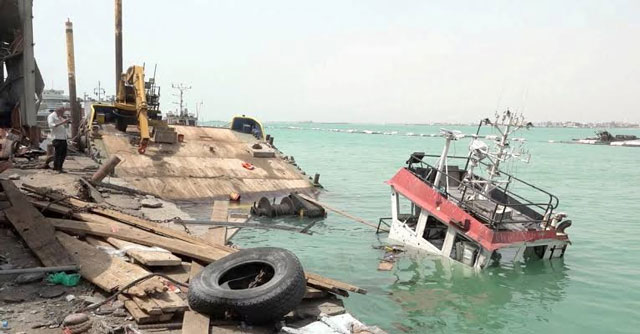
Yousef Mawry, Al Jazeera's Yemen correspondent, said government forces attempted to resist the Houthi advance and called in reinforcements, but the group's military pressure eventually forced them to withdraw from the port and the city.
The Houthis have also seized the strategically important district of Hais, he said.
The latest advance follows around 10 days of Houthi efforts to push west of Taiz with the objective of capturing Mocha. The group is also moving towards control of other coastal cities along the Bab al-Mandeb Strait as it seeks to establish control over Yemen's entire Red Sea coastline.
Control of Mocha's port gives the Houthis a strategic position overlooking the Bab al-Mandeb Strait, through which an estimated 10 to 12 per cent of global trade passes.
"This gives the Houthis the eyes, the ears, and the pressure to monitor international trade," Mawry said.
Defence analyst Wolfgang Pusztai described the capture of Mocha as a major development, saying it puts the Houthis in a position to cut the road leading to Taiz and represents a significant blow to the Yemeni government.
He said the capture also gives the Houthis control over almost the entire Yemeni Red Sea coast and the Bab al-Mandeb Strait.
Pusztai noted that Bab al-Mandeb is only around 20 km wide at its narrowest point, compared with roughly 50 km for the Strait of Hormuz.
He said the Houthis could potentially control or threaten shipping through the narrow waterway using artillery, without necessarily relying on missiles or drones.
Such a development, he warned, could have serious consequences for Saudi and international shipping.
Analysts also highlighted the growing role of Iran in supporting the Houthis. Badi described the relationship between Tehran and the Houthis as no longer a secret, placing the group alongside Hezbollah in Lebanon and the Popular Mobilisation Forces in Iraq as important regional partners of Iran.
He said Tehran was "doubling down on the Houthis as its remaining lever" and had helped reignite the conflict after a lull of around five years.
However, Pusztai cautioned against viewing the Houthis solely as an Iranian proxy, saying Iran has significant influence over the group but that the Houthis are also pursuing their own war and interests.
The Houthi advance comes amid an escalation in fighting with Yemen's Saudi-backed government. The group has carried out attacks on oil facilities and civilian infrastructure deep inside Saudi Arabia.
The Houthi-affiliated Saba news agency reported on Thursday that Saudi forces had carried out another 40 air strikes in the governorates of Taiz, Hodeidah, Al Jawf and Marib.
Saudi foreign policy analyst Abdulaziz Alghashian described the rapid Houthi advance in southern Yemen as concerning and disappointing, although he said it was not entirely unexpected.
He suggested that the capture of Mocha may have resulted less from Houthi military strength and more from disorganisation among anti-Houthi forces.
Alghashian said Saudi Arabia would likely respond on a tit-for-tat basis because it does not want to become involved in a prolonged military campaign.
Meanwhile, Pakistan has warned Iran to restrain the Houthis, saying its defence pact with Saudi Arabia and Turkiye could become operational if attacks on Saudi territory continue.
Saudi Arabia, Pakistan and Turkiye finalised a mutual defence pact last month, known as the Mecca Defence Alliance, following a meeting of senior officials.
The capture of Mocha has therefore raised fresh concerns over the security of one of the world's key maritime chokepoints and the potential impact on regional and international shipping.