Daijiworld Media Network - Asheville
Asheville, Sep 2: Japan should move beyond the reflationary policies associated with former prime minister Shinzo Abe and focus on managing the consequences of their success, US Treasury Secretary Scott Bessent said after the G20 finance ministers’ meeting in Asheville.
Bessent said the economic programme known as Abenomics had achieved its central objective of pulling Japan out of a prolonged period of disinflation.
“I think that Abenomics, which was designed to bring Japan out of disinflation as a reflationary programme, has worked,” he said.
The Treasury secretary also credited the programme with restructuring parts of Japan’s economy and reducing regulatory burdens on companies.
“One of the great parts of Abenomics is the economy has been restructured in terms of the corporate sector bringing down regulation,” he said.
“Many, many of the things that we’ve talked about here for the past few days, Japan has already done,” Bessent added.
His comments came in response to questions about Japan’s long-term interest rates, inflation and fiscal position. Bessent said some of his discussions with Japanese officials were private but reiterated his publicly expressed assessment of the country’s economic direction.
‘Stop the reflation’
Bessent said Japan should now allow the benefits of its earlier reforms to take hold rather than continuing to stimulate inflation.
“We’ve talked to the Japanese, and I’ve said they had a tremendous success in Abenomics. Now, they should actually let that run and stop the reflation,” he said.
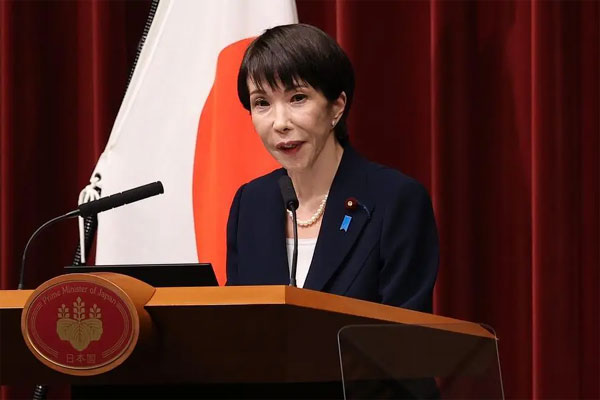
He described the next phase of Japan’s economic policy as “Takaichi Nomics”, although he did not specify the fiscal or monetary measures he believed it should involve.
“I think it’s now time, as I said, for Takaichi Nomics, and I think that Japan can sit back and enjoy the benefits of a successful 11, 12, 13-year run,” he said.
Bessent portrayed Japan’s current economic position as a sharp reversal from the pessimism surrounding the country more than a decade ago.
“In 2011, Japan was written off as dead, and now I think it’s one of the most vibrant economies in the world,” he said.
He argued that inflation near the Bank of Japan’s long-standing target would indicate that the reflationary programme had achieved its purpose.
“If inflation is 2%, they’ve succeeded in reflating, and now they have to think about the consequences of their success,” he said.
Bessent did not publicly outline specific recommendations for Japanese fiscal consolidation or comment directly on how the Bank of Japan should handle interest rates, saying some aspects of his bilateral discussions remained confidential.
G20 stresses fiscal stability
The G20 chair’s statement reaffirmed the importance of central bank independence and said monetary authorities remained strongly committed to maintaining price stability and financial-system resilience.
It also called on governments to safeguard fiscal sustainability, rebuild financial buffers and encourage investment that improves productivity.
A stable and predictable macroeconomic environment was important for supporting growth and employment, the statement added.
Abenomics legacy
Abenomics was introduced after Abe returned as Japan’s prime minister in 2012. The programme combined aggressive monetary easing, flexible fiscal policy and structural reforms in an effort to end deflation and revive economic growth.
The Bank of Japan maintained ultra-low interest rates and large-scale asset purchases for years under the framework.
Japan’s return to sustained inflation has since forced policymakers to consider how quickly monetary policy should be normalised without undermining economic growth.