Daijiworld Media Network – Washington
Washington, Sep 1: Renowned American author, poet and environmentalist Wendell Berry, whose writings championed rural life, sustainable farming and close ties with nature, has died at the age of 92.
Berry died at his home in Port Royal, Kentucky, his daughter Mary Berry confirmed on Monday.
Born in Henry County, Kentucky, in 1934, Berry became one of the most influential voices advocating traditional farming communities and criticising the impact of industrialisation, commercial agriculture and excessive consumerism.
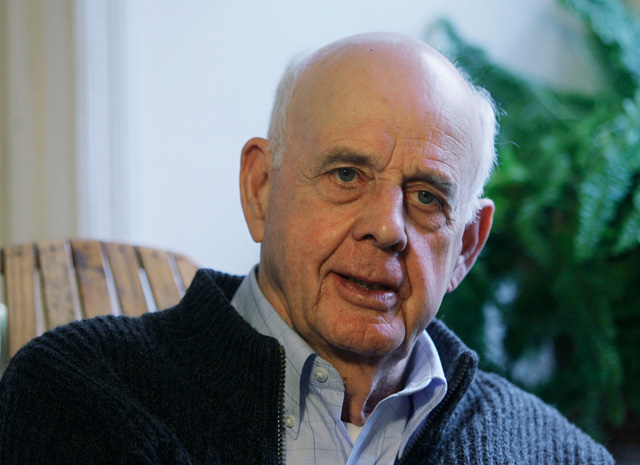
Through his poems, novels, short stories and essays, Berry explored themes including nature, family, farming, community, work and human relationships. Much of his fiction was set in the fictional rural community of Port William, drawing heavily on his experiences growing up in Kentucky.
Among his best-known works are Nathan Coulter, A Place on Earth, The Unsettling of America and A Timbered Choir: The Sabbath Poems 1979-1997. He published more than 40 books during his long literary career.
His 1977 book The Unsettling of America became an influential work on agriculture and environmentalism. Berry strongly criticised the consolidation and mechanisation of farming and warned that industrial society was increasingly disconnecting people from the land, food and their communities.
His influence extended beyond literature. Food writer Michael Pollan has credited Berry's ideas with influencing his own thinking about food and agriculture, while renowned chef and food activist Alice Waters also counted him among her favourite authors.
Berry received several major honours during his career, including the National Humanities Medal and membership of the American Academy of Arts and Letters. In 2016, he received a lifetime achievement award from the National Book Critics Circle.
Despite achieving international recognition, Berry remained deeply connected to Kentucky. He and his wife Tanya operated an organic farm in Henry County for decades and lived a deliberately simple lifestyle, avoiding computers, television and telephones.
Berry was also an outspoken critic of coal mining and industrial development. He participated in protests against strip-mining and severed ties with the University of Kentucky after it accepted a major donation linked to the coal industry.
His views on modern society were often controversial, but his writings continued to influence generations of readers, environmentalists, farmers and food activists.
Berry leaves behind a lasting literary legacy centred on the belief that people, communities and the natural world are deeply interconnected.