Daijiworld Media Network - Tehran
Tehran, Aug 24: Iran has reportedly been invited to join a trilateral defence pact between Saudi Arabia, Türkiye and Pakistan, with Tehran considering the proposal, according to a senior Iranian official.
Mehdi Rahimi, head of the Iranian Parliament's Khaneh Mellat news agency, made the claim while speaking to Lebanon-based Al Mayadeen television. He said the proposal was under review as countries in the region increasingly sought what he described as a “regional security umbrella”.
Rahimi called the reported proposal a “victory for Iran”, saying Tehran had advocated regional security arrangements for a long time. However, neither Iran's Foreign Ministry nor any other senior Iranian authority has officially confirmed that the country has been invited to join the pact.
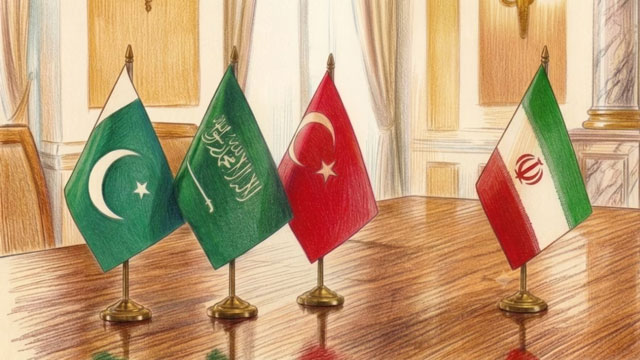
Saudi Arabia, Türkiye and Pakistan signed the trilateral defence agreement, known as the Mecca Joint Defence Agreement, on August 7. The agreement provides that an armed attack against any one of the three countries would be regarded as an attack against all three.
According to a joint statement issued after the agreement was signed, the pact aims to strengthen collective deterrence against aggression and expand defence cooperation among the three countries.
Although the agreement currently involves only Saudi Arabia, Türkiye and Pakistan, Ankara has indicated that other countries could join the arrangement in the future.
Turkish Foreign Minister Hakan Fidan had earlier said Egypt had expressed interest in joining the agreement. Two junior ministers from Bangladesh, Humayun Kobir and Shama Obaed Islam, have also indicated that Dhaka could consider becoming part of the pact.
When the agreement was first announced, analysts and observers had suggested that one of its major objectives could be to counter Iranian influence in the Middle East and provide Saudi Arabia with additional security guarantees.
Saudi Arabia has faced repeated attacks from Yemen's Houthi rebels and Iran-backed militias in Iraq. The new defence arrangement was therefore viewed by some observers as an effort by Riyadh to strengthen its regional security position.
Iran had initially responded critically to the agreement. Ebrahim Rezaei, a member of Iran's Parliament and its National Security and Foreign Policy Commission, said the pact would not provide Saudi Arabia with a long-term security guarantee.
He argued that an agreement with Türkiye and Pakistan would not guarantee Riyadh's security, just as its previous reliance on the United States had failed to provide lasting protection.
However, the latest claim that Iran itself may have been invited to join the alliance could significantly alter the geopolitical equation in the Middle East if officially confirmed.
Iran and Saudi Arabia have historically been regional rivals and have backed opposing sides in several conflicts through allied groups and proxies. An Iranian entry into the defence arrangement could therefore indicate an attempt to reduce long-standing tensions and promote greater regional cooperation.
The development comes amid continuing efforts by regional countries to strengthen their own security arrangements as tensions remain high across the Middle East.
US President Donald Trump had earlier welcomed the Saudi-Türkiye-Pakistan agreement, describing it as a “BIG, BOLD, IMPORTANT FIRST STEP”. He said the pact demonstrated that Middle Eastern countries were coming together and would be able to defend themselves more effectively.
Trump's comments come against the backdrop of the continuing conflict between the United States and Iran. Tehran has indicated that it is prepared for a prolonged confrontation, while Washington has been seeking an end to the conflict.
The closure of the Strait of Hormuz has also emerged as a major international concern, disrupting energy supplies and global trade routes. Trump has reportedly linked a possible peace agreement with Iran to the reopening of the strategically important waterway.
If Iran's reported invitation to join the Saudi-Türkiye-Pakistan defence pact is confirmed, it could mark a significant shift in regional alignments and have far-reaching implications for security and diplomacy in the Middle East.