Daijiworld Media Network - Tehran
Tehran, Aug 22: Iran on Friday warned that any new US threats would trigger a “devastating” response, after Washington pledged to impose what it described as the toughest financial penalties in history with the aim of bringing down the Iranian leadership.
US Treasury Secretary Scott Bessent said he would provide details of the planned sanctions at a press conference on Monday. The announcement came after President Donald Trump warned that countries providing “any type of lifeline” to Iran would face economic consequences.
The chief of staff of Iran’s Armed Forces, Major General Ali Abdollahi, said Iran’s response would be broad and decisive.
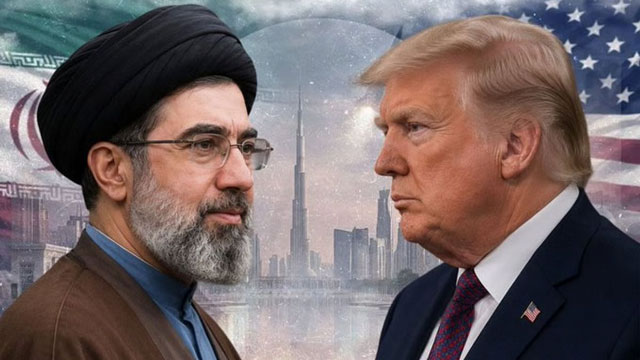
“With preparedness across land, sea, air, air defence and cyberspace, Iran's armed forces will respond to the enemy's new threats with crushing, punishing and devastating responses,” Abdollahi was quoted as saying by Iranian media.
Iranian leaders and Trump have continued to issue defiant and threatening statements even as neither side has achieved a decisive outcome in the conflict, which began with US and Israeli military action nearly six months ago.
The war has killed thousands of people, drawn other Gulf countries into the conflict and contributed to higher global fuel prices.
US attacks have severely weakened Iran’s economy and conventional military capabilities. Tehran, however, retains sufficient missile and drone capacity to threaten oil tanker traffic through the Strait of Hormuz and target regional rivals.
Trump has also yet to achieve objectives he announced at the beginning of the war, including dismantling Iran’s nuclear programme and creating conditions for Iranians to overthrow the country’s clerical leadership.
The conflict has pushed up gasoline prices in the United States and weighed on Trump’s popularity. A Reuters/Ipsos poll released this week showed his approval rating falling to 33 per cent, the lowest level of his current term.
Iranian Parliament Speaker Mohammad Baqer Qalibaf, who is the country’s main negotiator in mediated talks with the United States, said Washington appeared to have concluded that it could not prevail in a direct military confrontation.
“We must make plans to deal with the unjust sanctions so that we can overcome them,” Qalibaf said during a visit to neighbouring Iraq.
However, while speaking to Iranian and Iraqi businesspeople late on Thursday, Qalibaf acknowledged the growing pressure on Iran’s economy.
“No matter how much military power we have, we won't survive if people are hungry and we don't have financial turnover, economic growth and national production,” he said, according to Iran’s official IRNA news agency.
International and US crude oil futures rose on Friday after Washington threatened sanctions against countries trading with Iran, raising concerns over tighter supplies in the coming weeks.
Bessent told CNBC that he would announce details of the new sanctions on Monday, adding, “We are going to collapse this regime.”
Iran has faced near-continuous economic sanctions for almost five decades, dating back to the 1979 Islamic Revolution. The prolonged pressure has contributed to high inflation, a weakening currency and energy shortages, while the ongoing conflict has damaged infrastructure.
Further sanctions could have wider international consequences, particularly for China, which relies heavily on energy supplies from the Gulf.
Bessent said China obtains half of its energy from the Gulf and suggested that Beijing should “get with the program”.
China buys more than 80 per cent of Iran’s seaborne oil, according to 2025 data from analytics firm Kpler. However, further US economic pressure on Beijing could trigger retaliation, particularly as China has already eased some earlier restrictions on exports of its critical rare-earth minerals.
China’s embassy in Washington said sanctions and pressure would not help resolve the dispute and called for diplomacy.
The conflict also poses risks to US allies in the Gulf. Some regional energy facilities and desalination plants that provide drinking water have come under Iranian attack.
The United States and Iran have twice announced ceasefire agreements, in April and June, aimed at restoring the free movement of ships through the Strait of Hormuz. Before the conflict, the strategic waterway carried about one-fifth of the world’s traded oil.
Iran and Oman, located across the narrow strait, have held separate talks aimed at restoring navigation. The United States, however, has opposed any arrangement that would impose a toll on ships using the waterway.
NATO’s top commander, US Air Force General Alexus Grynkewich, convened a video conference of allied defence chiefs on Wednesday to discuss ways to support freedom of navigation in the Strait of Hormuz, his spokesperson told Reuters on Friday.
The spokesperson stressed that the effort was not a NATO mission but said that, given the alliance’s capabilities, “it makes sense for NATO to facilitate in this way.”