Daijiworld Media Network - Jerusalem
Jerusalem, Aug 19: Israel's ultra-Orthodox Jewish community is growing in numbers and political influence, intensifying a long-running debate over religion, military service and the role of the community in Israeli society.
Known in Hebrew as Haredim, ultra-Orthodox Jews place strong emphasis on full-time Torah study, particularly for men. Their distinctive religious practices and way of life have increasingly come into conflict with other sections of Israeli society, particularly over exemptions from military service.
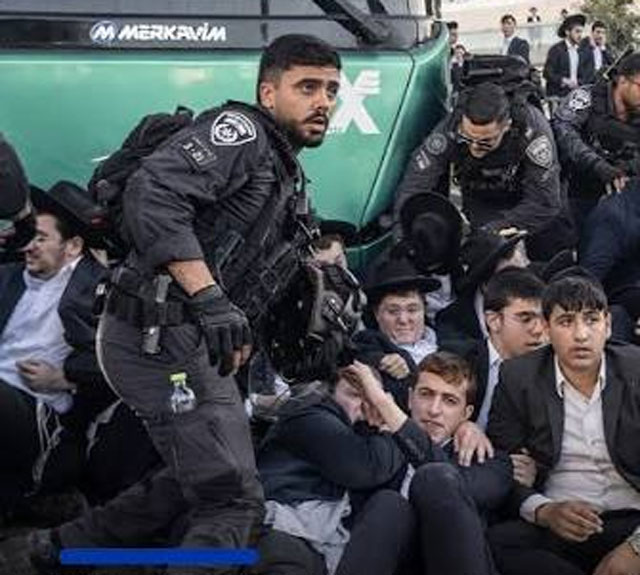
The issue has become especially contentious as Israel continues to face prolonged conflict on multiple fronts. Mass protests have been held over proposed changes to the military draft arrangements for ultra-Orthodox men, while the community's political parties are expected to play an important role in upcoming national elections.
For many Haredi families, Torah study is regarded as the highest religious duty. Yeshivas, or religious seminaries, form the centre of community life, with students spending much of their day praying and studying Jewish scriptures and commentaries.
Religious leaders argue that full-time Torah study is essential to preserving their faith and identity. Many also believe that military service at a young age could weaken religious observance and expose young men to influences outside the community.
However, the exemption has increasingly drawn criticism from Israelis who serve in the military. The Israeli army has faced heavy demands during the ongoing conflicts, prompting renewed calls for greater participation by ultra-Orthodox men.
The military exemption dates back to the early years of Israel, when special arrangements were made for a small number of religious scholars following the establishment of the state. Over the decades, the exemption expanded to include a much larger section of ultra-Orthodox men engaged in full-time religious study.
The rapid growth of the Haredi population has added to the debate. Estimates suggest that ultra-Orthodox Jews could account for around a quarter of Israel's population by 2050, while making up an even larger share of the potential military-age population.
Critics argue that the growing exemption places a greater burden on other Israelis, who are required to complete military service and often undertake lengthy reserve duty. The debate also extends to employment, welfare spending and the broader economic contribution of the community.
At the same time, not all ultra-Orthodox families reject military service. Some young men have volunteered, particularly since the October 7, 2023 Hamas attack and the subsequent wars. Supporters of such service within the community say individuals can balance religious commitment with responsibility towards the country.
The issue has therefore created divisions both within the ultra-Orthodox community and across Israeli society. While many rabbis continue to strongly oppose compulsory military service for yeshiva students, a small proportion of ultra-Orthodox men of conscription age have joined the armed forces, often in units designed to accommodate their religious practices.
For secular and religious Israelis outside the Haredi community, the central question is increasingly about fairness and the sharing of national responsibilities. For many ultra-Orthodox leaders and families, however, protecting Torah study remains a fundamental religious obligation.
As Israel approaches another election cycle, the dispute over military service is expected to remain a major political issue. Ultra-Orthodox parties could hold significant influence in coalition negotiations, making the future of the draft exemption a key question for the country's next government.
The growing Haredi population and its increasing political influence mean that the debate is unlikely to disappear soon. Instead, Israel faces the challenge of balancing religious freedom and community identity with military obligations and the demands of a country engaged in prolonged conflict.