Daijiworld Media Network – Dubai
Dubai, Aug 14: Air travel across the Middle East continues to face disruptions amid renewed tensions surrounding the Strait of Hormuz, with several airlines operating reduced schedules, suspending routes or warning passengers of possible last-minute changes.
The ongoing instability has prompted airlines and aviation authorities to closely monitor developments, while travellers flying to, from or through the region have been advised to check their flight status before leaving for the airport.
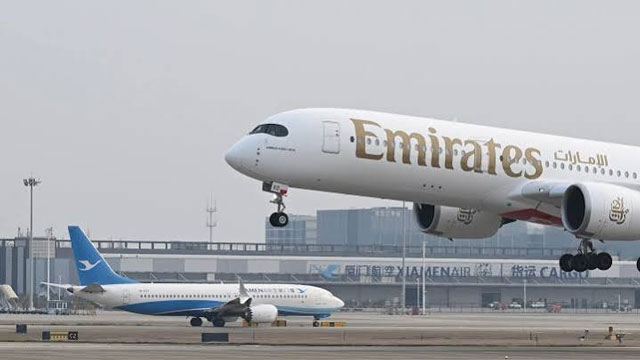
Several major Gulf hubs, including Dubai, Abu Dhabi, Doha and Bahrain, remain operational, although services on some routes continue to be affected by security and airspace restrictions.
The European Union Aviation Safety Agency (EASA) has extended its conflict-zone advisory for the Gulf until August 31. The advisory urges airlines to avoid airspace over the UAE, Bahrain, Kuwait, Oman and Qatar, citing risks linked to possible missile, drone, military aircraft and air-defence activity.
Emirates is currently operating around 1,300 flights a week across its network, while continuing to advise passengers to check their flight status even after completing check-in. Services to some regional destinations remain affected.
Etihad Airways is operating flights to more than 90 destinations, although services to Kuwait and Bahrain continue to face reductions. Passengers with affected bookings are being accommodated on alternative flights where possible.
Qatar Airways has resumed services to several regional destinations and is operating an expanding network, though at reduced capacity compared with its pre-conflict schedule.
Flydubai, Gulf Air and Air Arabia are also operating services, but some routes may face short-notice changes depending on airspace conditions.
Indian carriers Air India and Air India Express have restored services across the Gulf region, but have cautioned passengers that flights to and from the Middle East could be affected by airspace closures. IndiGo is also operating select services to and from the region, with schedules subject to regulatory and operational changes.
A number of international airlines continue to suspend or reduce their Middle East operations.
Air Canada has extended the suspension of flights to Dubai and Tel Aviv, while British Airways has suspended several services to destinations including Dubai, Doha, Abu Dhabi and Tel Aviv.
KLM, Lufthansa, Cathay Pacific, Singapore Airlines, Korean Air, Japan Airlines and several other carriers have also suspended or postponed services to parts of the region.
Some airlines are offering passengers flexible rebooking or refund options, depending on the terms of their tickets and the affected routes.
With airspace restrictions continuing to change, passengers could face longer flight times, rerouting, technical fuel stops, cancellations and schedule changes.
Kuwait's airspace has faced intermittent closures, while Bahrain remains open but continues to experience some disruptions. The UAE has announced the full resumption of air traffic, while Qatar has also reopened its airspace with reduced operations.
Iran has partially reopened its airspace, while Saudi Arabia continues to operate flights despite disruptions affecting some destinations.
Aviation authorities have urged passengers to remain in contact with their airlines and check the latest flight information before travelling.
Travellers have also been advised to reach airports well in advance, particularly during the busy summer travel period, as security checks and operational changes could result in longer processing and waiting times.