Daijiworld Media Network – Tehran
Tehran, Aug 13: A senior Iranian military official has said Tehran could consider prolonging the ongoing conflict with the United States until President Donald Trump leaves office, as tensions continue to escalate over the Strait of Hormuz.
Brigadier General Mohammad Reza Naqdi, a senior adviser to the commander of Iran's Islamic Revolutionary Guard Corps (IRGC), made the remarks during an interview with PBS NewsHour on Tuesday.
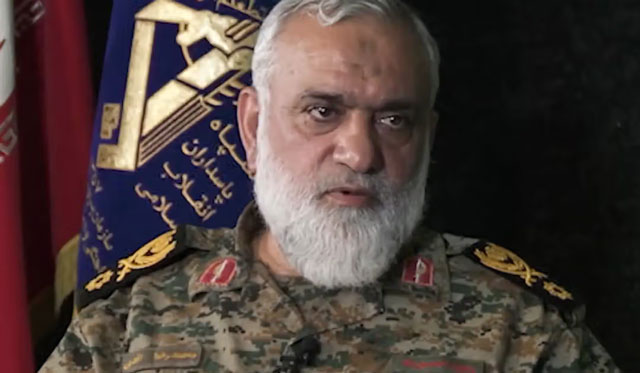
Naqdi claimed that the United States had two main objectives in the conflict — overthrowing Iran's leadership and breaking up the country — but alleged that neither goal had been achieved. He asserted that Iran had emerged stronger from the confrontation and would gain further experience if the conflict continued.
"One way is to prolong this war until we get to the next term of the presidency and cause attrition," Naqdi said, arguing that this could serve as a deterrent against any future attack on Iran.
He claimed that the US had repeatedly changed its objectives during the conflict, citing reported plans involving Kharg Island and the Strait of Hormuz. According to Naqdi, the mobilisation of US warships and other military measures had failed to achieve Washington's objectives.
Naqdi also addressed the Strait of Hormuz, a crucial global energy shipping route. Asked about attacks on civilian vessels passing through the waterway, he referred to international law and maintained that Iran could restrict access to waterways it considers a threat during wartime.
The Iranian general further claimed that Tehran possesses a large stockpile of missiles and drones and is producing more weapons each day than it is using.
On the possibility of the United States using nuclear weapons against Iran, Naqdi said he believed the international community would prevent such a scenario, adding that the circumstances today are different from those during the Second World War.
Meanwhile, reports have suggested that Trump is considering ending hostilities against Iran if Tehran agrees to reopen the Strait of Hormuz. The development comes amid continued concerns over the impact of the conflict on global energy supplies and international shipping.
Naqdi also sought to distinguish Iran's position from hostility towards the American people, saying Tehran's opposition was directed at the US leadership rather than its citizens.
He rejected the need for Iran to possess nuclear weapons, saying the country's strength lay in the support of people around the world who oppose oppression.
The remarks come as diplomatic and military tensions between Washington and Tehran remain high, with the future of the Strait of Hormuz emerging as one of the key issues in efforts to bring the conflict to an end.