Daijiworld Media Network - New Delhi
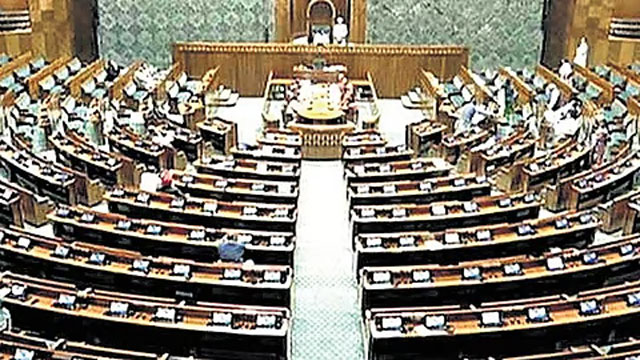
New Delhi, Aug 10: The Union government is likely to introduce the Tribunal Reforms Bill, 2026 in the Lok Sabha on Monday, proposing the creation of the long-pending National Tribunals Commission (NTC) to oversee the selection process for filling vacancies in various tribunals across the country.
According to the Lok Sabha's List of Business, the proposed commission will also review the performance of tribunal chairpersons and members, submit annual reports to the Centre and maintain a National Tribunals Grid.
Congress lawmaker Jairam Ramesh said his party supports the bill, which he said could chart "a new future" for 16 semi-judicial tribunals, including the National Green Tribunal (NGT), established in 2010.
Ramesh said the bill follows directions issued by the Supreme Court last year and should rectify key changes introduced by the Centre through the Tribunal Reforms Act, 2021.
"This bill seeks to implement the Supreme Court's directions in the landmark Madras Bar Association judgment of November 19, 2025, that had struck down key provisions of the Tribunals Reforms Act, 2021 and called for an independent National Tribunals Commission for appointments. Since the very existence of an independent NGT was at stake, I had also joined the challenge to the 2021 Act in the Supreme Court," Ramesh said in a post on X.
In its November 19, 2025 order, the Supreme Court struck down key provisions of the Tribunal Reforms Act, 2021, holding that they violated judicial independence and the separation of powers. Ramesh was among the petitioners challenging the constitutional validity of the legislation.
The court invalidated the 2021 law's 50-year age limit for appointments, which excluded younger but qualified advocates. It also restored a five-year tenure for tribunal members by striking down the four-year tenure prescribed under the legislation.
The Supreme Court further struck down a provision requiring selection committees to recommend two names for every vacancy and restored the single-name recommendation process, aimed at limiting executive discretion.
The court also directed the Centre to establish a National Tribunals Commission within four months to reduce executive control and ensure more independent and transparent administration of tribunals.
"Having defended the untenable 2021 law all the way to the Supreme Court, it (the government) now finds itself compelled to enact many of the very reforms it had stoutly resisted, and which were so badly needed. Confrontation has finally yielded to concurrence," Ramesh said.
The Rajya Sabha MP said there was now hope that the NGT would "find its voice" and make public the report of the high-powered committee on the Great Nicobar Island Project.
He also said the new bill should prevent the executive from arbitrarily increasing or reducing tribunal members' tenure or modifying their service conditions to suit its interests.
According to the List of Business, Union Law Minister Arjun Ram Meghwal is scheduled to introduce the 2026 bill in the Lok Sabha to improve efficiency and ensure independence, transparency and uniformity in the qualifications, appointments, terms and conditions of service of chairpersons and members of various tribunals.
The bill also seeks to provide a uniform framework for the administration and functioning of tribunals, establish the National Tribunals Commission and make consequential amendments to related laws.
According to the draft bill seen by Hindustan Times, the NTC will have its headquarters in Delhi and comprise a chairperson and four members — two judicial members and two technical members.
For appointment as chairperson, a person must be a retired Supreme Court judge or a former chief justice of a high court.
A former chief justice of a high court or a high court judge will be eligible for appointment as a judicial member.
Technical members must have special knowledge and at least 25 years of experience in fields including public administration, finance, law, accountancy, banking, management or technology.
The chairperson's tenure will be five years or until the age of 70, whichever is earlier. For other members, the tenure will be five years or until the age of 67, whichever is earlier.
Senior advocate Raj Panjwani said the bill seeks to implement the Supreme Court's directions and address shortcomings in the 2021 law, but may not be entirely fool-proof and requires detailed parliamentary debate.
"The bill states the chairperson of the Commission and the members of the Commission will be appointed by the Central government, provided that the Centre shall consult the Chief Justice of India before making an appointment. Here, there could be so many connotations with the word consult. Instead, it should state prior consultation and consent instead," Panjwani said.
He said the bill provides a comprehensive framework covering terms of service and a uniform selection process for tribunals, which could be less cumbersome than amending individual tribunal laws separately.
However, Panjwani said the bill should be referred to a parliamentary committee, particularly to examine its impact on individual tribunals.