Media Release
Udupi, Jul 6: As rain sweeps across temple towns, fishing harbours, rainforests and heritage homes, about 22 students participating in the Manipal International Summer School (MISS) 2026 from 06 July 2026 to 16 July 2026 will discover that some of their learning lies beyond the university classroom. In addition to the academic modules designed for the summer School, students are set to learn from the place they are in.
At a time when universities across the world are seeking more meaningful models of internationalization, MAHE's initiative offers a refreshing alternative. Instead of limiting learning to lectures and campus activities, it encourages students to engage with the place in which they are studying.
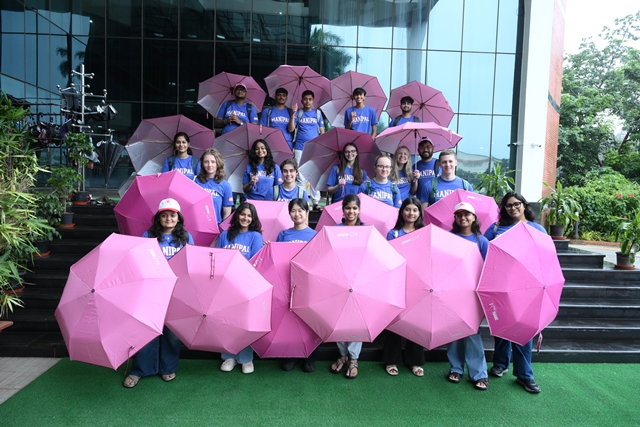
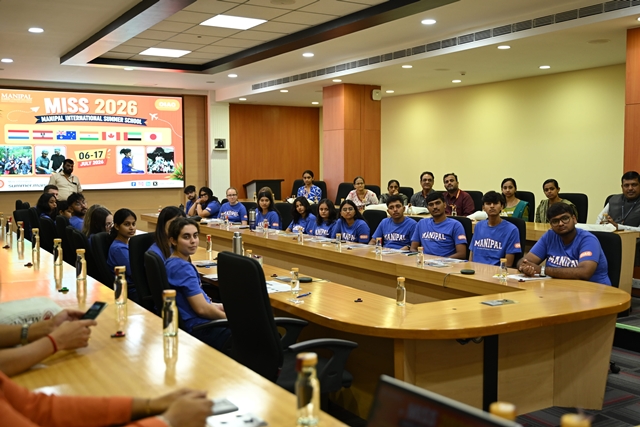
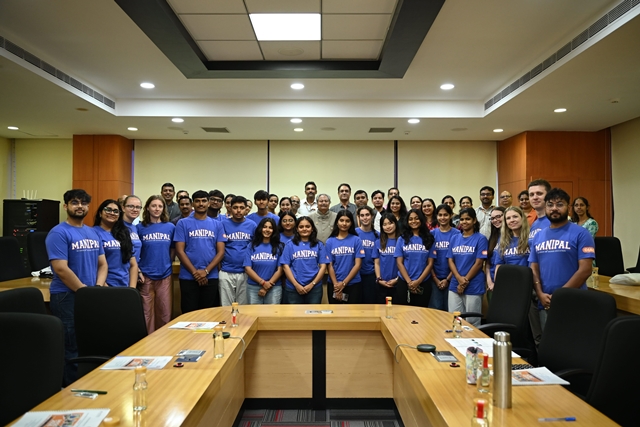
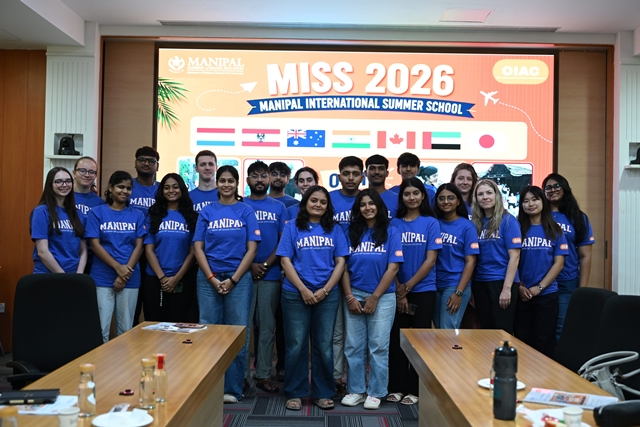
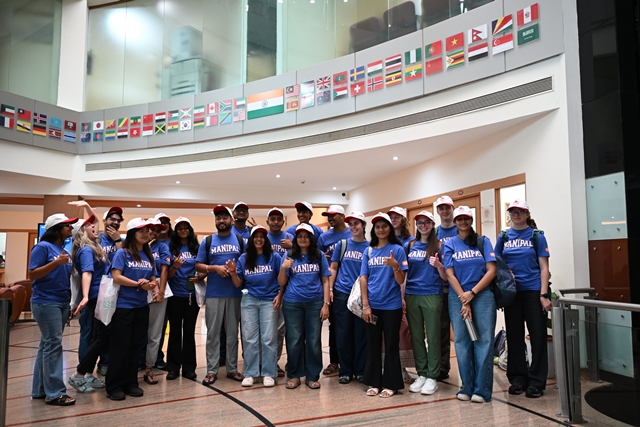
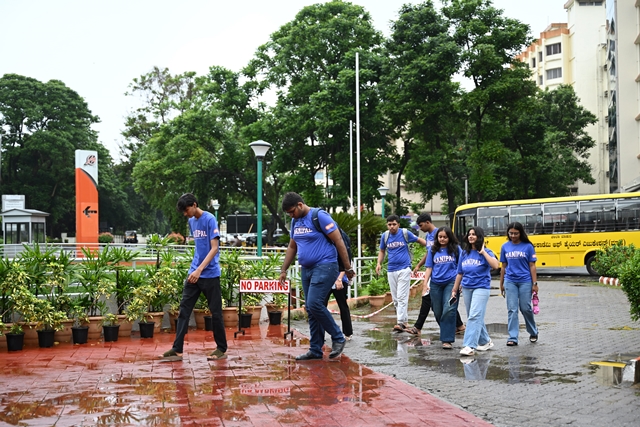
In an innovative experiment in international education, the Manipal Academy of Higher Education (MAHE) has designed a cultural immersion program that treats the cultural landscape of Coastal Karnataka as a learning laboratory. While students spend their mornings attending academic modules, their afternoons are devoted to exploring the region's history, ecology, architecture, food traditions, performance cultures and communities. The program carries equal academic weight, with assessed cultural immersion.
As a part of MISS 2026, the program, titled "Living Landscapes: Culture and Everyday Life in Coastal Karnataka," has been developed by MAHE's Office of International Affairs and Collaborations (OIAC) with conceptual inputs from the Centre for Intercultural Studies and Dialogue (CISD), MAHE. Its central premise is simple but powerful: culture is best understood not through observation alone but through engagement with people, places and everyday practices.
The students begin by exploring Udupi's Sri Krishna Matha and the nearby Malpe coastline. Rather than treating these as separate sites, the program encourages participants to examine the connections between spirituality, livelihood and ecology. They encounter a region where religion, economy and the sea have shaped one another for centuries.
At Hasta Shilpa Heritage Village in Manipal, heritage houses become teaching tools. Students study courtyards, kitchens, verandas and everyday objects to understand how architecture responds to climate, social relationships and cultural values.
In Barkur, the former port city filled with historical ruins, students engage with stories of trade, migration and political history. The experience is paired with a visit to a Yakshagana training centre, where they witness a living performance tradition that preserves memory through music, storytelling and movement. The lesson is clear: history survives not only in monuments but also in living cultural practices.
The program also takes students to the Udupi Magga Saree weaving unit, where they interact with artisans and observe the making of the region's GI-tagged handloom sarees. Here, innovation lies not in technology but in helping students understand craft traditions as repositories of knowledge, identity and livelihood.
The ecological dimension of the program unfolds in Agumbe, located in the biodiversity-rich Western Ghats. Through guided walks and observation exercises, students experience sustainability not as an abstract concept but as a lived reality. The forest becomes an active learning space where ecology, community knowledge and environmental awareness intersect.
Other sessions focus on wellness traditions, food cultures, biodiversity conservation and folk performance. Students explore yoga and holistic ideas of wellbeing, participate in culinary experiences centred on Coastal Karnataka's food heritage, and engage with artists and communities who preserve cultural knowledge through performance and practice.
What distinguishes the initiative is its pedagogy. Built around the framework of "See, Sense, Share," students first learn the context of a place, then engage with it through observation and interaction, and finally reflect on their experiences through journals and creative assignments. The emphasis is on interpretation, reflection and intercultural understanding rather than sightseeing.
For MAHE, the program reflects a broader vision of international education, a vision that connects global learners with local knowledge systems.
In doing so, it transforms Coastal Karnataka from a backdrop into a classroom and everyday life into a source of learning.