Daijiworld Media Network – Hubballi
Hubballi, Apr 12: With the Karnataka Eco-Tourism Development Board (KEDB) portal — aranyavihaara.karnataka.gov.in suspending trekking slot bookings indefinitely due to the ongoing fire season, forest authorities are struggling to contain a surge in unauthorised trekking across sensitive forest zones in Karnataka.
Despite the restrictions, hundreds of adventure seekers continue to trespass into forest areas, openly flouting rules and posing a growing threat to fragile ecosystems.
While KEDB has officially identified 38 trekking routes in the state, regular trekkers and organisers claim there are over 175 trekking spots in and around forest regions, many of them unmanned and poorly regulated.
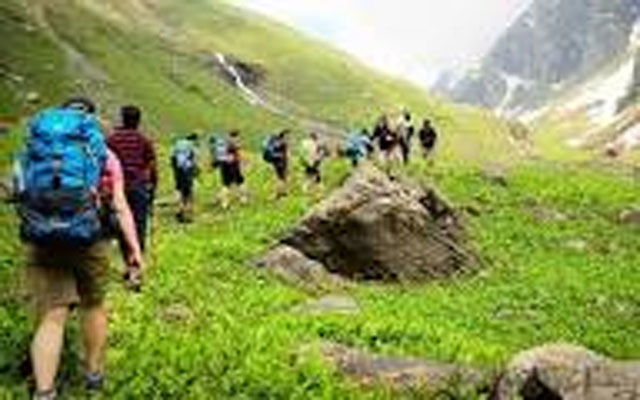
Recently, 10 youths from Dharwad district entered restricted forest areas in Khanapur to reach Vajrapoha waterfalls. Videos circulating on social media show them ignoring forest department warning boards. In one clip, a youth is heard claiming links to an elected representative, implying that action against them would not be possible.
Based on the footage, forest officials detained all 10 youths. However, they were later released on station bail after being issued warnings, as the offence is non-cognisable and carries a maximum penalty of a Rs 500 fine or up to six months’ imprisonment.
“We wanted to teach them a strict lesson as they had knowingly violated the rules. But most of the time, we are helpless as the law is weak,” a senior forest department officer in Belagavi said.
The videos also show the youths swimming in deep waters at the waterfall, with some allegedly consuming alcohol and smoking. Officials warned that this is a particularly dangerous period, as dry leaves cover the forest floor and even a small spark could trigger large-scale fires in sensitive elephant corridors.
“This is not the first such incident in the Khanapur forests. Every year, four to five cases of trespassing are reported in the area. One major issue is the lack of forest watchers or guards,” the officer added, noting that the Khanapur–Chorla Ghat stretch has several minor waterfalls that frequently attract unauthorised visitors.
Similar violations are being reported in Kodagu, Chikkamagaluru, Uttara Kannada, Dakshina Kannada and Udupi districts, where individuals increasingly enter forest areas to create social media content or “discover hidden gems”.
Experts caution that such irresponsible behaviour not only endangers trekkers but also threatens forest biodiversity. The recent case of Kerala IT professional G S Sharanya going missing in Kodagu forests — later rescued after straying from a permitted trek to Tadiandamol — has further raised concerns over unregulated trekking groups.
Following these incidents, Forest Minister Eshwar Khandre has directed officials to formulate a standard operating procedure, develop a tracking app for trekkers, and introduce group insurance. However, experts remain doubtful whether these measures will effectively prevent future violations.
Bengaluru-based trekker Rakhi Gowda said authorities cannot fully prevent such trespassing. “The forest and tourism departments lack the manpower to monitor all areas. Instead, regulated access with local guides should be allowed. This can also generate employment for villagers,” he said, adding that entry fees could be used to improve facilities.
Environment activist Girish D V from Chikkamagaluru criticised the state’s approach, stating that trekking is being permitted without scientific assessment of carrying capacity. He also alleged that unauthorised trekking camps continue to operate unchecked, questioning what action is being taken against them.
He further blamed irresponsible tourists for recent fires at Kerekatte, Manikya Betta and nearby areas, which destroyed around 18 acres of shola vegetation in Kudremukh National Park, leading to suspension of trekking on vulnerable routes.
KEDB CEO Ravi Shankar H said social media influencers are worsening the situation. “Many people unfamiliar with trekking routes are influenced by such videos and venture into unsafe areas, causing harm to themselves and the forest,” he said.
He added that while carrying capacity has been assessed for 38 routes and naturalists deployed, managing crowds remains a challenge. “A naturalist can handle 10–15 people, but if 200 arrive at once, it becomes difficult. Irresponsible trekkers also litter, affecting wildlife behaviour,” he said, stressing the need for stronger enforcement against violators.