Daijiworld Media Network - Chandigarh
Chandigarh, Apr 6: The Bhagwant Mann-led Punjab government has expanded the ambit of the Mukh Mantri Sehat Yojna, bringing transport sector workers and their families under its coverage with cashless treatment benefits of up to Rs 10 lakh.
Under the expanded scheme, employees of Punjab Transport Corporation (PTC), along with bus drivers, auto-rickshaw drivers, taxi drivers and their families, will now be eligible for the health coverage.
State Health and Family Welfare Minister Dr Balbir Singh said the move is a significant step towards ensuring healthcare access for transport workers, enabling them to seek timely treatment without financial concerns.
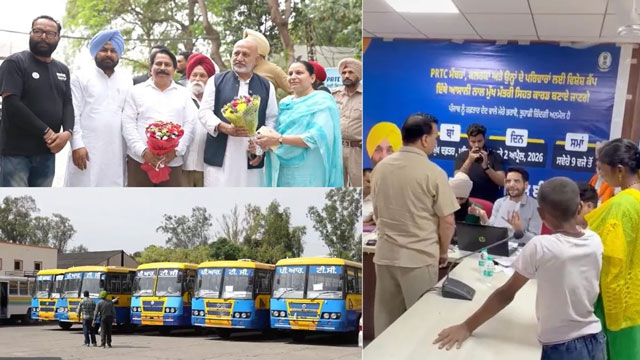
A two-day Sehat Camp held at the PRTC Head Office in Patiala on April 1 and 2 facilitated the enrolment of transport workers into the scheme. Several beneficiaries, including PRTC staff and their families, were issued Sehat Cards on the spot.
Each Sehat Card provides cashless medical coverage of up to ?10 lakh per family annually, offering relief to workers who often delay treatment due to irregular income and demanding work conditions.
PRTC Chairman Harpal Juneja said the initiative ensures that transport workers, who play a vital role in connectivity, receive essential health security without affecting their work schedules.
AAP Punjab General Secretary Baltej Pannu said the growing participation reflects increasing trust in the scheme. “Workers are coming forward as they see real impact in their lives and families. It shows confidence in the government’s commitment to accessible healthcare,” he said.
In a notable case, Mahinder Singh, a 63-year-old visually impaired former PRTC worker, was enrolled during the camp, highlighting the scheme’s reach among vulnerable sections.
The expansion marks a major step in extending comprehensive healthcare coverage to both organised and semi-organised workforce groups in the state.
So far, over 30 lakh Sehat Cards have been issued across Punjab, with more than 50,000 people enrolling daily. The state government has allocated ?2,000 crore in the 2026–27 budget to further strengthen and expand the scheme.