Daijiworld Media Network - New Delhi
New Delhi, Feb 6: The Supreme Court on Friday directed the medical termination of a 30-week pregnancy of a 17-year-old girl, asserting that courts cannot compel a woman, much less a minor, to continue an unwanted pregnancy.
A bench comprising Justices B V Nagarathna and Ujjal Bhuyan ordered Mumbai’s JJ Hospital to carry out the procedure while ensuring all necessary medical safeguards. The direction came after the minor approached the court seeking termination of her pregnancy, which resulted from a relationship with a neighbourhood boy.
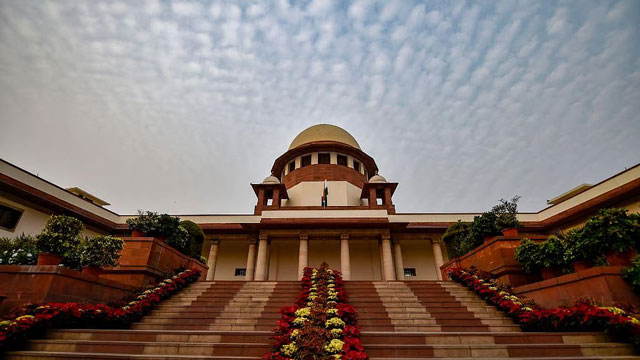
The bench observed that the key issue before the court was not whether the relationship was consensual or amounted to sexual assault, but the unwillingness of the minor to continue with the pregnancy. It noted that the girl herself is a minor and is facing an unfortunate situation arising from the relationship.
“What has to be considered is the right of the minor to continue a pregnancy which is ex facie illegitimate, as she herself is a minor. Ultimately, the child to be born is not legitimate and the mother does not want to bear the child,” the bench said.
Referring to the medical board’s report, the court noted that there was no immediate threat to the life of either the mother or the foetus if the pregnancy were carried to full term. However, it emphasised that reproductive autonomy of the minor must take precedence.
“The court cannot compel any woman, much less a minor child, to complete her pregnancy if she is otherwise not intending to do so,” the bench observed.
Justice Nagarathna also highlighted the complex moral and legal questions involved, noting that denial of medical termination could push vulnerable women and minors towards unsafe and illegal procedures.
“If courts do not address such cases, people will approach quacks and unauthorised medical establishments, which will be unsafe,” the bench said, adding that the decisive factor in the present case was the minor’s clear and consistent unwillingness to continue the pregnancy.
The court further observed that termination beyond the period stipulated under the Medical Termination of Pregnancy Act, 1971, is not uncommon, and refusal by hospitals often leaves women with no safe alternatives.
During the hearing, counsel for the Maharashtra government submitted that medical reports suggested the child would be born alive if delivered at present, and one view of the high court was that the baby could be given to an orphanage if the mother did not wish to keep it.
The Supreme Court said it would release the operative portion of the order immediately to facilitate the procedure, while the detailed judgment would follow later.