Daijiworld Media Network - Washington
Washington, Feb 1: Elon Musk’s SpaceX has sought regulatory approval to launch an ambitious constellation of up to one million satellites that would orbit Earth and use solar energy to power artificial intelligence data centres, according to a filing with the US Federal Communications Commission (FCC).
The filing, submitted on Friday, came a day after Reuters reported that SpaceX and Musk’s artificial intelligence venture xAI are in talks to merge ahead of a potential blockbuster public offering planned later this year. A merger could significantly boost SpaceX’s push to move data centres into orbit as Musk intensifies competition with AI heavyweights such as Google, Meta and OpenAI.
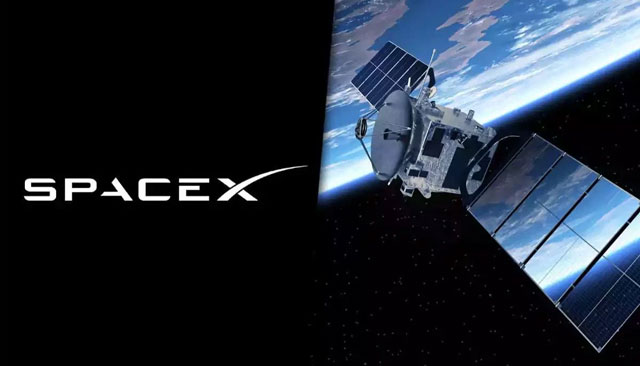
In its filing, SpaceX said the proposed satellites would directly harness near-constant solar power in space, enabling transformative gains in cost and energy efficiency while sharply reducing the environmental impact associated with terrestrial data centres.
“By directly harnessing near-constant solar power with little operating or maintenance costs, these satellites will achieve transformative cost and energy efficiency while significantly reducing the environmental impact associated with terrestrial data centers,” the company said, noting that approval from the telecom regulator would be required to proceed.
While the proposal envisions a constellation far larger than anything currently in orbit, industry experts note that satellite operators often seek approval for higher numbers than they ultimately deploy to retain design flexibility. SpaceX had earlier received approval for 42,000 Starlink satellites before beginning deployment, and its existing network now has around 9,500 satellites in space, compared to roughly 15,000 satellites globally.
The proposal also hinges on the reduced launch costs expected from Starship, SpaceX’s next-generation fully reusable rocket. The company said such vehicles could enable the deployment of millions of tonnes of mass into orbit annually, allowing on-orbit processing capacity to scale far faster than ground-based infrastructure with a lower environmental footprint.
Starship has been test-launched 11 times since 2023, and Musk has said the rocket, which is critical to expanding the Starlink network with more powerful satellites, is expected to place its first payloads into orbit later this year.