Daijiworld Media Network – Bengaluru
Bengaluru, Jan 2: Four major cities in Karnataka—Bengaluru, Hubballi-Dharwad, Kalaburagi, and Davanagere—have been classified as ‘non-attainment’ under the National Clean Air Programme (NCAP) for failing to meet prescribed air quality standards, raising alarms over public health and environmental safety.
Bengaluru, grappling with worsening air pollution, has deployed 12 mobile smoke-measuring vehicles, six of which are operational in the city. Equipped with sophisticated instruments, these units, in coordination with the transport department, Police, BMTC and KSRTC, conduct joint operations targeting vehicles emitting smoke beyond legal limits. Officials confirmed that violators are being dealt with strictly under the law.
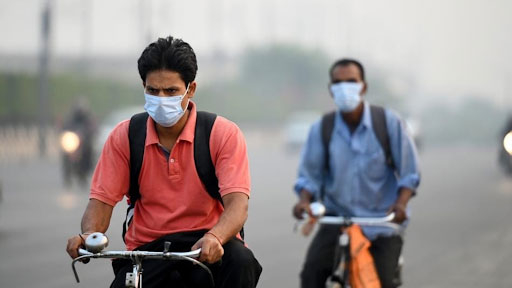
Representational image
Under the NCAP, Karnataka operates 43 manual air quality monitoring stations and 39 continuous ambient air quality monitoring stations. These stations track pollutants including sulphur dioxide (SO2), nitrogen dioxide (NO2), particulate matter (PM10 and PM2.5), carbon monoxide (CO), ozone (O3), ammonia (NH3) and benzene. Data from manual stations is collected twice weekly over 24 hours, while continuous stations operate round the clock. The Central Pollution Control Board receives these readings electronically, and they are publicly accessible on its website. Bengaluru’s 11 continuous stations also send daily Air Quality Index (AQI) readings to department heads and media via SMS.
To tackle the pollution crisis, authorities have implemented a 44-point action plan for Bengaluru, while Hubballi-Dharwad, Kalaburagi, and Davanagere follow a 27-point plan. Studies identifying the sources of pollution are underway, led by the Centre for Study for Science, Technology and Policy (CSTEP) in Bengaluru and IIT Madras for the other cities. Officials say these findings are crucial for revising action plans and strengthening mitigation measures.
“Strict enforcement, continuous monitoring, and public awareness are key to bringing down pollution levels,” said a senior official from the Karnataka Forest and Environment Department.
Industrial compliance is being enforced under the Air (Prevention and Control of Pollution) Act, 1981, with factories adhering to Karnataka State Pollution Control Board emission standards. Continuous emission monitoring ensures chemical and industrial pollutants stay within limits, and authorities conduct periodic inspections to curb violations.
Open burning of solid waste, including leaves and twigs, is banned across all urban local bodies, including Greater Bengaluru. Construction and demolition (C&D) waste must be transported in covered vehicles, water sprinkling is mandatory to control dust, and city authorities are overseeing strict implementation.
The official added, “These measures, along with stricter vehicular checks and industrial oversight, aim to ensure residents can breathe cleaner air and safeguard public health.”