Daijiworld Media Network - Panaji
Panaji, Dec 31: Just a short distance from Old Goa’s bustling Basilica of Bom Jesus—where crowds gather to venerate the relics of St Francis Xavier—another sacred relic has completed a century in near silence. On the tranquil island of St Estevam, barely 10 km away, a tiny relic of St Stephen, Christianity’s first martyr, has marked 100 years of its presence in Goa.
Devotees on Friday observed the feast of St Stephen at the hilltop church dedicated to him with customary devotion and ceremony. However, the centenary of the installation of the saint’s relic—a small fragment of bone placed in the church on August 3, 1925—passed largely without public notice.
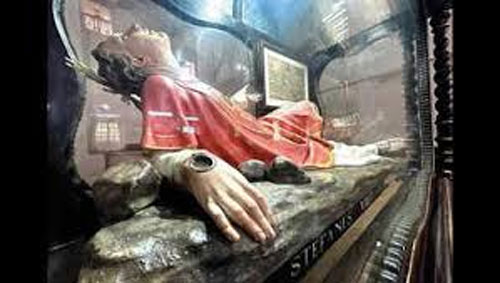
Parish priest Fr Manuelio Rodrigues said the milestone was marked earlier this year with a full day of adoration of the Blessed Sacrament. “We commemorated 100 years of the relics of our patron saint on August 3,” he said, noting the quiet nature of the observance.
The church itself dates back over 250 years and stands on a gentle hillock overlooking the Mandovi basin. The island’s association with St Stephen predates even the arrival of St Francis Xavier in Goa. According to historian and island native Fr V B Monteiro, the Portuguese entered the island on December 26, 1510—St Stephen’s feast day—soon after capturing Goa. The date gave the island its enduring name, Santo Estevam, later anglicised as St Estevam.
St Stephen, a Greek-speaking Jew, was stoned to death in Jerusalem shortly after the crucifixion and resurrection of Jesus Christ. Tradition places his martyrdom near what is today the Damascus Gate in Jerusalem. He is regarded as the patron saint of stone masons and those suffering from headaches. Though many Goans remain unaware of the relic housed on St Estevam, devotees seeking healing have visited the church from far-off places, including Bengaluru.
The relic was brought to the island in 1925 by Fr Leandro da Rosa, a native of St Estevam and a renowned theologian popularly known as Padre Mestre Rosa. He served in several academic and theological roles, including teaching sacramental theology and dogmatics at Rachol Seminary. His contributions to the island’s spiritual and cultural life remain deeply respected.
Known variously as Jua, Juvem or Sakecho Zunvo (Island of Vegetables), St Estevam is widely celebrated across Goa for its bhende, or lady’s fingers. Historically, however, life on the island was modest, with agriculture as the main source of livelihood. An island resident recalled an old saying that reflected the villagers’ simplicity: “Ekach vistidan chear festam”—one outfit for four feasts, covering Christmas, the patron saint’s feast, Christ the King on December 27, and New Year.
Fr Rosa also commissioned the monument of Christ the King atop the island’s fort, a vantage point offering sweeping views of three talukas—Tiswadi, Ponda and Bicholim. In recognition of his legacy, a bust of Fr Rosa stands at St Anne’s Chapel on the island.
By the 1550s, when the island’s residents embraced Christianity, the wealthy comunidade of Jua constructed the first church in 1575. Today, St Estevam remains one of the largest islands in the Mandovi basin, rich in layered history, heritage ruins and quiet traditions that continue to endure away from the tourist spotlight.