Daijiworld Media Network - Dhaka
Dhaka, Dec 30: Former Prime Minister of Bangladesh and Chairperson of the Bangladesh Nationalist Party (BNP), Begum Khaleda Zia, passed away on Tuesday morning following a prolonged illness. She was 80.
According to a statement issued by the BNP, Khaleda Zia breathed her last at around 6 am at Evercare Hospital in Dhaka, shortly after the Fajr (dawn) prayers.
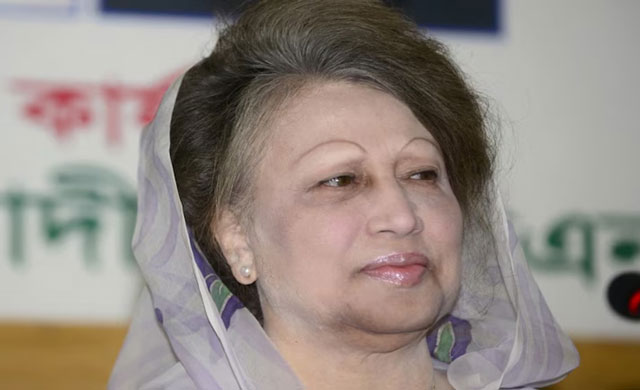
“The BNP Chairperson and former Prime Minister, national leader Begum Khaleda Zia, passed away today at 6:00 am,” the party said, while appealing to people across the country to pray for the eternal peace of her soul.
Zia had been undergoing treatment at the hospital for the past 36 days after being admitted on November 23 with severe infections affecting her heart and lungs. She was also suffering from pneumonia, Bangladeshi daily The Daily Star reported.
The veteran leader had long been battling multiple health complications, including liver cirrhosis, diabetes, arthritis, and chronic ailments involving her kidneys, lungs, heart, and eyes. Her treatment was being monitored by a team of specialists from Bangladesh as well as the UK, the US, China and Australia.
Earlier this month, efforts were made to shift her abroad for advanced medical care, but the move could not materialise due to her fragile health condition.
Khaleda Zia is survived by her elder son Tarique Rahman, his wife Zubaida Rahman, and their daughter Zaima Rahman. Tarique returned to Bangladesh on December 25 after spending 17 years in exile. Her younger son, Arafat Rahman Koko, had passed away earlier in Malaysia.
A towering political legacy
The three-time Prime Minister formally entered national politics after winning the 1991 parliamentary election, becoming Bangladesh’s first female prime minister. Her tenure marked the restoration of parliamentary democracy and the introduction of the caretaker government system to ensure free and fair elections.
Born in 1945 in Jalpaiguri, then in British India (now West Bengal), Khaleda Zia moved to East Bengal following the partition in 1947. She pursued her education in Dinajpur and later married Ziaur Rahman, a Pakistan Army officer, in 1960.
During the 1971 Liberation War, Ziaur Rahman emerged as a key leader in Bangladesh’s fight for independence. Following his assassination in 1981, Khaleda Zia stepped into politics to revive and lead the BNP, eventually emerging as a formidable national leader.
Under her leadership, BNP spearheaded major movements against military rule and played a crucial role in shaping Bangladesh’s democratic framework. She served as Prime Minister thrice — in 1991, briefly in 1996, and again from 2001 to 2006.
With her demise, Bangladesh has lost one of its most influential and enduring political figures.