Daijiworld Media Network - Fatorda
Fatorda, Dec 28: Farmers and vegetable growers from Agalli and Murida in Fatorda have raised strong objections to the discharge of sewage water into a freshwater nullah used for irrigation, stating that the contamination has threatened their livelihood.
The affected farmers claimed that sewage-laced water from the nullah has entered their fields, making it impossible for them to step into the farmland. They said the contamination has led to fish mortality and raised fears that locally grown vegetables may be rejected in the market due to health concerns.
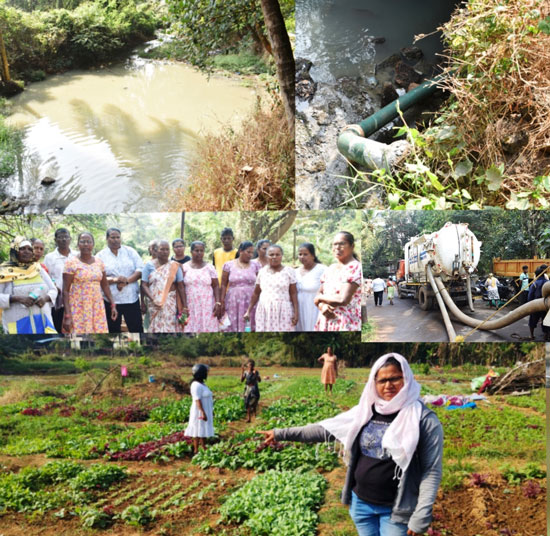
For the past two days, farmers have also been forced to endure a strong sewage odour, as the same nullah water used for irrigation has been polluted. They questioned how the sewerage department or the contractor engaged by the government allowed sewage to be released into a freshwater nullah, despite being aware that it is used extensively for irrigation.
A farmer said this is the peak season when over 50 farmers take up vegetable cultivation and supply produce to local markets. “How will farmers earn a living if the vegetables do not sell due to contamination?” he asked.
Another farmer alleged that those who entered the fields to irrigate crops developed itching on their hands and legs after coming into contact with the polluted water.
While stating that the contractor later agreed to supply tanker water for irrigation, farmers expressed concern over whether tanker water would be sufficient to cover fields spread across several acres.
Margao Municipal Councillor Nimisha Faleiro told the media that the sewerage department had violated all norms by allowing sewage discharge into a freshwater nullah. “Even if a contractor was engaged, sewage should have been collected in tankers and transported to the sewage treatment plant. This is completely unacceptable. Those responsible must be punished and farmers compensated,” she said.
Former councillor Jose Fernandes also demanded immediate compensation for the affected farmers. “These are poor farmers dependent on agriculture and vegetable cultivation. Their livelihood has been severely affected due to sewage contamination, and the government must compensate them,” he said.