Daijiworld Media Network - Bengaluru
Bengaluru, Oct 30: In a significant step toward globalising India’s digital payment ecosystem, Razorpay announced on Thursday that Indian travellers will soon be able to make UPI payments in Malaysia, marking a new milestone in cross-border fintech innovation.
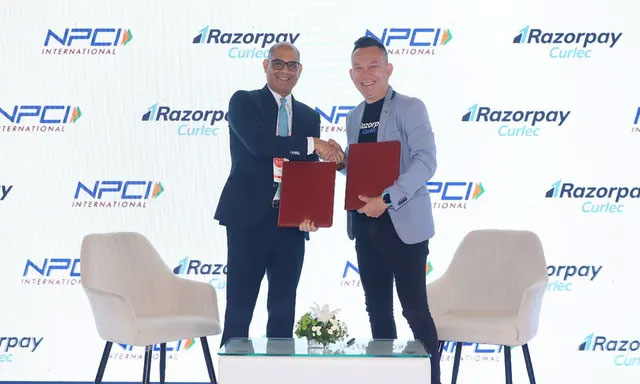
The initiative comes through Razorpay’s Malaysian subsidiary, Curlec, in collaboration with NPCI International Payments Limited (NIPL) — the overseas arm of the National Payments Corporation of India (NPCI). The partnership was formally unveiled at the Global Fintech Fest 2025.
With this integration, Indian tourists visiting Malaysia will be able to pay instantly and securely at local stores using their UPI-enabled apps, eliminating the need for international cards or currency exchanges.
In 2024, Malaysia welcomed over one million Indian tourists, who spent approximately Rs 110 billion — a 71.7% jump from the previous year. The surge in travel has underlined the demand for simpler and more cost-efficient digital payment solutions.
The introduction of UPI in Malaysia is expected to streamline transactions, reduce foreign exchange costs, and benefit both travellers and local merchants. Under the arrangement, Malaysian businesses using Razorpay Curlec’s platform can accept UPI payments in Indian rupees, with settlements processed in Malaysian ringgit (RM).
India’s Unified Payments Interface (UPI) has already transformed the domestic financial landscape, processing nearly 20 billion transactions in September 2025 alone. The system’s success — built on speed, security, and ease of use — is now being extended to international markets.
Commenting on the development, Shashank Kumar, managing director and co-founder of Razorpay, said, “UPI has revolutionised how India pays, blending innovation and inclusion at scale. Now, with Curlec, we’re taking that same spirit to Malaysia — enabling businesses and travellers to experience the same trust and simplicity that define India’s digital payment success.”
He added, “This move isn’t just about expanding payments; it’s about building a borderless fintech future across Asia.”