Daijiworld Media Network - New Delhi
New Delhi, Oct 30: Sleep deprivation, irregular daily routines and excessive activities may contribute significantly to migraine attacks among children, highlighting the importance of healthy lifestyle habits in preventing recurring headaches, according to medical experts.
Paediatric migraine is a condition in which lifestyle factors, including inadequate sleep and disrupted daily schedules, can play an important role in triggering episodes. Experts point out that identifying these triggers and helping children adopt healthier routines can be challenging, as lifestyle habits are often deeply embedded in family schedules.
One of the first challenges in managing childhood migraine is helping parents recognise the connection between a child's daily routine and headache episodes.
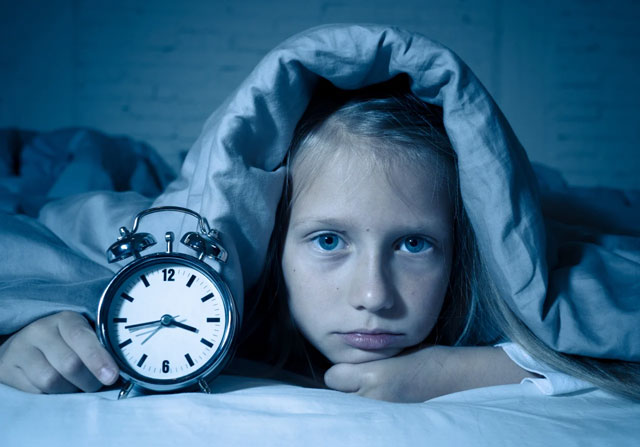
In children who experience migraines only a few times a year, identifying triggers may require repeated discussions with parents and careful examination of their daily activities. Factors such as staying awake late due to excitement, exhausting travel schedules, prolonged activities without adequate rest and the early stages of an illness may contribute to an attack.
Young children often cannot clearly describe warning symptoms or migraine-related visual disturbances known as aura. Consequently, parents may overlook early signs of tiredness or fatigue that could precede an episode.
For children experiencing migraines once or twice a month or more frequently, identifying individual triggers can become even more difficult. Chronic sleep deprivation and overcrowded daily schedules may create conditions in which several potential triggers overlap.
Medical experts acknowledge that scientific evidence supporting lifestyle interventions specifically for childhood migraine remains limited. A review by neurologists titled 'Lifestyle Advice for Pediatric Migraine: Blaming the Patient, or Evidence Based?' examined the challenges surrounding lifestyle recommendations and their scientific basis.
Nevertheless, specialists continue to recommend lifestyle modifications as an important initial approach before considering preventive medication.
Medication-based prevention also presents challenges. A recent review of 40 studies involving more than 2,500 patients found that approximately 30 per cent experienced at least one adverse event associated with preventive migraine medication.
The Childhood and Adolescent Migraine Prevention (CHAMP) trial, conducted between 2012 and 2018, compared amitriptyline, topiramate and a placebo among children and adolescents over 24 weeks. The study found no significant differences between the three groups in achieving a reduction of at least 50 per cent in monthly migraine days.
Despite these findings, the need for effective treatment remains significant as childhood migraine has emerged as an increasing public health concern.
A Finnish study found that migraine prevalence among seven-year-old children increased from 14.4 per cent in 1974 to 51.5 per cent in 1992. Another analysis published in 2025, based on Global Burden of Disease data, estimated that the incidence of childhood migraine increased from 22 per cent in 1990 to 36.8 per cent in 2021.
Meanwhile, emerging research into a molecule called calcitonin gene-related peptide (CGRP) has raised hopes of developing more effective migraine treatments.
CGRP is a neuropeptide found throughout the sensory nervous system and is believed to play an important role in migraine development. Research suggests that blocking its activity may help prevent or stop migraine attacks.
An animal study involving sleep-restricted rats found that exposure to even low levels of CGRP triggered migraine-like behaviour. Rats that had not experienced sleep restriction did not show the same response.
Other animal studies have also suggested that lifestyle-related stressors associated with migraine may act through biological pathways involving CGRP.
A newer group of migraine medicines known as gepants works by blocking CGRP-related activity. Although these medicines initially appeared to offer a better safety profile than some traditional treatments, the US Food and Drug Administration has recently required warnings about new-onset and worsening hypertension associated with certain drugs in this category.
These medicines are currently not approved for children and adolescents.
Researchers are hopeful that further studies into CGRP could eventually lead to treatments that are more effective and produce fewer side effects than existing preventive medications.
Medical experts emphasise that childhood migraine is influenced by several factors, including individual biological and potentially genetic vulnerabilities. Until more effective treatments become available, maintaining regular sleep schedules, ensuring adequate rest and avoiding excessive daily activities remain important steps in managing the condition.
Parents are encouraged to observe their children's routines, recognise possible warning signs and work with healthcare professionals to identify individual migraine triggers rather than assuming that every headache has the same cause.