Daijiworld Media Network - New Delhi
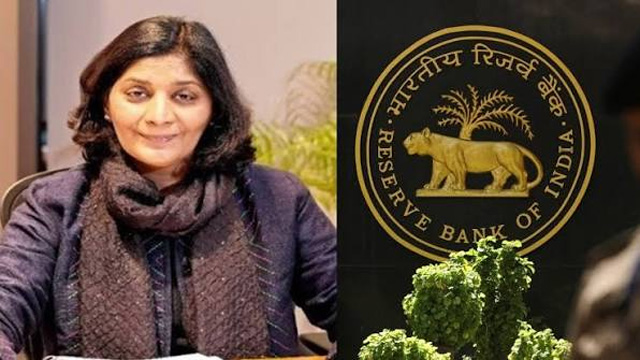
New Delhi, Sep 24: The rupee's 13 per cent depreciation over the past one-and-a-half years could prove to be temporary, with the Indian currency having scope to stabilise and appreciate from current levels, Reserve Bank of India (RBI) Deputy Governor Poonam Gupta said on Wednesday.
Speaking at the SBI Banking and Economics Conclave 2026, Gupta said the current market dynamics did not appear well-founded, noting that the RBI remains committed to maintaining orderly conditions in the foreign exchange market and has sufficient resources to meet India's external financing requirements.
The rupee on Wednesday ended a five-day gaining streak, closing at Rs 95.75 against the US dollar, down 0.16 per cent from the previous close. It has depreciated 0.6 per cent so far in September.
Gupta said the rupee had come under pressure following the West Asia conflict, depreciating more than 4 per cent against the dollar in March. However, after several measures taken over the following months, the currency's depreciation had been contained to less than 1 per cent between April and Wednesday, despite a rise in oil prices.
She said the current account deficit (CAD) is expected to narrow further in the coming years, supported by India's traditional strengths and emerging opportunities, including the growing performance of merchandise exports.
India's dependence on imported oil is expected to decline with the expansion of alternative energy sources and efforts to develop domestic oil reserves. Gupta also said oil prices could stabilise once the West Asia conflict is resolved.
She noted that recent increases in oil and gold prices had temporarily pushed up the CAD. India traditionally runs a small current account deficit alongside a larger capital account surplus, resulting in a net positive balance of payments. However, over the past two years, the capital account surplus has fallen short of the CAD, resulting in a negative balance of payments of around $5 billion in 2024-25 and $23.6 billion in 2025-26.
Gupta also expects the capital account to become more favourable from later this financial year. She cited stretched valuations in other markets, moderation in the artificial intelligence investment boom, strong domestic macroeconomic fundamentals and India's robust real and nominal GDP growth among the factors that could support capital inflows.
She said the domestic investment cycle was gaining momentum, while healthy balance sheets of banks and corporate houses would provide further support. India's inclusion in global bond indices, she added, would also help attract capital flows.
Gupta said India could continue to grow at 7 per cent or more, citing the broad-based nature of the economy. Unlike economies dependent on one or two sectors, India has several sectors contributing to both domestic and external demand, she said.
She also pointed to differences in the economic strengths of various states, with some specialising in high-tech manufacturing while others are catching up through investments in skills, infrastructure and ease of doing business.
According to Gupta, India's growth could already be around 8 per cent if global external conditions were more favourable. She said the relationship between India's growth and global growth was positive, but the country was currently not receiving an additional boost from the global economy.
Artificial intelligence, she said, remains an untapped growth opportunity for India. Gupta said the country had leveraged digital innovation and could similarly benefit from AI while managing the associated risks.