Daijiworld Media Network - New Delhi
London, Sep 15: A new super-resolution microscope could help scientists better understand inflammatory bowel disease (IBD), potentially paving the way for more targeted treatments for thousands of people living with the incurable condition.
Scientists at the Rosalind Franklin Institute have begun using a Stimulated Emission Depletion (STED) microscope that can operate at around 10 times the resolution of conventional light microscopy.
Housed at the Harwell Science and Innovation Campus in Oxfordshire, the microscope uses a second, doughnut-shaped depletion laser. The outer ring of the laser suppresses fluorescence emitted by the first laser beam, while leaving the centre unaffected. This allows scientists to detect fluorescent light from the focal point in exceptional detail.
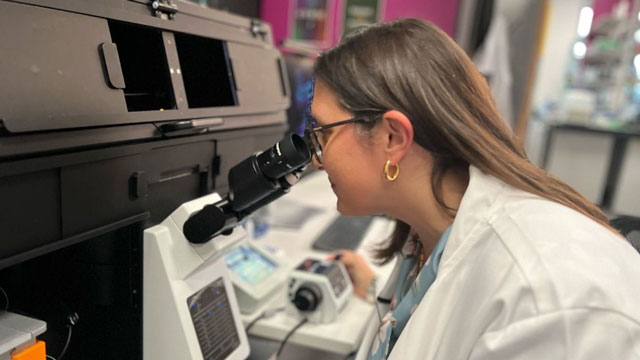
The technology can also visualise several biomolecules, including proteins, lipids and glycans, in a single sample through different fluorescent tags. This process, known as multiplexing, could allow researchers to examine multiple cellular structures and processes simultaneously.
The microscope is described as one of its kind in the UK and includes additional features such as mirrors to correct image distortion and a temperature-controlled stage. These features allow scientists to study living cells and mini-organs under conditions close to normal body temperature, as well as examine fixed samples.
The research team, led by Dr Karina Pombo-Garcia, hopes the technology will shed new light on the biological mechanisms behind IBD, which affects more than half a million people in the UK. Crohn's disease and ulcerative colitis are the two main forms of the condition.
Dr Pombo-Garcia said STED provides the ability to examine the molecular architecture of the human gut at approximately 20-nanometre resolution, allowing researchers to observe how individual proteins organise at the junctions between intestinal cells to form and maintain the gut barrier.
She said this was particularly important in IBD because the intestinal barrier becomes damaged and more permeable, allowing inflammation to persist. However, scientists still do not fully understand the precise changes taking place at the nanoscale.
While conventional microscopy can show that the gut barrier has been disrupted, STED could help researchers determine exactly how and where the disruption occurs, she said.
The microscope can also be used to examine thicker human samples, including patient-derived intestinal organoids. By comparing healthy samples with those derived from people with IBD, researchers hope to identify the earliest molecular changes that cause the intestinal barrier to fail.
According to a report by the British Society of Gastroenterology, around 24% of adults in the UK living with IBD find it difficult to cope with the disease. About one in seven cases are reportedly diagnosed following an emergency hospital admission.
Many forms of IBD currently lack targeted treatments, while existing therapies can cause debilitating side effects that affect patients' daily lives.
Dr Pombo-Garcia said understanding the molecular processes involved in the disease was essential for developing more precise therapies. She said STED could help identify potential treatment targets and eventually enable researchers to test whether a treatment can restore the normal nanoscale organisation of the gut barrier.
Science Minister Chris McDonald unveiled the microscope alongside a five-year investment of £67.7 million from the Engineering and Physical Sciences Research Council (EPSRC) for the Rosalind Franklin Institute. The funding will support its work in next-generation imaging, engineering, biology and diagnostics.
Dr Pombo-Garcia said the new funding would provide an unprecedented opportunity to connect changes occurring at the scale of individual proteins with their eventual impact on patients with IBD.
The Henry Royce Institute, which specialises in materials research, will also receive a further £90 million over the same period under the government's plan to support scientific and medical innovation. The funding was included in the core budget of UK Research and Innovation (UKRI) as part of the 2025 spending review.