Daijiworld Media Network - Bhubaneswar
Bhubaneswar, Sep 8: The recovery of five infant orangutans from a forest area in Bhograi block of Odisha's Baleshwar district on Tuesday has raised suspicions of wildlife trafficking and a possible international smuggling racket.
Odisha Forest, Environment and Climate Change Minister Ganesh Ram Singh Khuntia said forest officials reached the area after receiving information about the presence of orangutans and rescued five animals aged between one and two years.
The minister said orangutans are native to the rainforest regions of Indonesia and Malaysia and are extremely rare in India. The species has also been reported from some other parts of the Asian subcontinent.
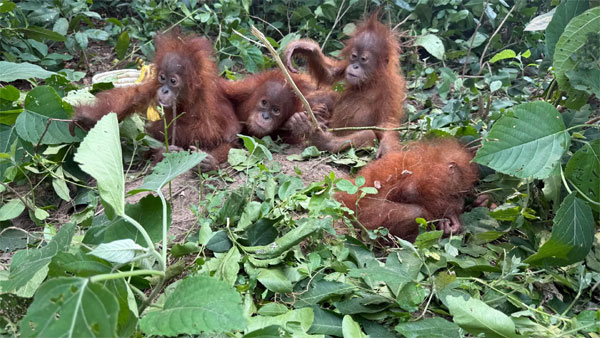
"Though these species are not found in Odisha, it is fortunate for us that such exotic wildlife species have been spotted in the state. They might have come here in search of food, or there could be an international wildlife smuggling racket involved. According to information, one orangutan is priced at around Rs 20 lakh to Rs 25 lakh in the international market," Singh Khuntia said.
The rescued orangutans will be shifted to a designated facility, where they will be quarantined and provided necessary treatment. They will subsequently be housed at Nandankanan Zoological Park in Bhubaneswar.
The Forest Department has launched an investigation to determine how the exotic animals reached Odisha and whether an international wildlife smuggling network was involved.
According to reports, the Wildlife Crime Control Bureau (WCCB) has also been informed about the recovery and is likely to initiate an investigation.
Orangutans are great apes known for their intelligence and reddish-brown hair. Native to Indonesia and Malaysia, they are critically endangered, with their populations threatened by habitat loss and illegal wildlife trade.
India has no native orangutan population, making the recovery of five young animals in an Odisha forest particularly unusual and prompting authorities to investigate their possible trafficking.