Daijiworld Media Network - Ujire
Ujire, Sep 6: Scalp acupuncture combined with intensive physical rehabilitation may help support motor recovery in people recovering from spinal cord injuries, experts said, while stressing that the technique should be used only as a complementary intervention and not as a substitute for conventional rehabilitation.
Dr Geetha B Shetty, Dean and Head of the Department of Acupuncture at SDM College of Naturopathy and Yogic Sciences, Ujire, said scalp acupuncture may help stimulate areas of the brain involved in movement and support the brain's ability to adapt following a spinal cord injury.
“When combined with targeted physical exercises, this stimulation may potentially support motor recovery by encouraging repeated movement practice and helping the brain and body relearn impaired functions,” Dr Shetty said.
A case report published in the Journal of Acupuncture and Meridian Studies in 2023 described a 45-year-old man who sustained a serious spinal cord injury after falling from a tree. He suffered a burst fracture of the L3 vertebra, along with fractures of the right medial malleolus and fibula and dislocation of the right lunate, resulting in significant impairment of movement and sensation.
The patient underwent rehabilitation at SDM College of Naturopathy and Yogic Sciences, Ujire, where scalp acupuncture was incorporated alongside intensive physical therapy.
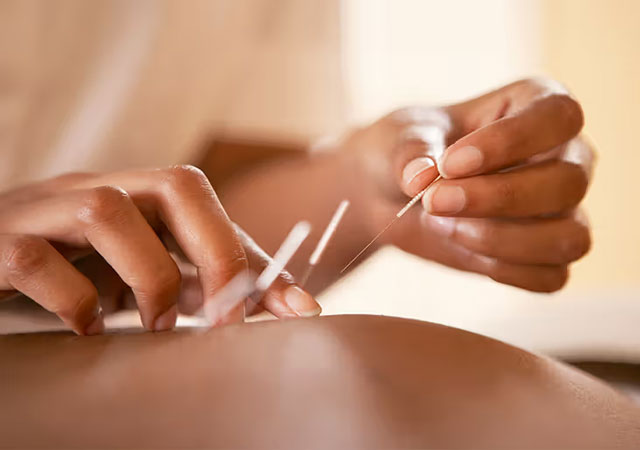
Ten disposable stainless-steel needles were inserted on both sides of the scalp and manually stimulated for around 30 minutes per session. The patient underwent five sessions a week over a 21-day period, completing 15 sessions in total. No electrical stimulation was used.
Acupuncture was administered alongside, rather than instead of, physical rehabilitation. During the sessions, the patient was encouraged to attempt movements that remained difficult during his rehabilitation exercises.
According to the case report, changes in movement were observed following the first 30-minute acupuncture session. The patient's left knee flexion reportedly improved from around 45 degrees to 130 degrees, while muscle strength in the affected area also improved.
By the end of the 21-day intervention, the patient demonstrated improvements in muscle strength in both lower limbs, balance, walking speed and distance, and his ability to walk independently. At discharge, he was reportedly able to walk without a cane and had regained the ability to distinguish between hot and cold sensations in his legs.
“Scalp acupuncture should be viewed as a complementary approach and not a replacement for physical rehabilitation. When combined with intensive, supervised physiotherapy, it may help stimulate areas of the brain involved in movement while giving patients an opportunity to repeatedly practice, strengthen and regain impaired motor functions,” Dr Arghya, Assistant Professor, SDM College of Naturopathy and Yogic Sciences, Ujire, said.
The possible explanation is that stimulation of motor-related areas of the scalp, when combined with repeated physical movement, may support the brain's ability to adapt and reorganise following neurological injury, he said.
Experts said the approach gives patients an opportunity to repeatedly practise movements affected by the injury, which is an important component of neurological rehabilitation.
However, as the findings are based on an individual case, larger clinical studies are needed to establish its effectiveness and broader clinical application, they said.