Daijiworld Media Network - Bengaluru
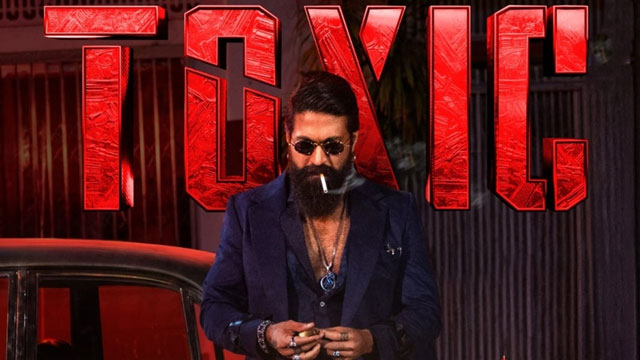
Bengaluru, Aug 31: Yash's Toxic, directed by Geetu Mohandas, attempts to blend a gangster saga with psychological drama, family conflict and revenge, but its ambitious vision is undermined by hurried storytelling, an overloaded narrative and an editing style that leaves little room for its characters or emotions to register.
The film presents itself as a gangster's rise and fall set against Portuguese-era Goa, while drawing elements of a psychological tragedy, family revenge drama and crime epic. Rather than feeling like a focused story, however, Toxic attempts to accommodate several different cinematic influences and story arcs within a single film.
The central criticism is not aimed at editor Ujwal Kulkarni, who previously worked on films such as KGF 2 and Salaar. Instead, the problem appears to stem from the overall storytelling and editing choices, with the film frequently introducing characters, relationships and conflicts without allowing enough time for audiences to understand or connect with them.
A major issue emerges within the opening 15 to 30 minutes, where a large portion of the film's major developments are compressed into a short period. Raya's rise, his backstory, the introduction of different gangs, several relationships, betrayals, deaths and major action sequences unfold at such speed that the narrative becomes difficult to follow.
The relationship between Ganga, played by Nayanthara, and Raya receives particularly limited development, with their childhood connection established through only a couple of scenes. Several other characters, including Victor, Marcus, Nicholas and Sudev Nair's character, are introduced without sufficient explanation of their backgrounds, loyalties or motivations.
The women's characters also suffer from the rushed treatment. Rebecca, played by Tara Sutaria, and Elisabeth, portrayed by Huma Qureshi, receive little time to establish their respective relationships with Raya and other central characters before the plot moves forward.
Rebecca's emotional journey, including her betrayal and heartbreak, arrives before audiences have had enough opportunity to understand her character. Similarly, Elisabeth's relationship with her brother, played by Akshay Oberoi, is insufficiently developed before his death becomes an important part of her motivation.
Melissa, played by Rukmini, also enters the narrative with comparatively little groundwork.
By the interval, the film has already moved through an enormous number of developments, with Raya's rise, multiple conflicts, relationships, killings and major action sequences packed into the first half. Four of the five major women are also dead by that point.
The film's problem, therefore, is not a lack of information but a lack of time for that information to have an emotional impact. Scenes that could have been developed over several sequences are instead reduced to brief moments, leaving audiences to fill in important gaps themselves.
The editing style further contributes to the problem. Toxic frequently uses cuts to black, slow-motion entries and intercut sequences reminiscent of techniques used in KGF and Salaar. While such techniques can be effective when one scene builds upon another, they often appear in Toxic without adding sufficient narrative or emotional value.
Several emotional scenes are cut away from just as they appear ready to reach their impact. Instead of allowing a character's reaction or an emotional exchange to develop, the film repeatedly moves to another scene.
One particularly noticeable sequence comes before the interval, when Ganga appears ready to demonstrate her strength with a gun. Just as the moment begins to build, the scene cuts away, leaving her character arc feeling incomplete.
The emotional consequences of Raya's downfall are similarly weakened. What should have been the central emotional turning point is largely presented through a montage featuring rain, whisky and Raya's dishevelled appearance. The visual presentation conveys sadness, but the film has not spent enough time establishing the emotional foundation necessary for audiences to experience that loss with him.
The narrative might have benefited from being divided into two parts. A longer first instalment could have established the characters, relationships, gangs and conflicts before allowing the second part to deliver the consequences and emotional payoff.
Instead, Toxic attempts to establish its world and deliver its climax within the same film, leaving several potentially powerful character arcs underdeveloped.
The film's ambitious nature is nevertheless evident. Its world, scale and themes suggest the possibility of a much larger gangster drama, combining elements of revenge, family conflict, ambition and psychological collapse.
Geetu Mohandas has previously described her filmmaking process as one in which writing, shooting and editing can evolve independently rather than strictly following the original script. While such an approach can allow creative freedom, the review argues that a sprawling, multi-character crime epic such as Toxic requires stronger coordination between its various storytelling elements.
Ultimately, Toxic appears to contain the ingredients of a potentially compelling film but struggles to bring them together coherently. A longer version or a two-part structure could potentially have given its characters and emotional arcs the breathing space they needed.
The film's ambition is evident, but the execution leaves the impression that a much larger story was compressed during the editing process, resulting in a visually elaborate film whose characters and emotions often fail to receive the time they deserve.