Media Release
Mangaluru, Aug 28: “Young people are a force for good, with imagination, courage and ingenuity to find lasting solutions to global challenges,” said Ban ki-moon, former UN secretary-general.
St Aloysius Pre-University College believes that young people will help build a better world - the future they want and the future the world needs. The College hosts a plethora of events to ensure that youth are provided the vision and platform to become powerful change makers. St Aloysius Pre-University Model United Nations (SAPMUN) is one such dynamic forum; a vibrant arena for dialogue and diplomacy.
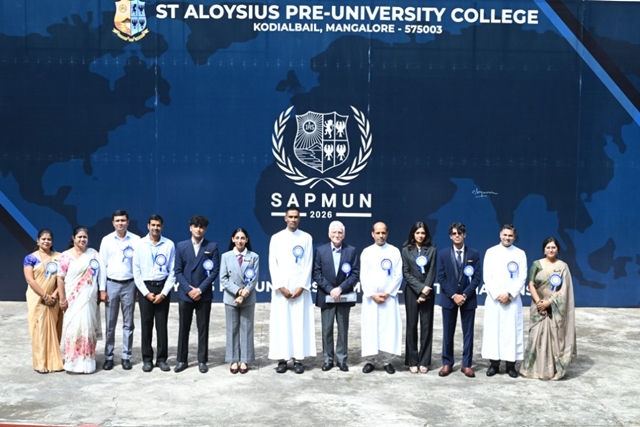
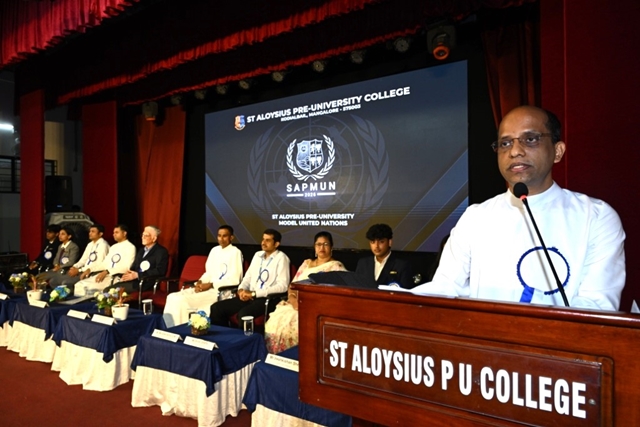
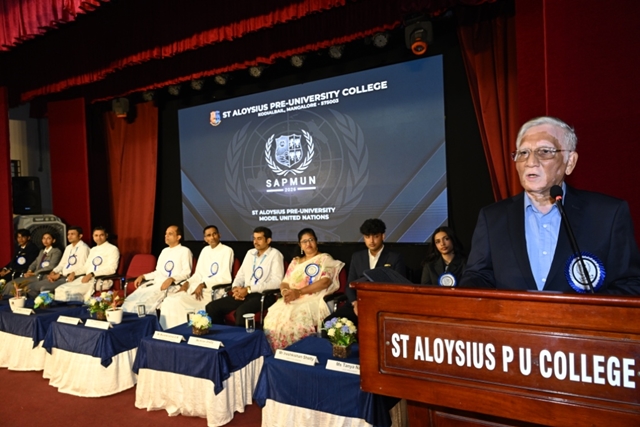
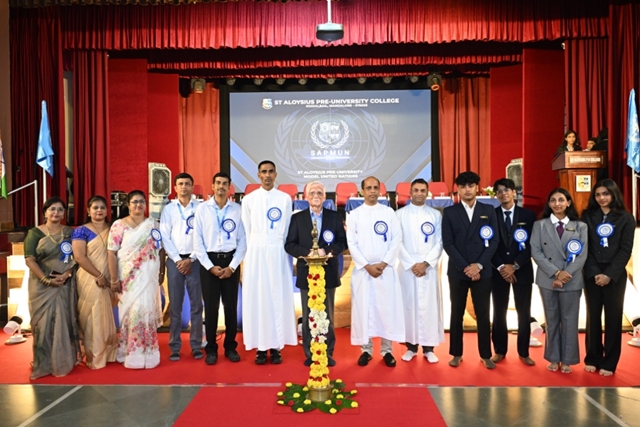
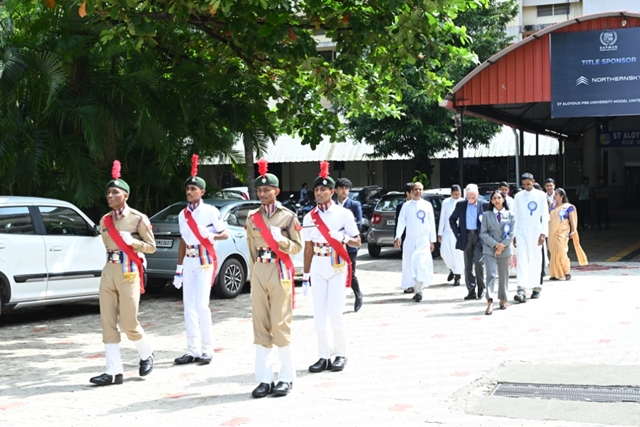
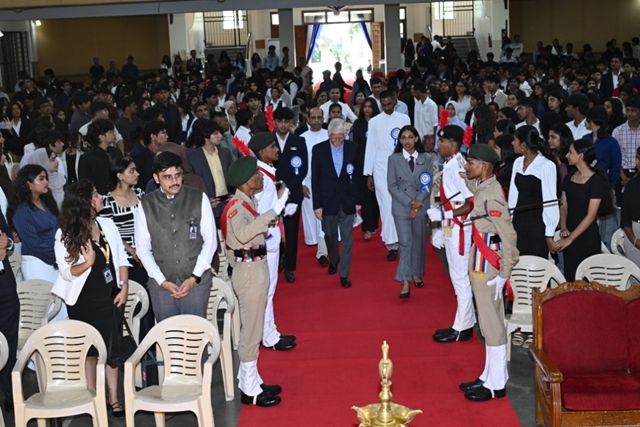
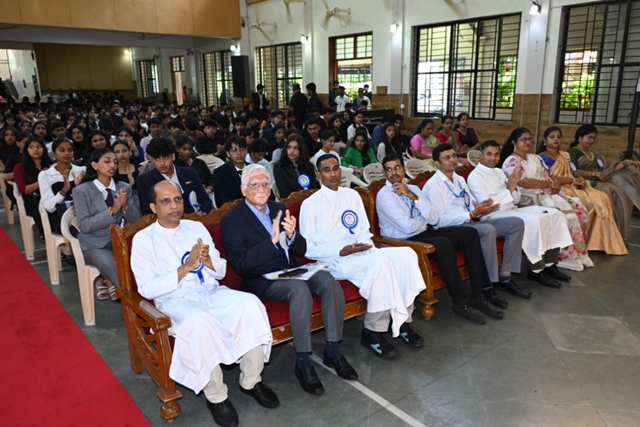
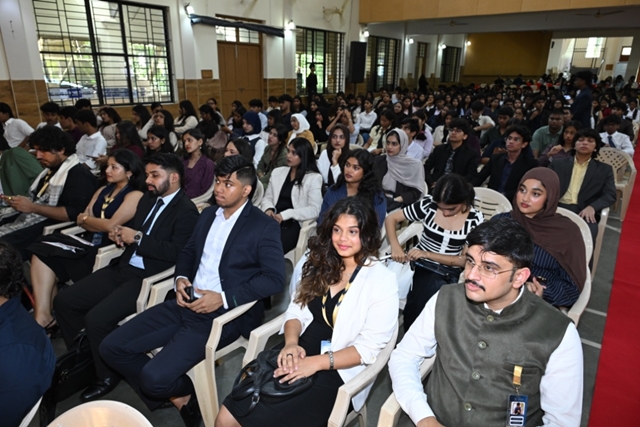
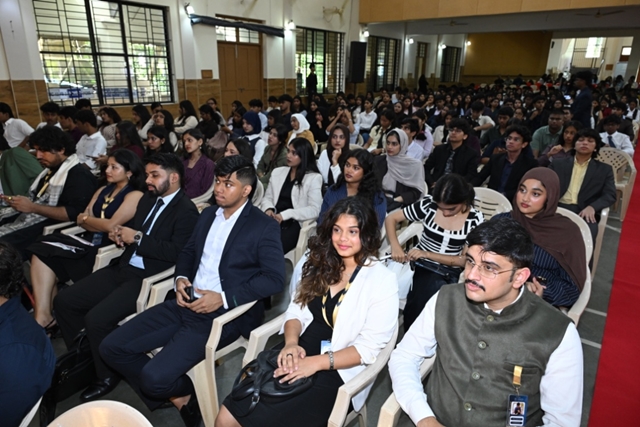
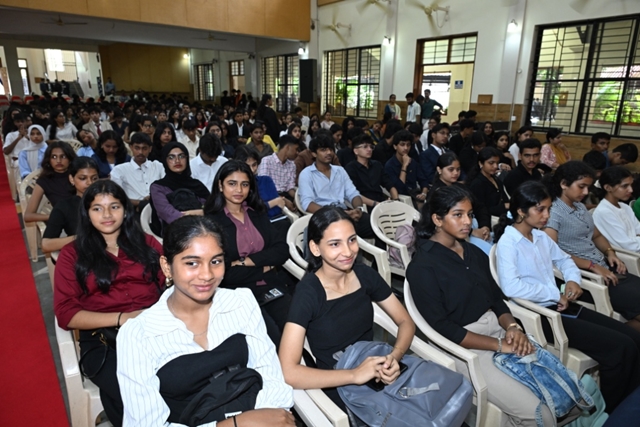
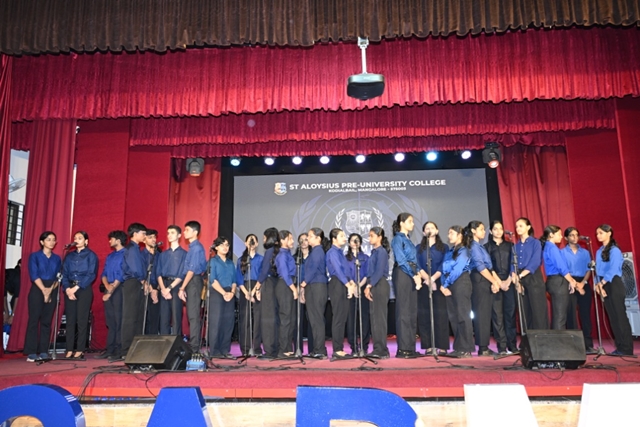
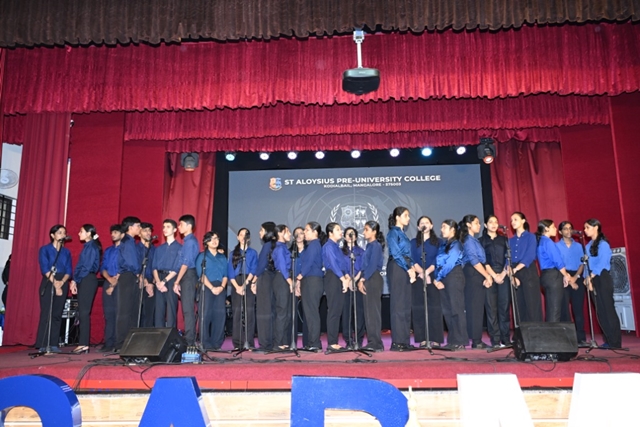
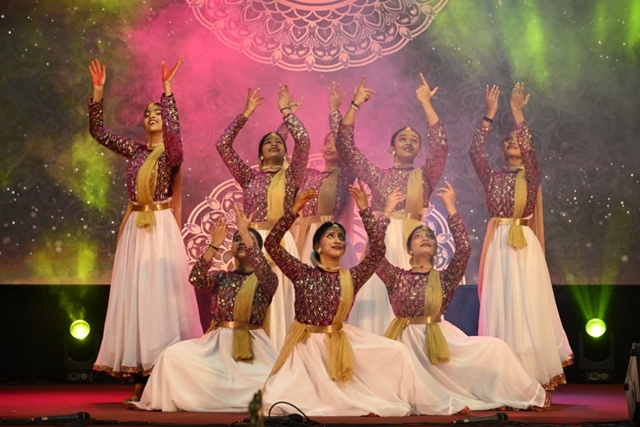
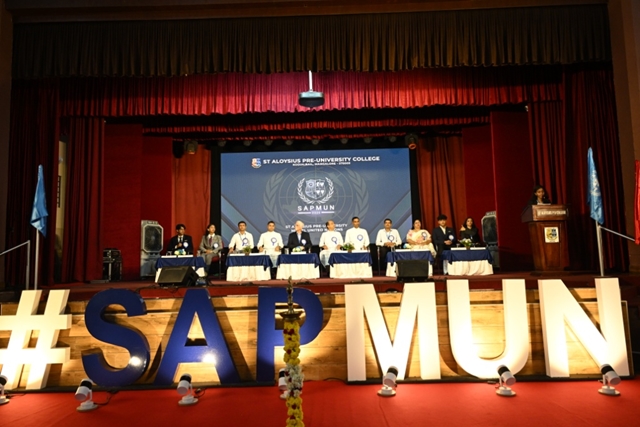
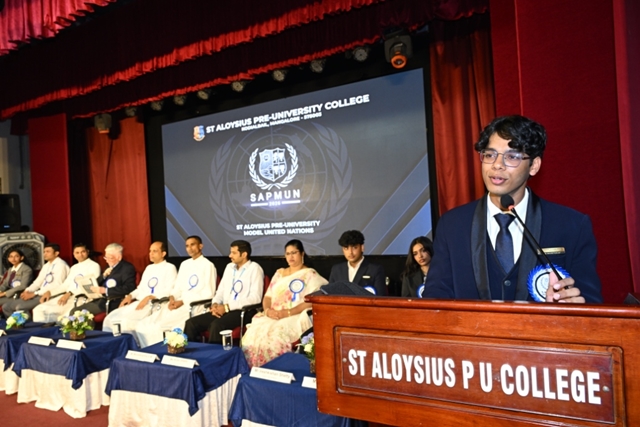
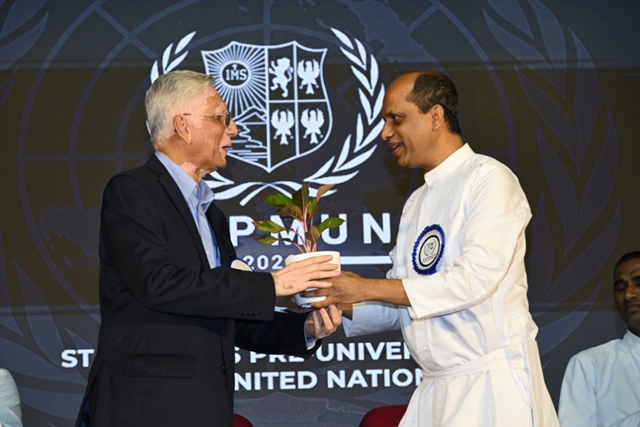
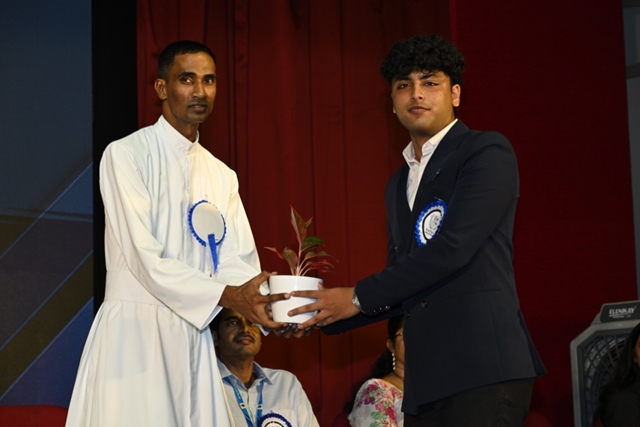
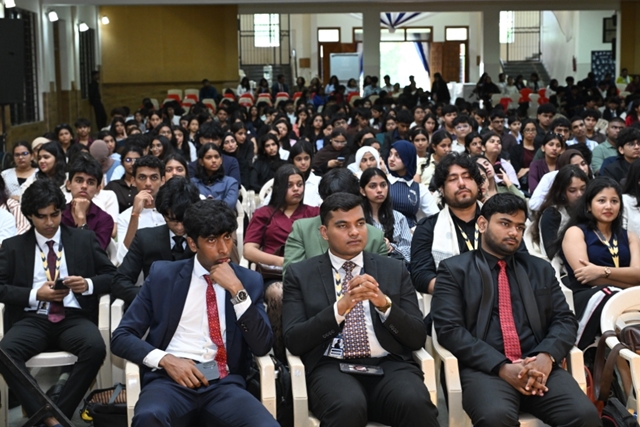
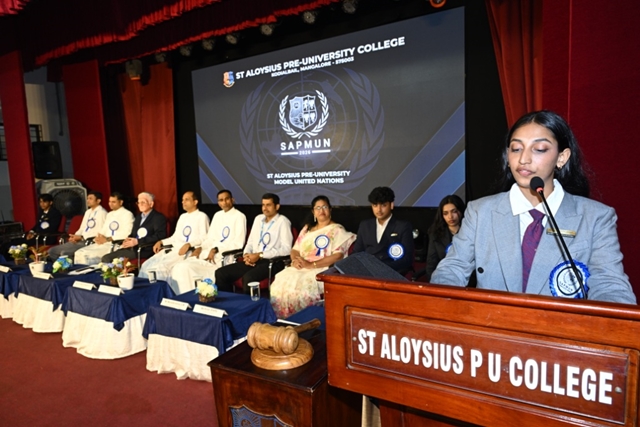
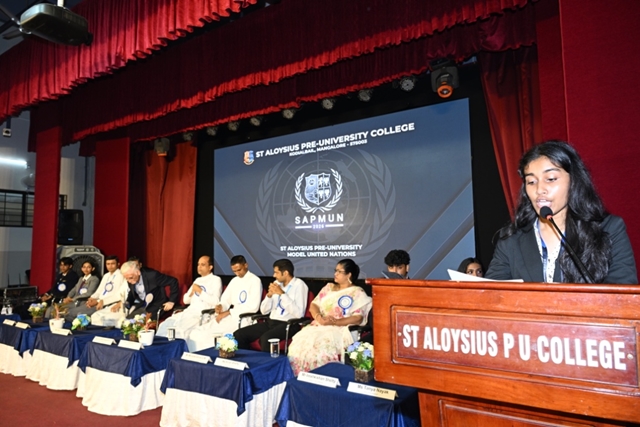
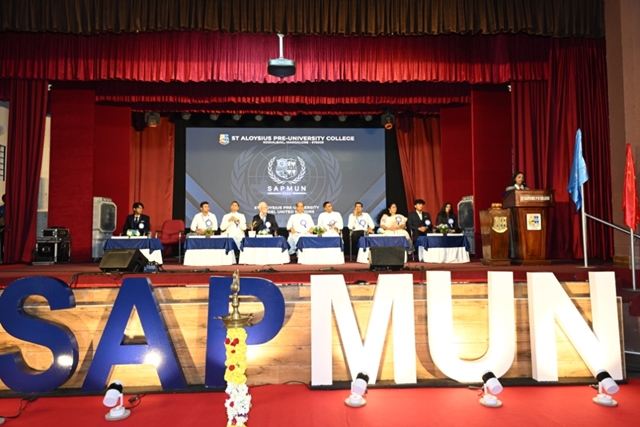
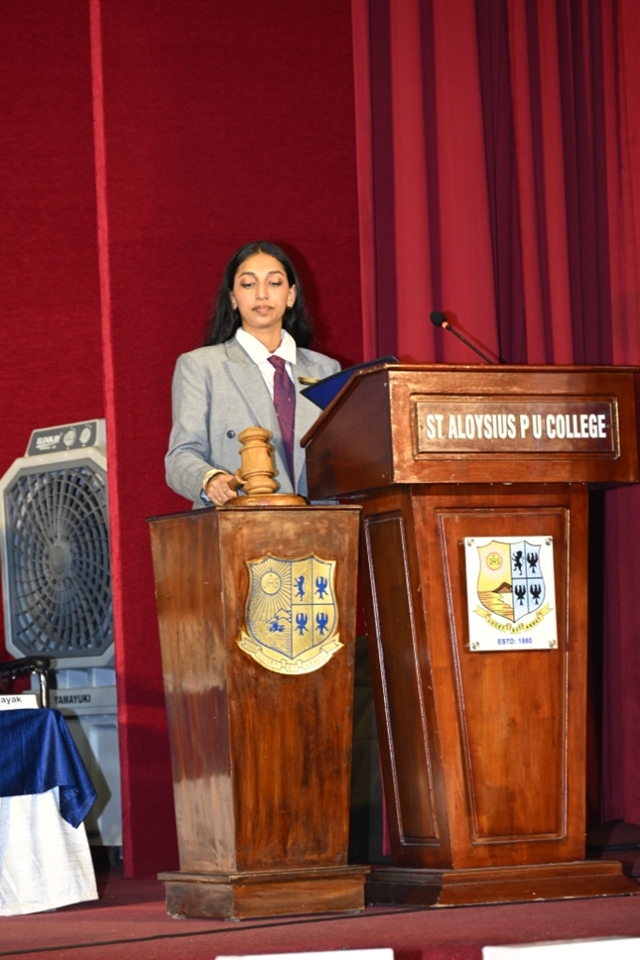
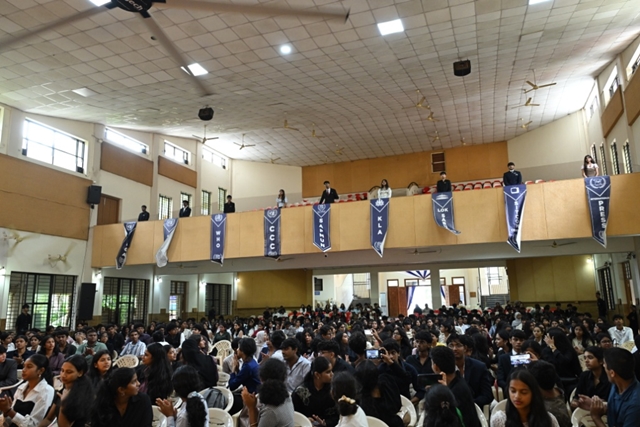
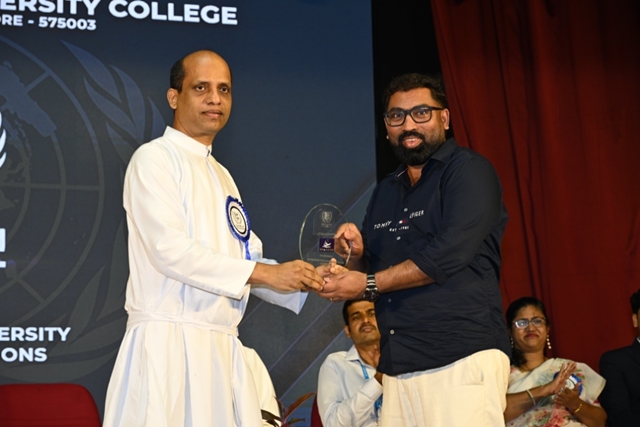
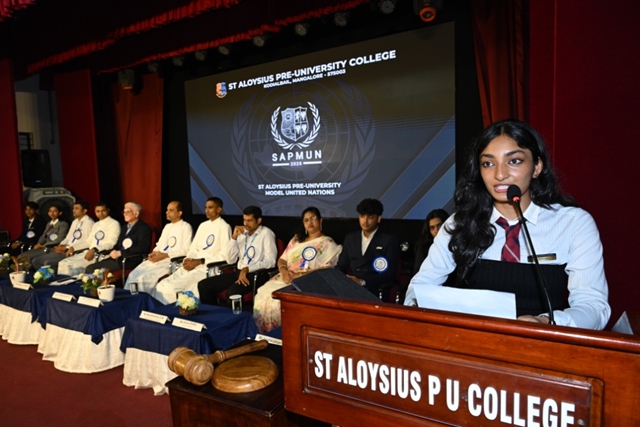
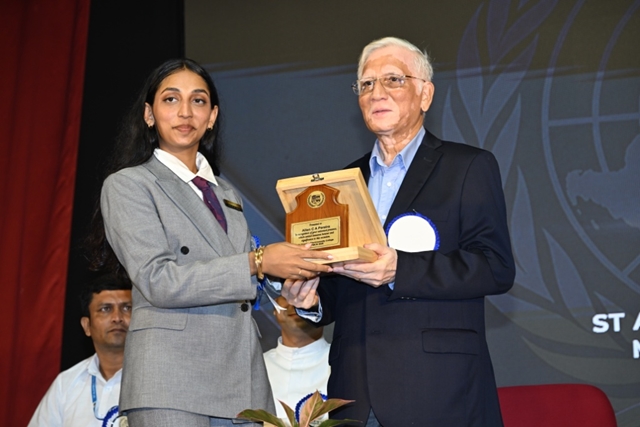
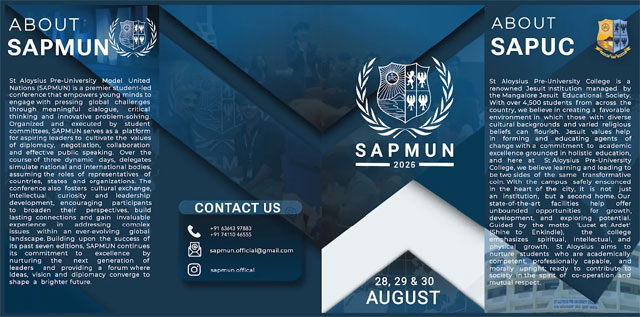
Marking eight years of excellence, SAPMUN officially inaugurated its latest edition, reaffirming the institution’s commitment to fostering leadership and well-rounded student development.The inauguration commenced on a gracious note, with a solemn prayer song and a traditional welcome dance, followed by the ceremoniallighting of the lamp.
Daniel Eugene Veigas, president, SAPMUN 2026, officially greeted the assembly and introduced the chief guest of the occasion, Allen C A Pereira, an illustrious alumnus and distinguished banking professional.
Fr Clifford Sequeira SJ, principal of St Aloysius Pre-University College shared insightful remarks with the audience, emphasizing the importance of a forum such as SAPMUN which gives young people the opportunity to understand the world, listen to different perspectives and discover their role as future-makers of our nation and the world. Fr Clifford presented three vital imperatives as he urged the delegates to recognize their agency on the global stage. Drawing parallels to the United Nations adopted its sustainable development goals, Fr Clifford highlighted the enormous global challenge of addressing issues like poverty, health and education, environmental care and peace, whichdemand collective action from governments, organisations and communities. Recollecting the story of young William Kamkwamba, the Principal exhorted the delegates to utilise the ample resources available to them, believe in themselves, and take initiatives that can make a difference. The Principal pointed out that awareness paired with action leads to change. He asserted that setting aside ideological differences, one must be willing to take first step. Finally, Fr Clifford stressed the need to sensitize oneself to people, cultures and perspectives different from one’s own. Encouraging the young leaders to cultivate independent thought, embrace alternative perspectives and stand for what is right, the Principal concluded with a message: true global change begins the moment individuals commit to making a difference right where they stand.
In his keynote address, chief guest Allen C A Pereira warmly recalled his formative years as a student at the institution. He highlighted how participating in co-curricular activities like the Rotaract Club and the College Magazine cultivated a multicultural, multidimensional worldview—shaping students into well-informed, morally grounded individuals.Building upon the Principal’s remarks, Mr. Pereira reflected on the mid-20th century, describing the two World Wars as the most devastating man-made catastrophes in modern history and warning against the catastrophic perils of a future global conflict. In this context, he commended platforms like SAPMUN as invaluable arenas for self-reflection and inner conflict resolution. Cautioning delegates against the prejudices often fueled by sensationalist media and opportunistic political narratives, he challenged the young assembly to evaluate their roles as responsible national and global citizens.
Addressing the evolving legacy of the United Nations, Pereira noted that the aftermath of the World Wars compelled the global body to prioritize social justice, poverty alleviation, and the eradication of human exploitation. However, he observed that contemporary global conflicts severely test the UN’s efficacy, raising urgent questions regarding its relevance and structural reform—most notably, the imperative to liberate international governance from the control of a select few within the UN Security Council. Pointing to landmark triumphs such as the global eradication of polio, Mr. Pereira expressed optimism that the UN can similarly tackle acute humanitarian crises, including severe hunger and disease across Sub-Saharan Africa, alongside the rehabilitation of war-displaced populations. In closing, Pereira commended the rising generation for championing non-violence and embracing a broader humanitarian perspective. He advised delegates that meaningful external change begins with self-awareness and personal integrity, urging them to ponder on these questions before taking any action- Is it the truth? Is it fair to all concerned? Will it build goodwill and better friendships? He concluded with a call to action: treat others as one wishes to be treated, and allow transformative change to begin from within.
In her address, Namratha Shenoy, secretary-general of SAPMUN 2026, delivered a thoughtful reflection on human connection, noting that "the most beautiful aspect of being human is that we are all stories that cross paths." Highlighting the scope of the three-day conference, Shenoy observed that delegates would engage in rigorous debates over unfamiliar borders, defend unfamiliar policies, and formulate solutions to crises impacting millions globally. She emphasized that beyond intense negotiations, the core lesson of the assembly is empathy: learning to understand the origins of an idea before offering disagreement. "The world lacks understanding—let us learn to listen," she remarked, urging participants to look beyond their personal viewpoints and cultivate a broader perspective. Furthermore, Shenoy outlined the vision behind ‘Project Svara,’ a landmark initiative launched by SAPMUN 2026 designed to broaden educational access, the initiative provides underprivileged students with the opportunity to participate directly in the Model UN conference and benefit from its transformative academic experience.
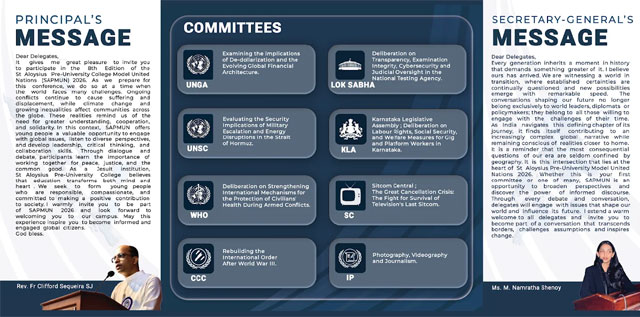
Namratha officially declared the eight edition of SAPMUN open unveiling the eight commitees- UNGA, UNSC, WHO, Sitcom Central, Karnataka Legislative Assembly, Lok Sabha, International Press, CCC- and set the proceedings of the three-day assembly in motion.
The other dignitaries present at the event included the finance officer Fr Balaraju SJ, campus minister, Fr Anthony Derrick SJ, vice principal of Science Muralikrishna G M, deans Kiran Shetty and Inas Dais; staff coordinators, Lavanya K, Niha Fahim and John Wesley; director general, Iresh Kishan Shetty and vice president Tanya Nayak.
The ceremony concluded with a vote of thanks delivered by Deeya Alva, under-secretary general of Media and Design and Neha Castelino compered the programme.