Daijiworld Media Network – Panaji
Panaji, Aug 13: Goa currently has sewage treatment capacity for less than half of the wastewater generated in the state, with installed treatment capacity standing at 87 million litres per day (MLD) against an estimated sewage generation of 176 MLD, according to information provided in the Rajya Sabha.
The figures indicate a treatment capacity gap of nearly 89 MLD, with the state's existing infrastructure capable of handling only around 47% of the sewage generated each day.
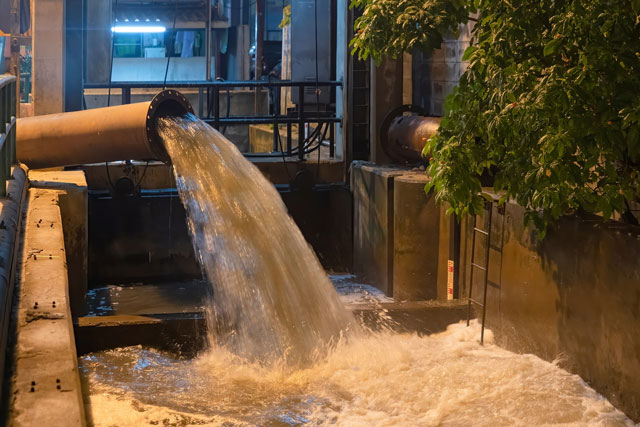
The operational sewage treatment plants include a 7.5 MLD facility at Colva, 15 MLD and 12.5 MLD plants at Panaji, a 2 MLD plant at Patto in Panaji, a 1 MLD plant at Durbhat, a 20 MLD plant at Vasco and 20 MLD and 6.7 MLD plants at Margao. Goa also has a 15 MLD sewage treatment plant at Kavelem and a 0.8 MLD facility at Sanquelim.
With sewage generation nearly twice the state's installed treatment capacity, authorities have also moved to strengthen monitoring of sewage treatment plants operated by private establishments such as hotels, hospitals and residential complexes.
Under the new measures, such establishments will be required to install Internet of Things (IoT)-based online monitoring systems for their sewage treatment plants within six months. The systems are aimed at enabling continuous monitoring of plant operations and ensuring compliance with prescribed discharge standards.
The government has also laid down penalties for establishments found violating the prescribed discharge norms.
In the event of a first violation, the sample will be re-tested for confirmation. If the deviation is confirmed, a penalty of Rs 5,000 will be imposed, while the establishment will also have to bear the cost of re-collection and analysis of the sample.
For a second violation, the penalty will increase to Rs 20,000. The Goa State Pollution Control Board will also conduct a performance evaluation of the sewage treatment plant, with the cost to be borne by the concerned establishment.
Meanwhile, the Goa Sewerage and Infrastructure Development Corporation has been adopting various technologies to expand sewage treatment and sewerage infrastructure across the state.
These include Sequential Batch Reactor (SBR), Membrane Bio Reactor (MBR), Natural Treatment System-Phytorid and Vacuum Sewerage System for sewage treatment plants.
For laying and upgrading sewer networks, technologies such as Horizontal Directional Drilling (HDD), Micro Tunnelling (MT) and pipe bursting for rehabilitation of existing sewer lines are also being used.
The measures come as Goa faces the challenge of expanding its sewage treatment infrastructure to bridge the significant gap between wastewater generation and treatment capacity.