Media Release
Bengaluru, Jul 27: The School of Information Technology (SoIT), St Joseph's University, inaugurated its Centre for Excellence in Artificial Intelligence and Machine Learning (AI/ML) on July 24. Established in partnership with Sherpavector Pvt Ltd, the centre aims to bridge academia and industry by providing students with opportunities to engage in cutting-edge research, innovation, and real-world technology projects.
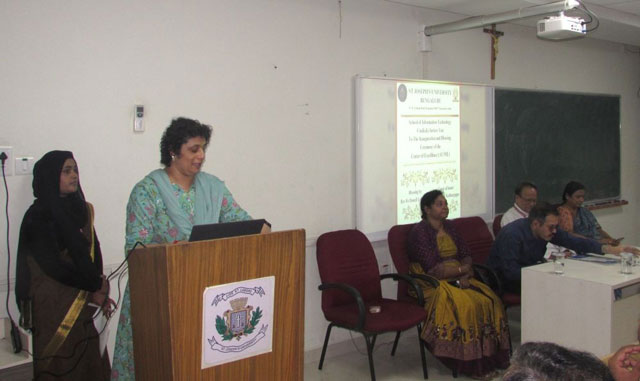
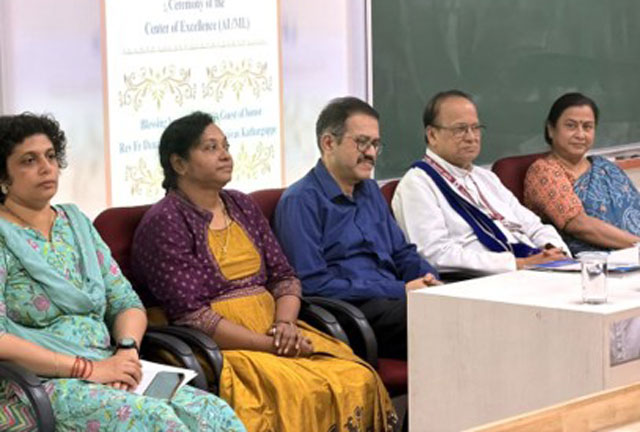
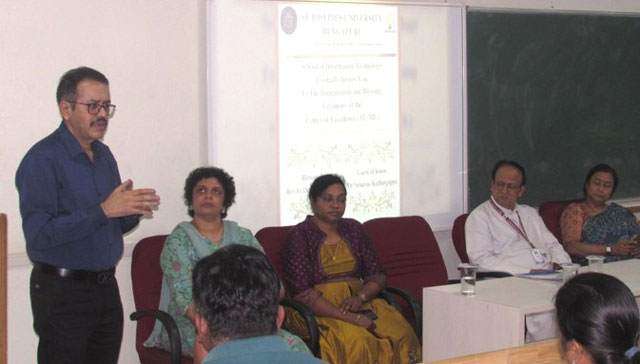
The inauguration ceremony commenced in the conference room at the MAGIS Block with the gathering of postgraduate students, faculty members, programme coordinators, and dignitaries. The proceedings opened with the choir's rendition of Thank You Lord. The dignitaries included Fr Denzil Lobo SJ, director, School of Information Technology; Dr A M Bojamma, dean, School of Information Technology; Dr Jayati Bhadra, head, department of advanced computing; Dr Prasanthi B G, associate dean and head, department of computer science; and the guest of honour, Dr K S Srinivas, founder and chief technology officer of Sherpavector Pvt Ltd. Faculty members Dr Mrinmoyee and Dr Periyaswamy, programme coordinators, were also present. The ceremony was compered by Mustakheem Sayem Fathima.
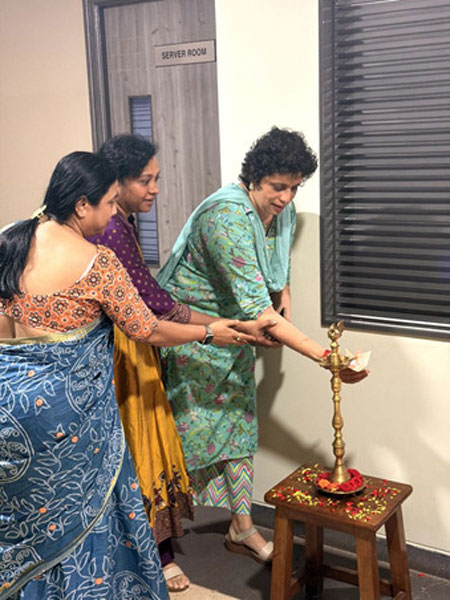
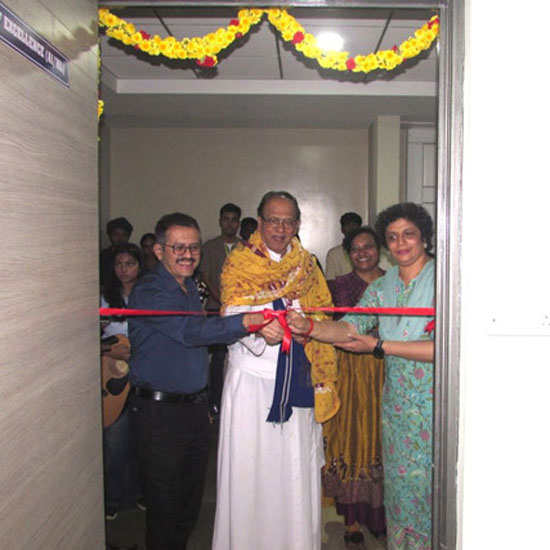
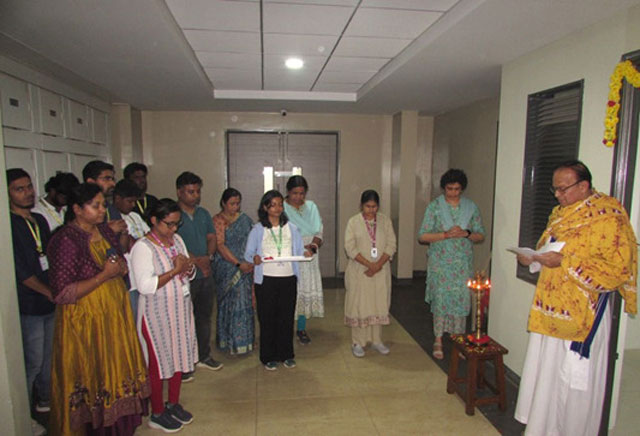
The gathering then proceeded to the entrance of the Centre for Excellence on the second floor of the MAGIS Block, where the blessing, ribbon-cutting ceremony, and lighting of the lamp were held. Fr Denzil Lobo SJ, blessed the centre and reflected on the need to pair technological advancement with compassion in service of humanity. He described the centre as more than a physical space or repository of technical knowledge, calling it a new beginning dedicated to innovation rooted in human dignity. Drawing on the Jesuit vision of forming men and women for others, he emphasised that knowledge acquires meaning only when applied for the betterment of society. He also acknowledged Dr Bojamma's instrumental role in initiating the collaboration between the University and Sherpavector. Following the blessing, the dignitaries cut the ceremonial ribbon and were joined by faculty members and students in the lighting of the lamp. The gathering then sang There Shall Be Showers of Blessing before returning to the conference hall.
Addressing the gathering, Dr A M Bojamma described the partnership as a significant milestone for the school of information technology. She highlighted that students would have the opportunity to work as research associates and interns on live industry projects rather than simulated classroom exercises. She noted that research undertaken at the centre would be jointly supervised and published with experienced academicians and industry experts. Dr Bojamma also outlined Sherpavector's commitment to fostering entrepreneurship through seed funding, incubation support, and mentorship, while emphasising shared intellectual property ownership and faculty development. She encouraged students to seize the opportunity to prepare themselves for the evolving demands of the technology industry.
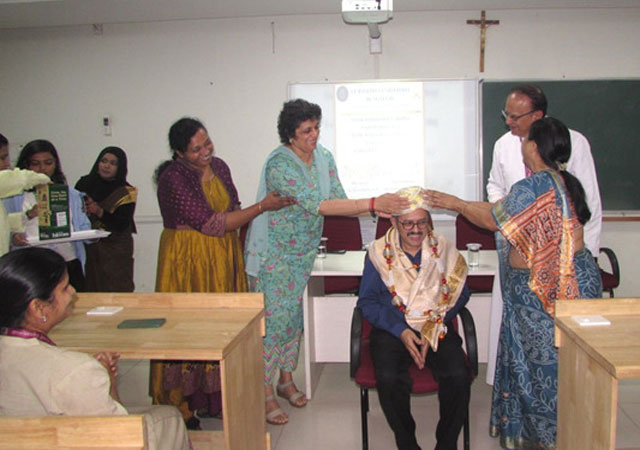
The ceremony continued with the felicitation of the guest of honour, Dr K S Srinivas, entrepreneur, researcher, venture capitalist, and veteran technology leader with twenty patents to his credit. Introducing himself as a ‘fellow learner', he quoted the Rig Veda: ‘Let noble thoughts come to us from all directions.’ Reflecting on his entrepreneurial journey spanning more than thirteen years, he spoke about building a portfolio of nine companies employing nearly 6,000 professionals across diverse industries. He observed that with information technology expected to make an even greater contribution to India's economy by 2030, the country would require nearly ten lac skilled IT professionals.
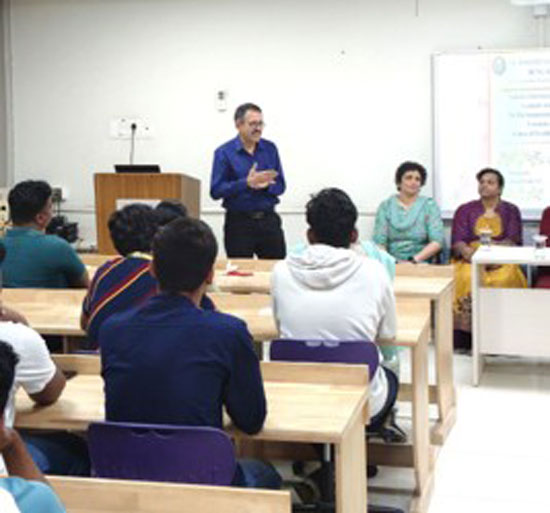
Dr Srinivas explained that Sherpavector operates across seven industry verticals ‘Aerospace, Space, Defence, Cybersecurity, Agri-tech, Pharmaceuticals, and Healthcare’ with artificial intelligence, machine learning, and cybersecurity serving as its core technological domains. He noted that many of the company's leaders hold doctoral degrees and emphasised that the centre would enable students to work on state-of-the-art projects, including developing large language models from scratch. Stressing that the initiative would demand the same level of commitment expected from professionals in the organisation, he remarked that students selected for the centre would be challenged to think critically and solve real-world problems. He further shared that all 250 interns at Sherpavector had been successfully placed and encouraged students to strengthen their programming fundamentals by writing 500–600 lines of code every day without relying on AI tools, while cultivating a strong foundation in mathematics.
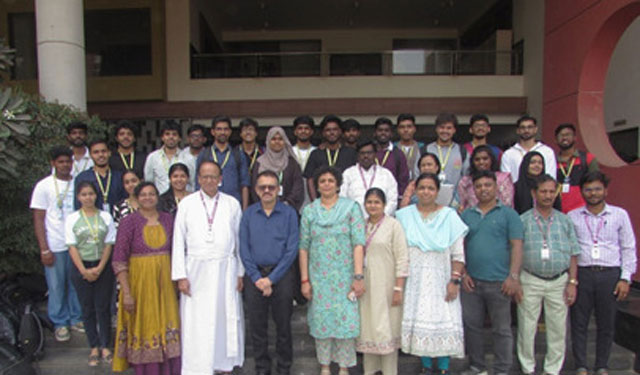
The programme concluded with a vote of thanks, followed by a group photograph of the dignitaries, faculty members, programme coordinators, and students, marking the formal launch of a collaboration that seeks to advance education, research, and innovation in artificial intelligence and machine learning.