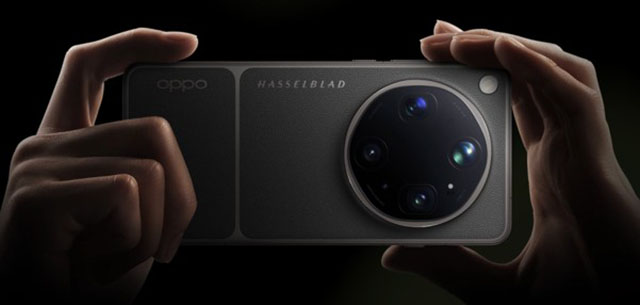
Italy has long set the standard for academic rigour — and nowhere is that more apparent than at the University of Bologna, the world’s oldest, where the weight of nearly a thousand years of scholarship still shapes how students approach learning today. Dense lectures, multilingual seminars, and research that demands precision at every stage leave little room for the limitations of an average device. The OPPO Find X9 Ultra is built for exactly this environment: a set of AI-powered tools and purpose-designed hardware that turns a smartphone into a genuine academic instrument, from the first lecture of the semester to the final hours before an exam.
AI Recording: Transcription That Builds a Study Resource
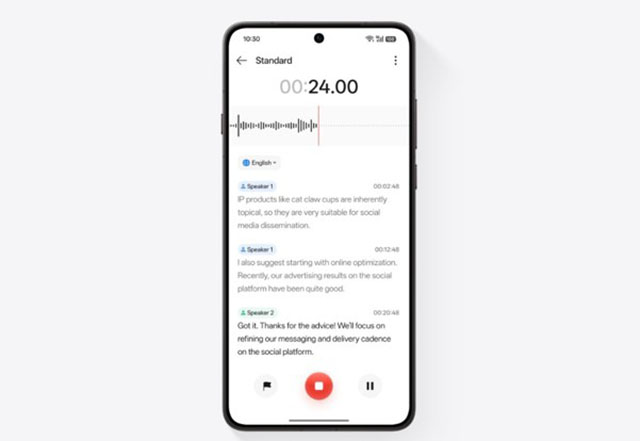
Lecture content in Italian universities spans dense technical material, fast-spoken commentary, multilingual academic discourse, and seminar debates where five people contribute simultaneously. AI Recording on the OPPO Find X9 Ultra transcribes audio in real time, identifies different speakers, and automatically generates titles, tags, and chapter markers. The output is a searchable structured document rather than an audio file requiring manual review.
For Italian students in medicine, law, engineering, or economics — where a two-hour lecture contains hundreds of specific facts, terms, and conceptual relationships — the ability to search a transcribed lecture for a specific term changes revision fundamentally. Finding where a professor first introduced a concept, or isolating a specific speaker's answer during a seminar, becomes a search query rather than a time-coded playback exercise.
The transcription runs in real time during the recording, meaning notes begin building from the first minute of class, significantly reducing the need for extensive post-session processing. The chapter markers make the transcription navigable by structure rather than requiring linear reading.
10× Optical Telephoto: Whiteboard Capture From the Back Row
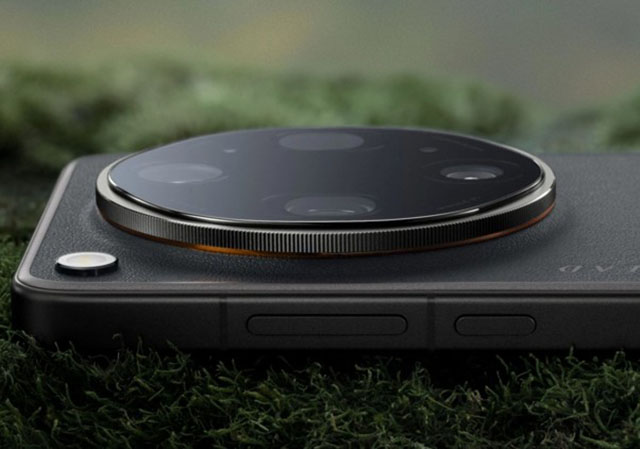
Large lecture halls at Bologna, Rome's La Sapienza, or Milan's Politecnico seat hundreds of students, with whiteboard or projection content often fifty meters from the back row. The 10× optical telephoto at 230mm f/3.5 on the OPPO Find X9 Ultra captures whiteboard diagrams, equations, and projected slides from distances where a phone camera's standard lens produces an unreadable image.
At 10× native optical zoom, the output captures legible handwriting and diagram detail without digital degradation. For Italian students who sit at the back of large lecture halls due to late arrival or preference, this converts what would otherwise be an unusable photo into a reliable study reference.
DOC SCANNER: From Physical to Digital
The dedicated DOC SCANNER mode on the OPPO Find X9 Ultra applies perspective correction and contrast handling to produce flat, readable digital versions of physical documents. Printed lecture handouts, textbook pages, physical assignments, and whiteboard notes become PDF-ready files with corrected distortion and enhanced contrast. For Italian students who receive physical course materials and need to enter them into a digital study system — shared with study groups, searchable for revision — DOC SCANNER handles the conversion without a separate app or hardware.
The 200MP main camera's resolution provides document scanning output at a quality level that makes even small-print footnotes readable.
AI Writer: Structuring Ideas Into Work
AI Writer transforms rough notes, captured fragments, and basic prompts into structured drafts, formatted tables, and visual mind maps. For Italian students approaching an 8,000-word thesis or a complex research paper, the structural organization — building the outline, converting research notes into a map of connected concepts — is often the hardest part of getting started. AI Writer handles the scaffolding, leaving the actual intellectual work of argumentation and analysis to the student.
The transformation of dense lecture transcriptions into structured mind maps is useful for subjects with many interconnected concepts: pharmacology pathways, constitutional law frameworks, circuit analysis in electrical engineering.
Eye Care Display for All-Day and Night Study
The OPPO Find X9 Ultra's display runs 3600 nits peak brightness and uses multiple TÜV Rheinland certifications, including low dynamic interference and AI Adaptive Eye Care. The display operates at 1 nit ultra-low brightness for dark room use. For Italian students who study late into the night — particularly during the June exam sessions — the low-brightness capability and eye care certifications matter for sustained comfort across multi-hour screen sessions.
The 510PPI pixel density at QHD+ resolution produces text clarity that makes extended reading less fatiguing than lower-resolution panels.
Battery for the Full Academic Day
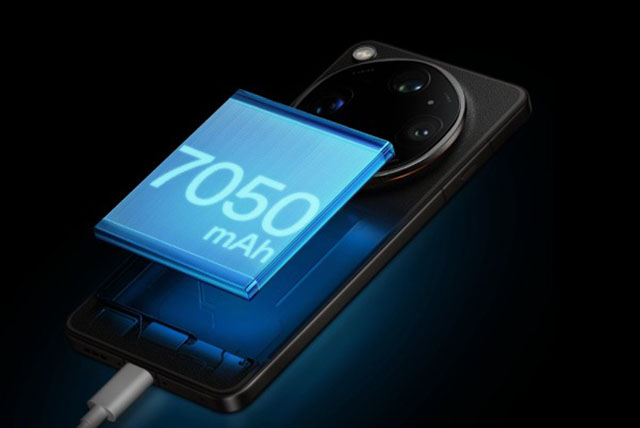
The 7050mAh(typical) battery carries the device through a full day of lectures, note-taking, research, and social use without midday intervention. The 100W SUPERVOOC wired charging handles a top-up quickly—useful between morning and afternoon lecture blocks. The 50W AIRVOOC wireless charging supports desk charging setups without cable management.
The Academic Case for the OPPO Find X9 Ultra
For Italian students navigating the particular demands of a Bologna lecture hall, a Rome seminar room, or the final weeks of a Milan exam period, the OPPO Find X9 Ultra assembles a set of tools that address real friction points rather than theoretical ones.