Daijiworld Media Network – Paris
Paris, Jun 25: France has confirmed its first Ebola case linked to the ongoing outbreak in the Democratic Republic of the Congo (DRC), after a doctor returning from a humanitarian mission tested positive for the virus, health authorities said on Wednesday.
According to the French Health Ministry, the healthcare worker had been serving in an area affected by the outbreak in eastern DRC before returning to France.
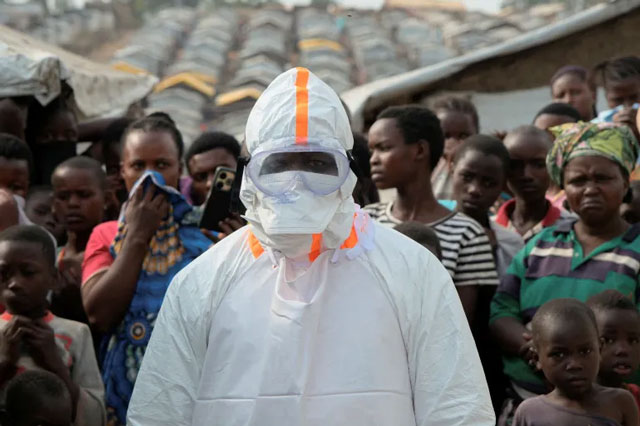
"The patient is being treated at a specialised healthcare facility under strict biosafety protocols," the ministry said, adding that all precautionary measures, including immediate isolation and secure transfer to hospital, were implemented upon the individual's arrival in the country.
French authorities have launched an epidemiological investigation to identify people who may have come into contact with the patient. Those identified will be contacted and asked to self-isolate for 21 days as a precautionary measure.
World Health Organization (WHO) Director-General Tedros Adhanom Ghebreyesus sought to reassure the public, saying there was no reason for panic over the case in France.
Speaking at a news conference, Tedros noted that fewer than 30 Ebola cases had been detected outside Africa over the past five decades.
"The risk to the rest of the world remains low. Countries should not overreact," he said.
However, Tedros warned that the Ebola outbreak in the DRC's Ituri province, which began in May, continues to outpace response efforts. He cited inadequate contact tracing, limited treatment capacity and difficulties in conducting safe burials as major challenges facing health authorities.
The outbreak is caused by the rare Bundibugyo strain of the Ebola virus, for which there are currently no approved vaccines or treatments.
Africa Centres for Disease Control and Prevention (Africa CDC) Director-General Jean Kaseya warned that the current outbreak could become the worst Ebola crisis on record if not brought under control quickly.
He said humanitarian and security challenges were hampering response efforts, particularly in areas housing large numbers of internally displaced people.
Since May, the outbreak has infected more than 1,000 people and claimed at least 277 lives in the DRC. Cases have also been reported in neighbouring Uganda.
The WHO declared the outbreak a Public Health Emergency of International Concern on May 17.
Meanwhile, UNICEF and Gavi, the Vaccine Alliance, have begun discussions with vaccine developers and manufacturers regarding the development of a vaccine targeting the Bundibugyo strain. Gavi has committed up to $40 million to support vaccine research, manufacturing and future deployment if clinical trials prove successful.
Health workers on the ground have reported improved public awareness and increased attendance at treatment centres, although security concerns continue to pose serious obstacles to containment efforts.