Daijiworld Media Network - Kinshasa
Kinshasa, Jun 19: The Democratic Republic of the Congo (DRC) has reported a sharp rise in Ebola infections, with confirmed cases reaching 896 and the death toll climbing to 232, according to the country's health authorities.
In its latest daily update, the Health Ministry said 21 new confirmed infections, including six fatalities, were recorded on Wednesday in the eastern provinces of Ituri and North Kivu.
The outbreak, caused by the Bundibugyo strain of the Ebola virus, has now spread across 33 health zones in three eastern provinces -- Ituri, North Kivu and South Kivu.
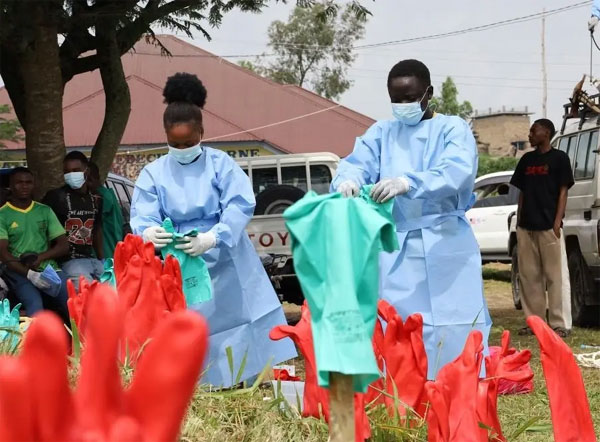
Health officials said 383 patients are currently either in isolation or receiving treatment in hospitals, while 78 people have recovered from the disease. Among them, 11 patients were recently declared recovered after testing negative during follow-up examinations.
Authorities also reported 151 suspected cases, including 35 deaths, on Wednesday alone.
Contact tracing efforts remain underway, with 6,367 individuals identified for monitoring across the affected regions. Of these, 4,525 people were successfully reached during the latest reporting period, resulting in a follow-up rate of 71.1 per cent.
The Health Ministry warned that confirmed infections continue to rise each week, indicating sustained community transmission.
Officials cautioned that the outbreak could spread rapidly to new areas if containment measures are not strengthened immediately.
The current health emergency, officially declared on May 15, marks the Democratic Republic of the Congo's 17th Ebola outbreak.
Ebola was first identified in 1976 during two simultaneous outbreaks in Central Africa. One involved the Sudan virus in present-day South Sudan, while the other occurred in Yambuku, in what is now the Democratic Republic of the Congo. The disease was later named after the nearby Ebola River.
The illness typically begins suddenly with symptoms such as fever, fatigue, muscle pain, headache and a sore throat. As the disease progresses, patients may develop vomiting, diarrhoea, abdominal pain, skin rashes and impaired kidney and liver function.
Health authorities have urged medical workers to remain vigilant and quickly identify potential cases to prevent further transmission.